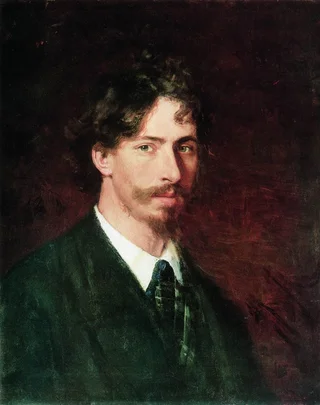
Ilja Repin
1844–1930 · Russisches Kaiserreich · Realismus
Die Geschichte
In den frühen 1870er Jahren beobachtete der junge Ilja Repin, geboren in der Kleinstadt Tschuhuiv im heutigen Ukraine, wie Männerkolonnen am Seil Lastkähne die Wolga hinaufzogen, angeschirrt wie Zugtiere. Das Gemälde, das daraus entstand, "Die Wolgatreidler", 1873 vollendet, zeigt elf erschöpfte Männer, die unter einem gewaltigen, blassen Himmel ein Boot ziehen – jeder von ihnen ein eigenständiges Porträt, kein bloßer Typus. Es machte ihn mit 29 Jahren berühmt.
Er wurde zum großen Maler der Peredwischniki, der "Wanderer", einer Gruppe russischer Realisten, die mit der offiziellen Akademie brachen und ihre gesellschaftskritischen Bilder durch die Provinz reisen ließen. Repin malte Revolutionäre, Priester, Bauern und Kosaken mit derselben unerschrockenen Aufmerksamkeit, und seine Porträts des Komponisten Mussorgski und des Schriftstellers Tolstoi prägen bis heute, wie sich die meisten Menschen diese Männer vorstellen.
Ein Bild beunruhigte selbst ihn. "Iwan der Schreckliche tötet seinen Sohn", aus der Mitte der 1880er Jahre, zeigt den Zaren, wie er seinen erwachsenen Sohn im Arm hält, den er soeben in einem Wutanfall getötet hat, Blut an der Schläfe des jungen Mannes, Entsetzen in den Augen des Vaters. Es war so roh, dass 1913 ein Besucher die Leinwand dreimal mit einem Messer aufschlitzte, und Repin half selbst bei der Reparatur des Schadens. Er lebte bis 1930 und verbrachte seine letzten Jahre in seinem Haus nahe der neuen finnischen Grenze, außerhalb des sowjetischen Russlands, in das er nicht zurückkehren wollte.
Werke
69 Werke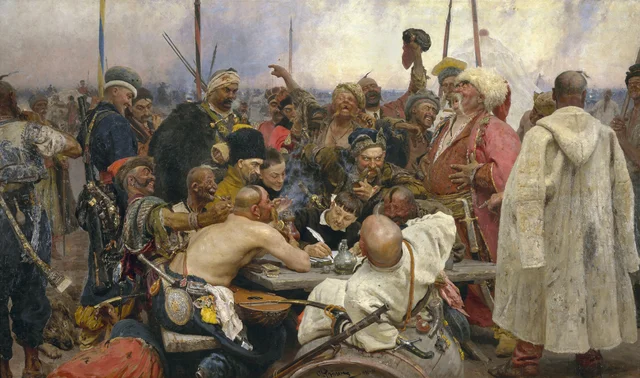 Die Antwort der Saporoger KosakenIlja Repin, 1890
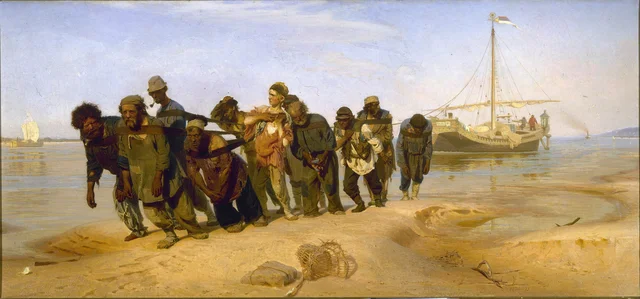 Die WolgatreidlerIlja Repin, 1870
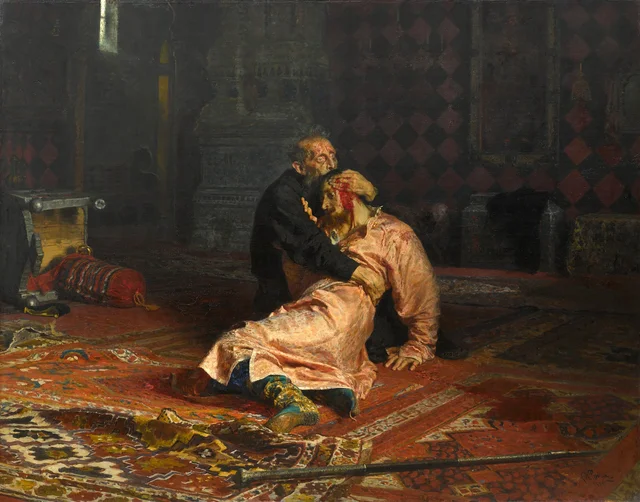 Iwan der Schreckliche und sein Sohn Iwan am 16. November 1581Ilja Repin, 1883
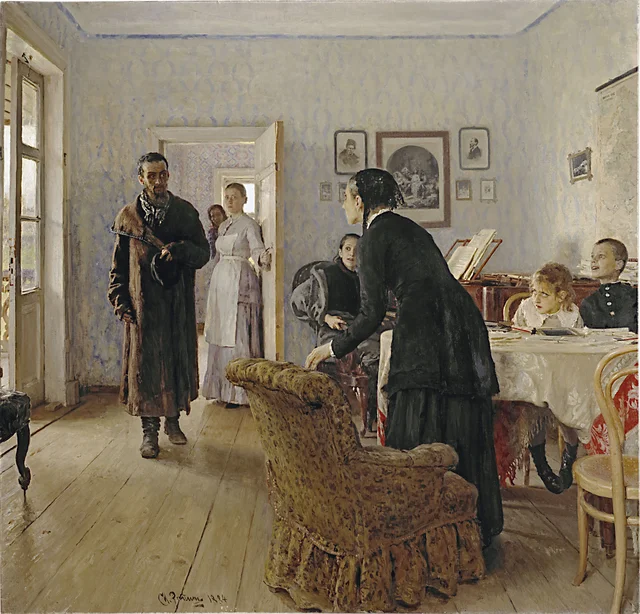 Sie erwarteten ihn nichtIlja Repin, 1888
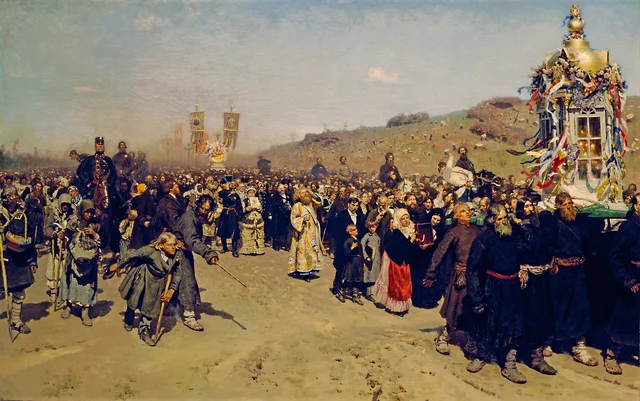 Religiöse Prozession im Gouvernement KurskIlja Repin, 1880
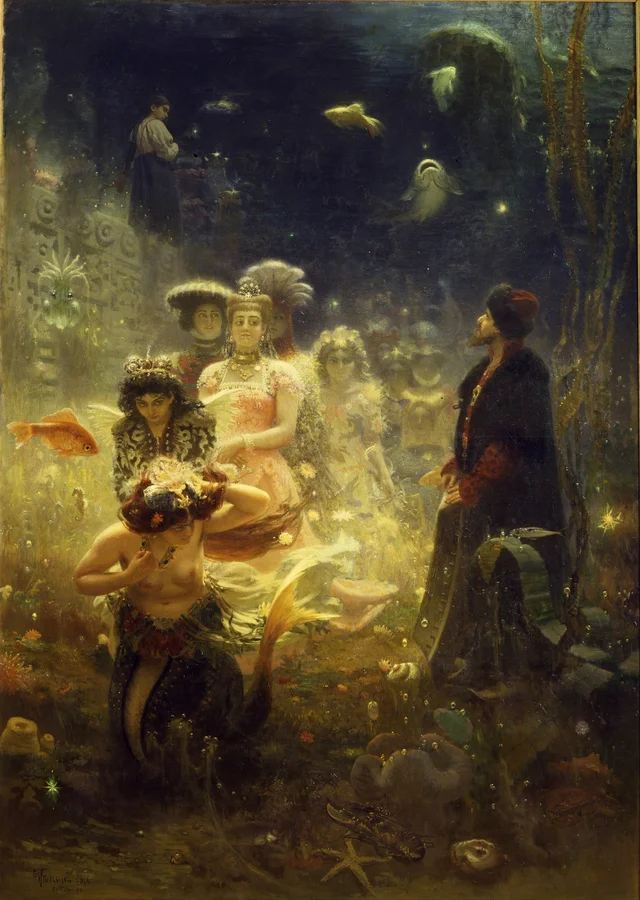 SadkoIlja Repin, 1876
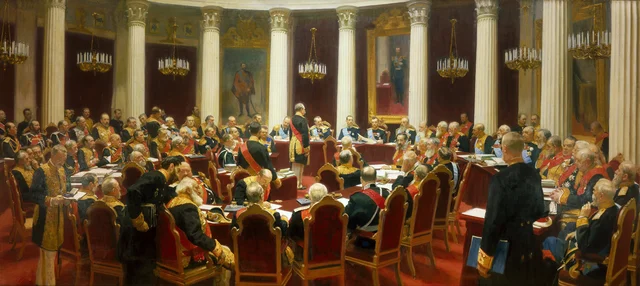 Feierliche Sitzung des Staatsrates am 7. Mai 1901 zum hundertjährigen Bestehen seiner GründungIlja Repin, 1903
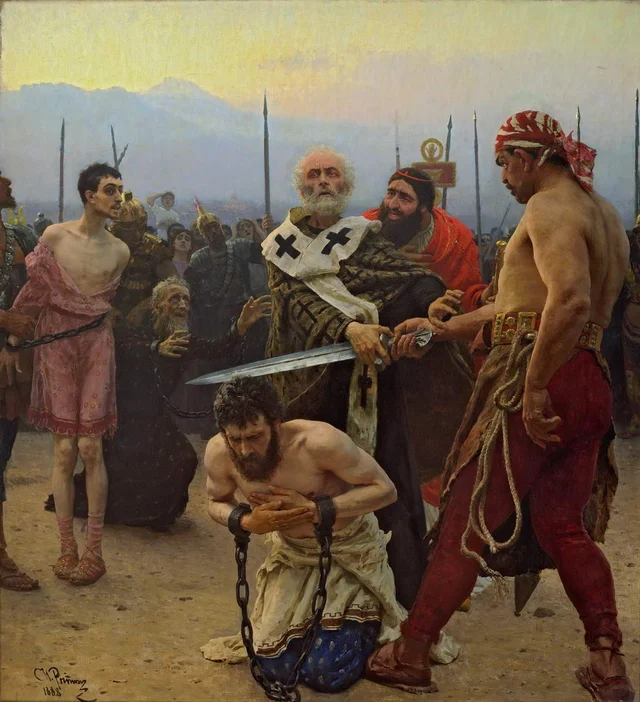 Der heilige Nikolaus von Myra rettet drei Unschuldige vor dem TodIlja Repin, 1888
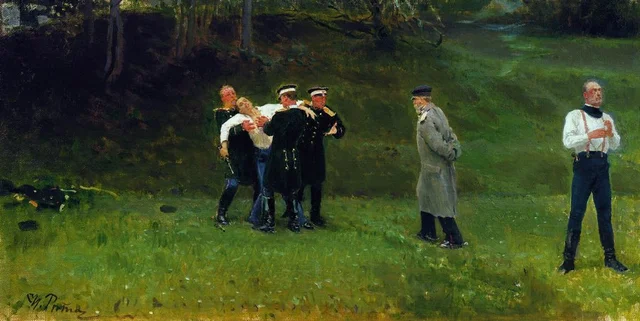 DuellIlja Repin, 1896
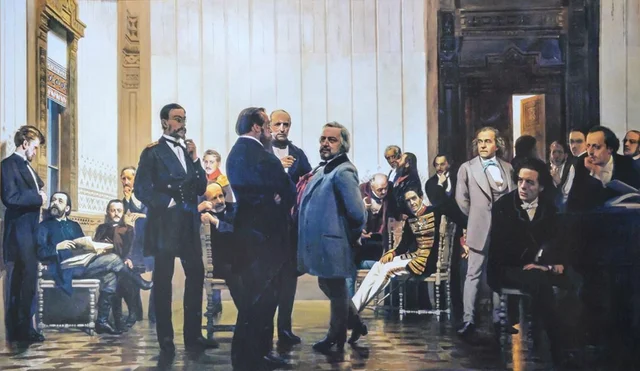 Slawische KomponistenIlja Repin, 1872
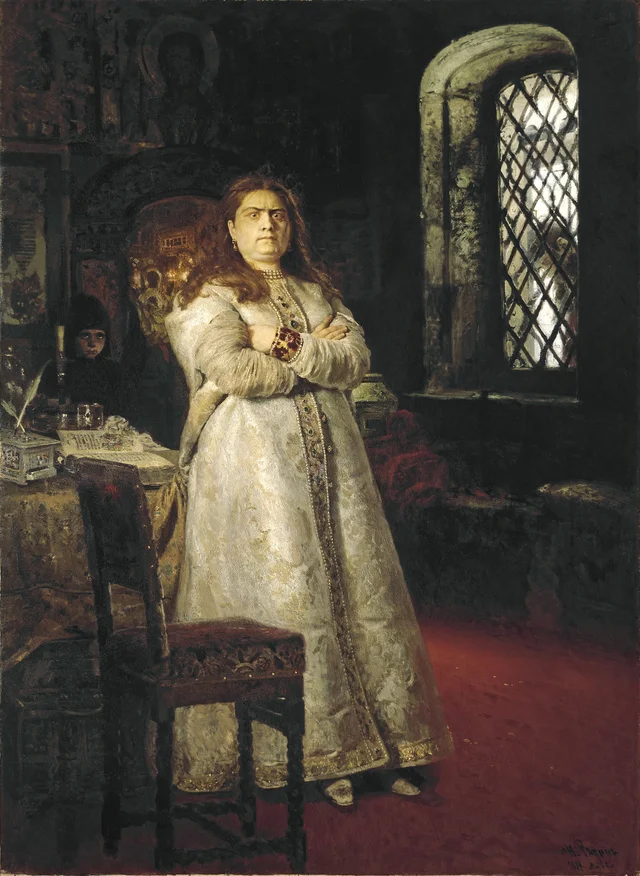 Zarewna Sofia im Nowodewitschi-KlosterIlja Repin, 1879
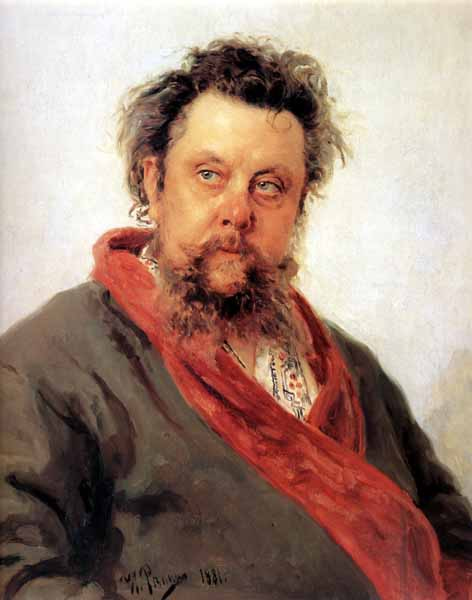 Porträt von Modest MussorgskiIlja Repin, 1881
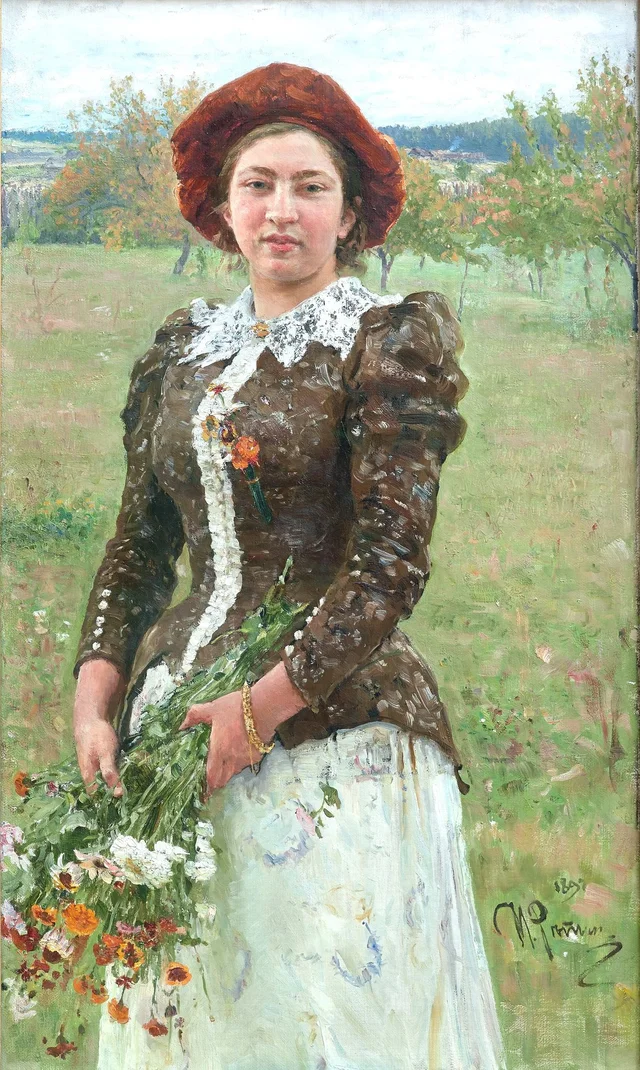 HerbststraußIlja Repin, 1892
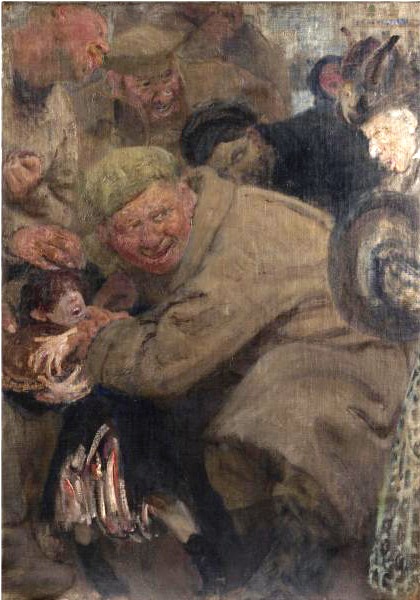 Der BolschewikIlja Repin, 1918
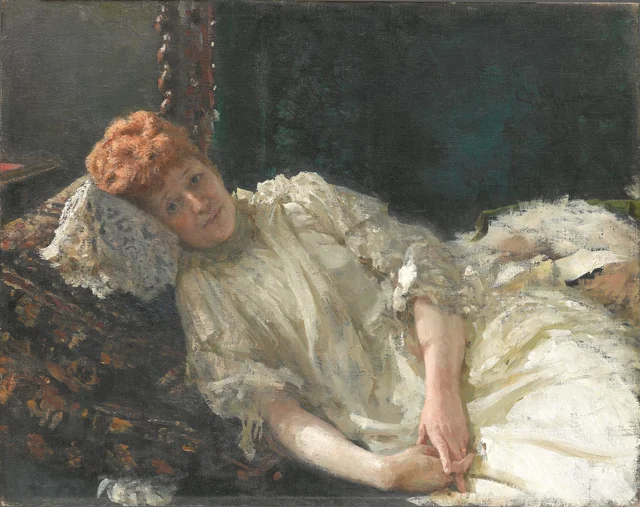 Porträt der Pianistin und Gräfin Louise de Mercy-ArgenteauIlja Repin, 1890
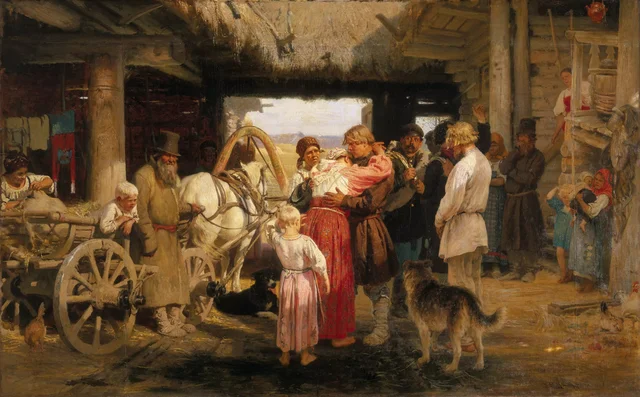 Verabschiedung des RekrutenIlja Repin, 1879
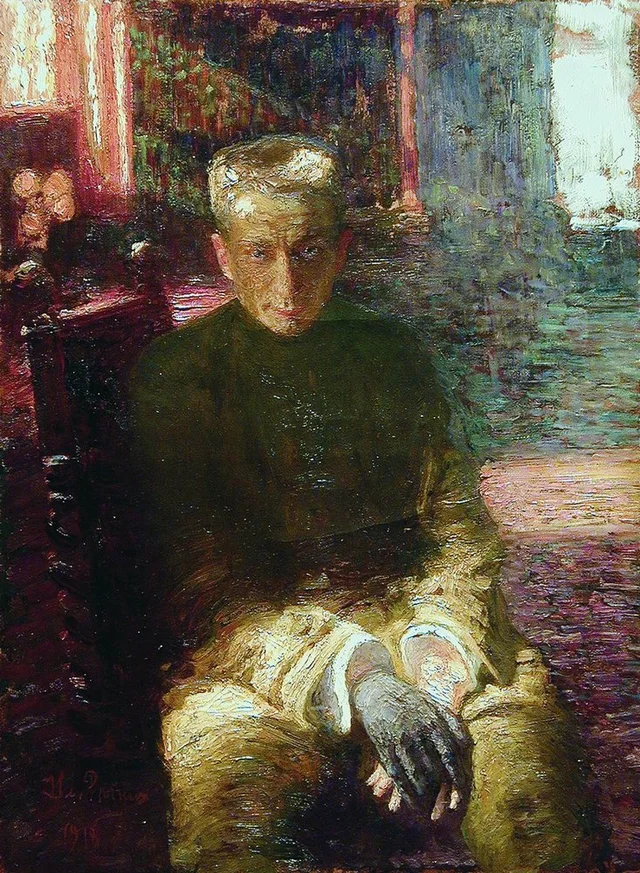 Alexander KerenskiIlja Repin, 1918
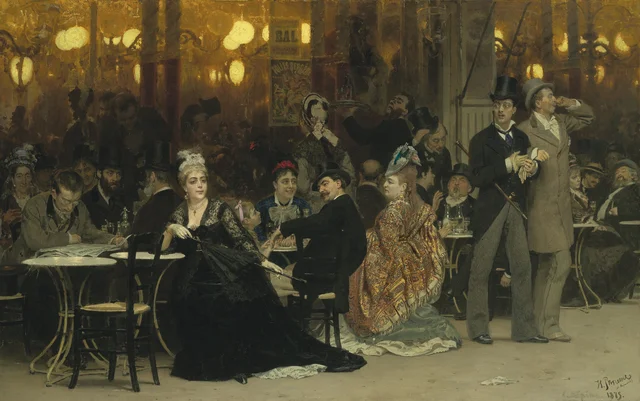 Ein Pariser CaféIlja Repin, 1875
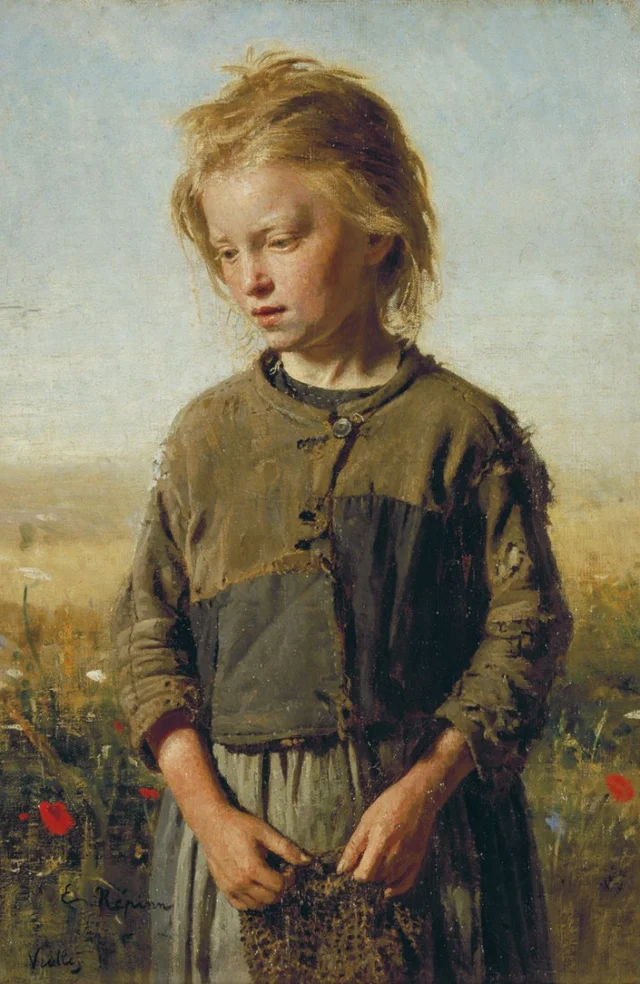 Bettlerin (Fischermädchen)Ilja Repin, 1874
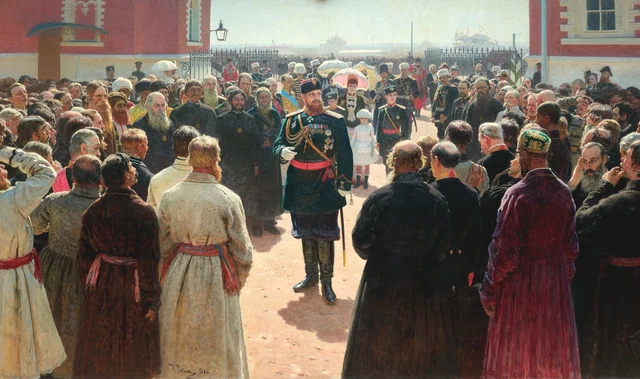 Abordnung der Dorfältesten vor Alexander III.Ilja Repin, 1886
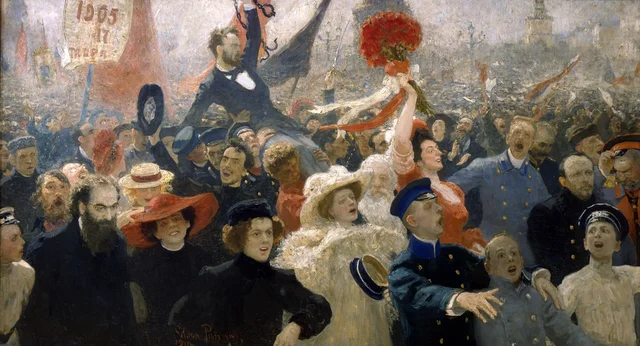 Demonstration am 17. Oktober 1905Ilja Repin, 1907
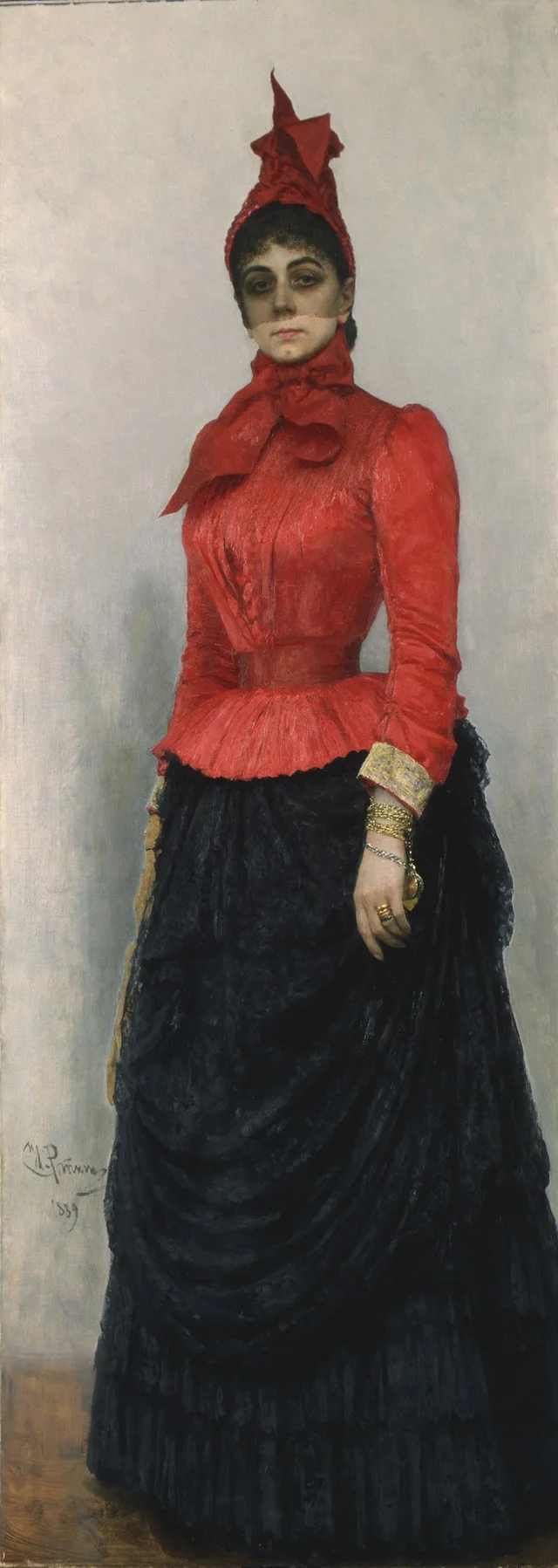 Porträt der Baronin V. I. Ikskül von HildenbandtIlja Repin, 1889
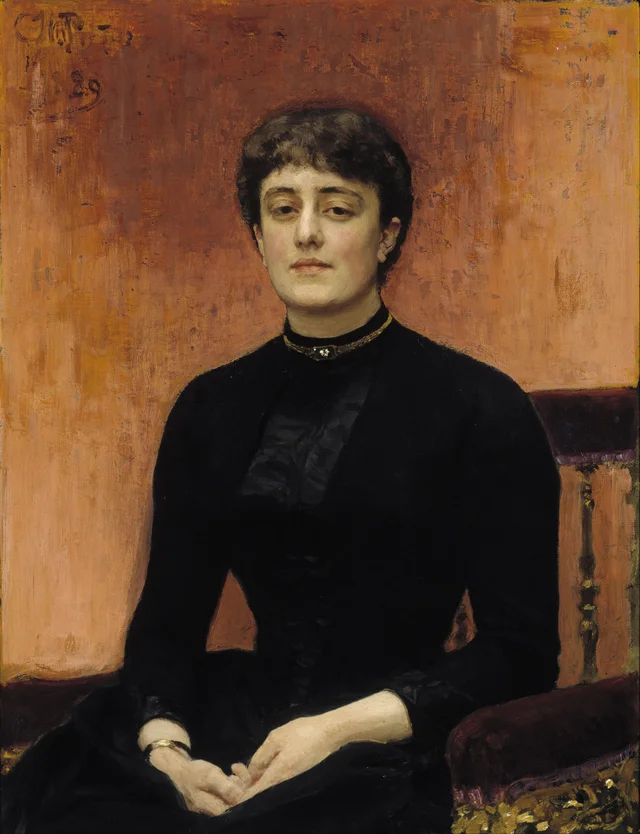 Porträt von Elisaveta ZwanzewaIlja Repin, 1889
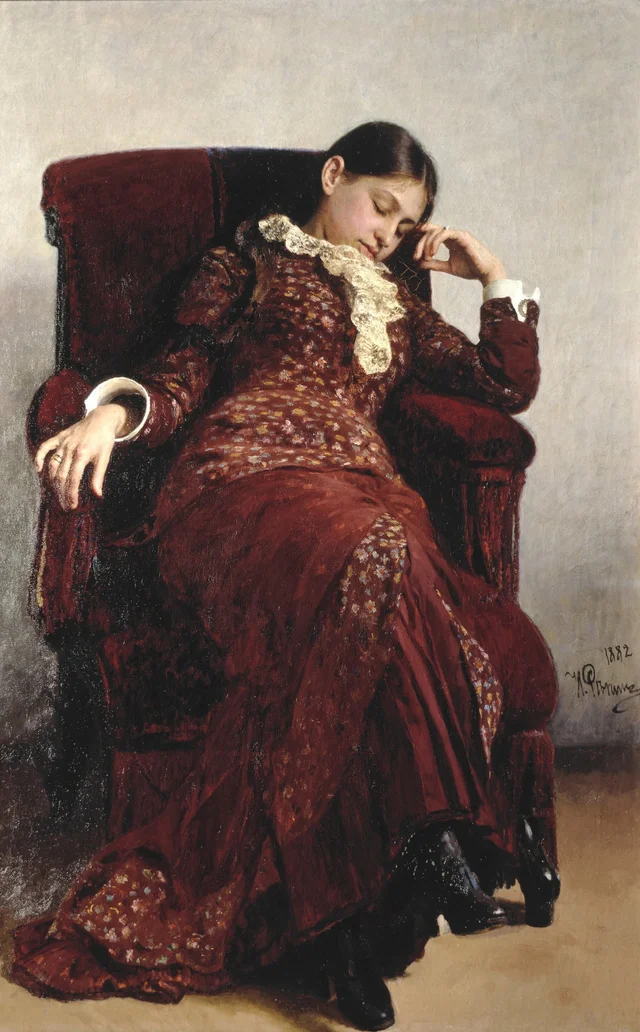 AusruhenIlja Repin, 1882
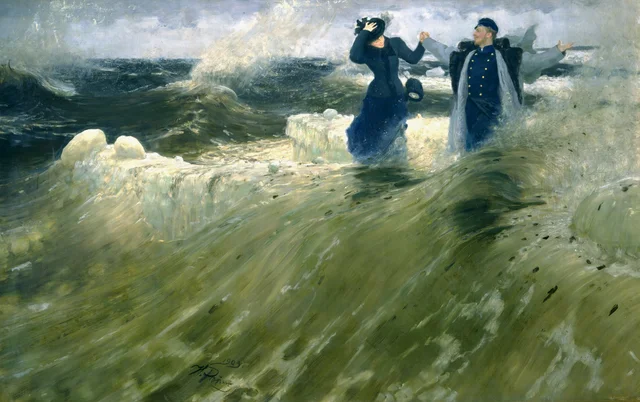 Was für eine Freiheit!Ilja Repin, 1903