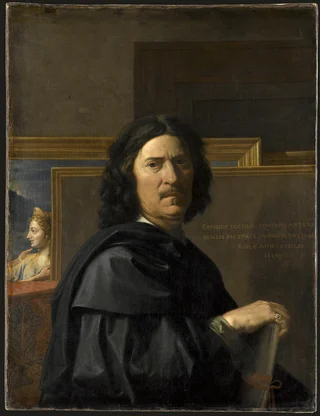
Nicolas Poussin
1594–1665 · Königreich Frankreich · Klassizismus
Die Geschichte
Poussin war der meistbewunderte französische Maler des 17. Jahrhunderts – und verbrachte fast sein ganzes Leben außerhalb Frankreichs. Mitte dreißig ging er nach Rom und blieb dort, arbeitete langsam für einen kleinen Kreis gelehrter Sammler an ruhigen, streng komponierten Szenen aus Bibel und Antike. Er dachte ein Bild wie ein Argument durch und stellte kleine Wachsfiguren auf einer Miniaturbühne in einem Kasten auf, um Posen und Licht festzulegen, bevor er die Leinwand überhaupt berührte.
Sein Et in Arcadia Ego zeigt Hirten in einer idyllischen Landschaft, die stirnrunzelnd über in einen Grabstein gemeißelte Worte gebeugt sind – eine Erinnerung daran, dass der Tod selbst in einer vollkommenen pastoralen Welt gegenwärtig ist. Das Bild vereint sein ganzes Wesen: Schönheit und kühle Reflexion zugleich.
1640 rief ihn König Ludwig XIII. nach Paris zurück, um die Kunstprojekte der Krone zu leiten. Poussin empfand die höfischen Aufträge und die Rivalitäten darum als unerträglich. Nach zwei Jahren reiste er ab nach Rom, angeblich um seine Frau abzuholen, und kehrte einfach nie wieder zurück; er starb 1665 in der Stadt.
Werke
115 Werke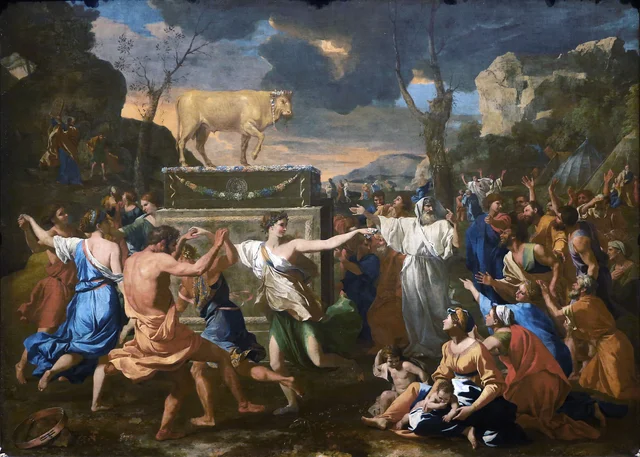 Die Anbetung des Goldenen KalbesNicolas Poussin, 1634
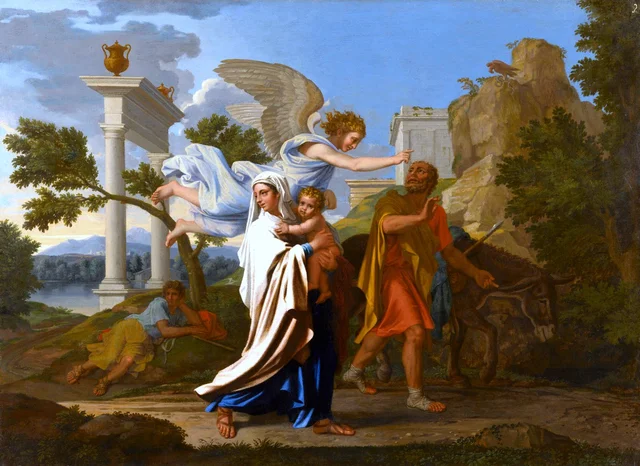 Die Flucht nach ÄgyptenNicolas Poussin, 1658
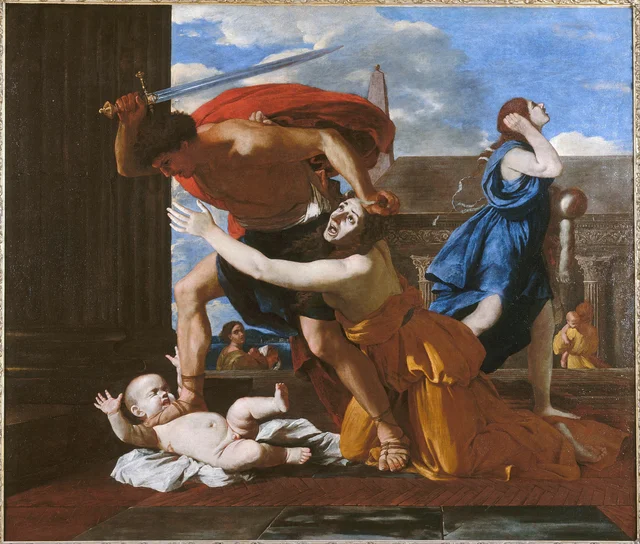 Der bethlehemitische KindermordNicolas Poussin, 1629
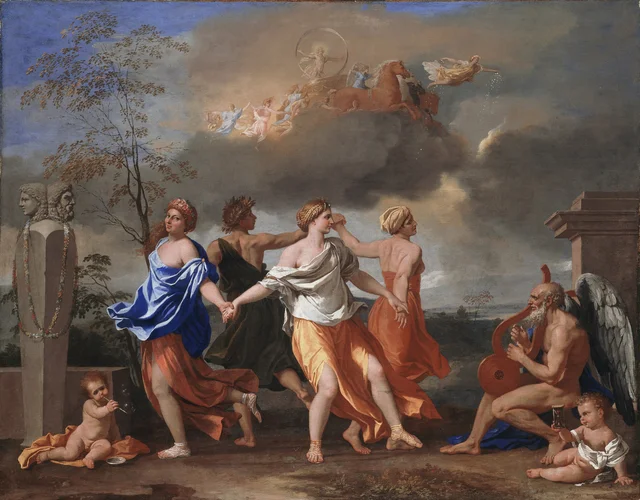 Ein Tanz zur Musik der ZeitNicolas Poussin, 1635
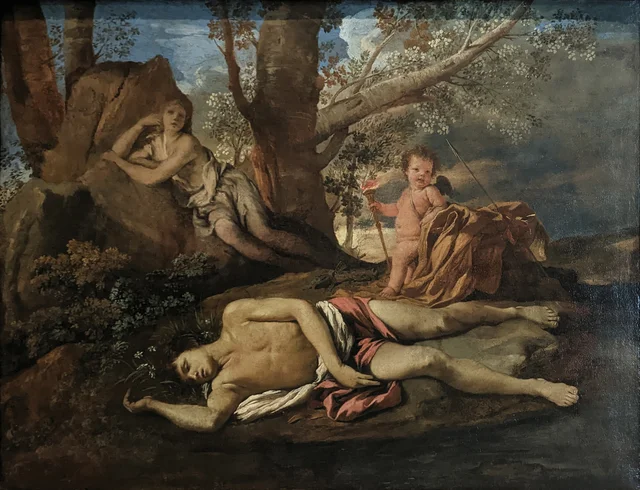 Echo und NarzissNicolas Poussin, 1629
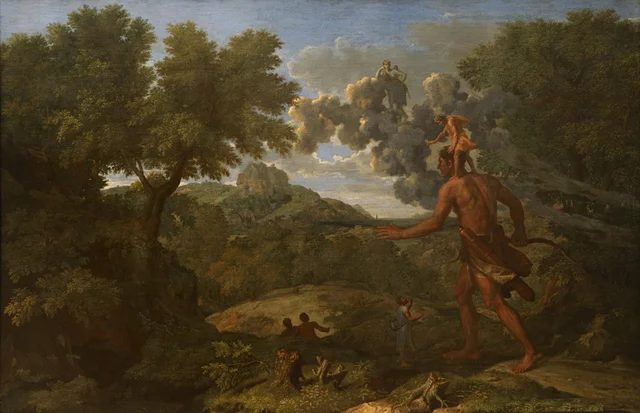 Der blinde Orion auf der Suche nach der aufgehenden SonneNicolas Poussin, 1658
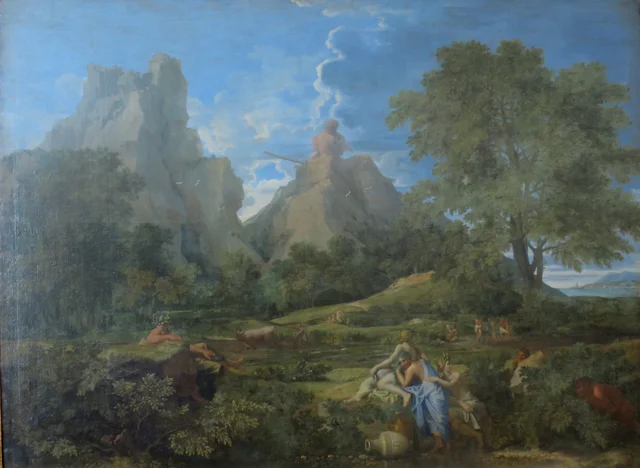 Landschaft mit PolyphemNicolas Poussin, 1649
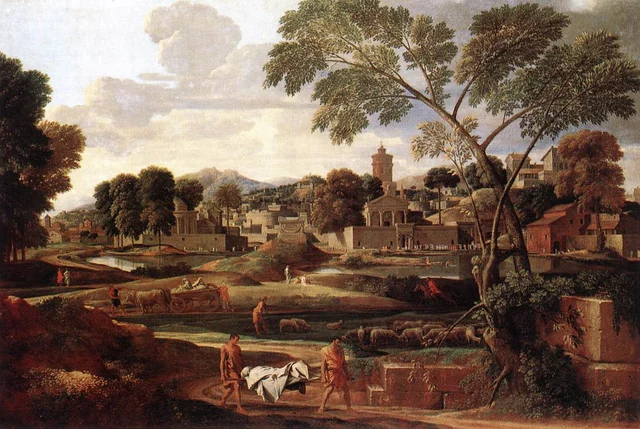 Das Begräbnis des PhokionNicolas Poussin, 1648
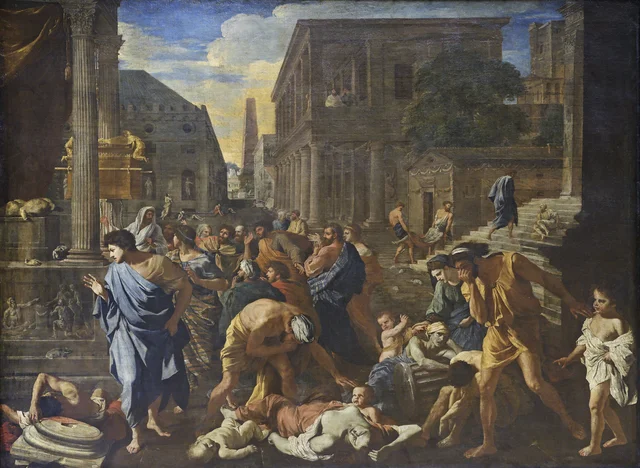 Die Pest von AschdodNicolas Poussin, 1630
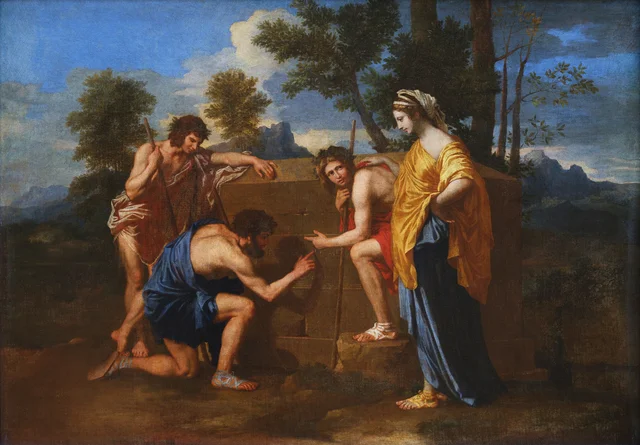 Et in Arcadia ego (Die arkadischen Hirten)Nicolas Poussin, 1638
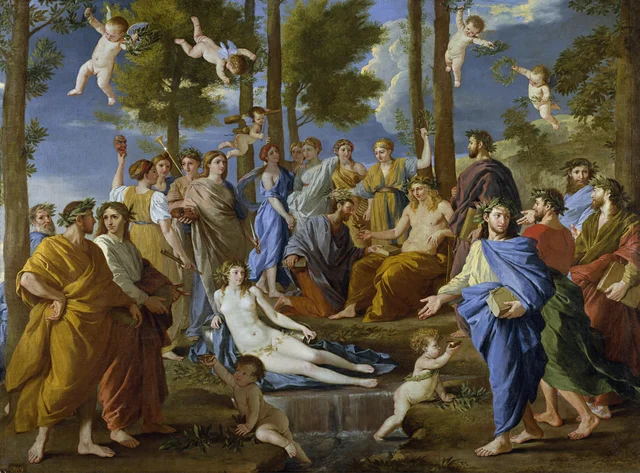 Der ParnassNicolas Poussin, 1632
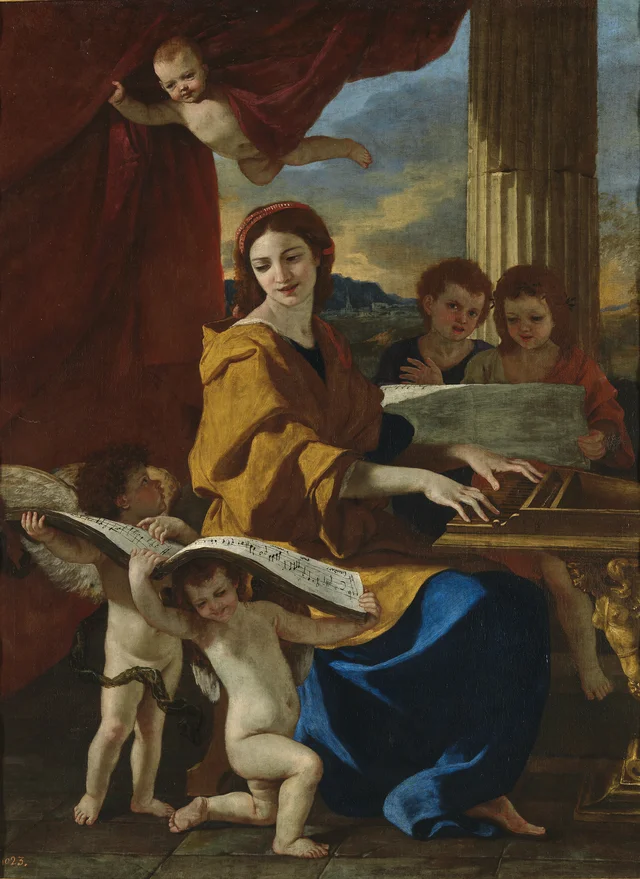 Die heilige CäciliaNicolas Poussin, 1635
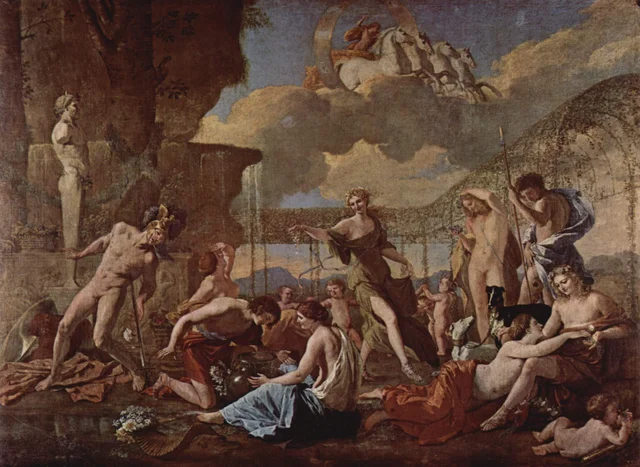 Das Reich der FloraNicolas Poussin, 1631
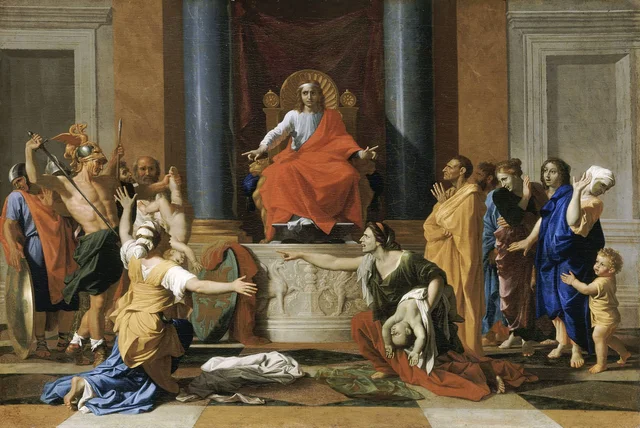 Das Urteil SalomosNicolas Poussin, 1649
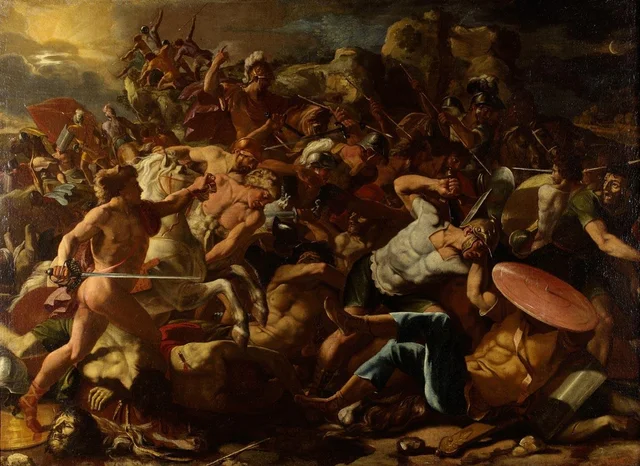 Der Sieg Josuas über die AmoriterNicolas Poussin, 1625
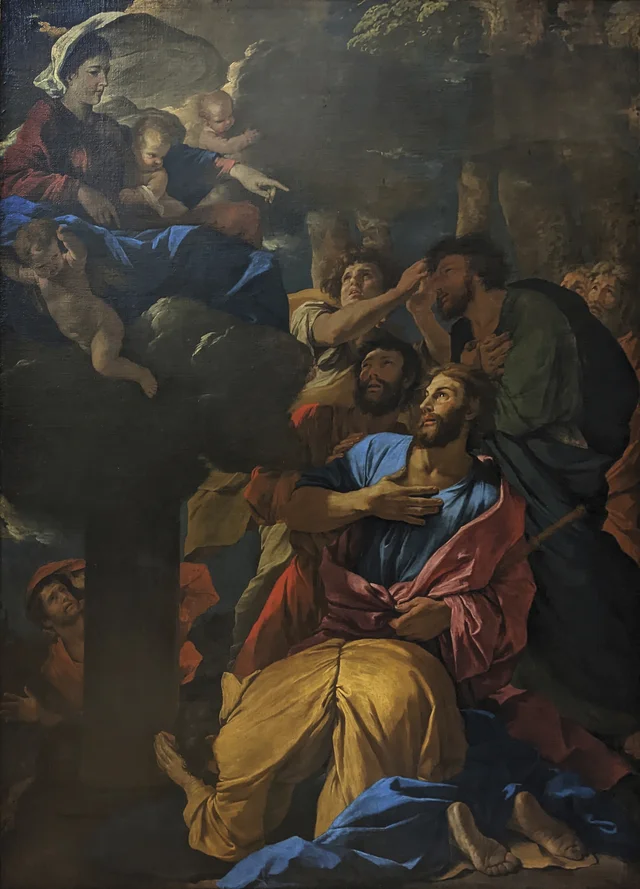 Die Erscheinung der Jungfrau vor dem heiligen Jakobus dem ÄlterenNicolas Poussin, 1629
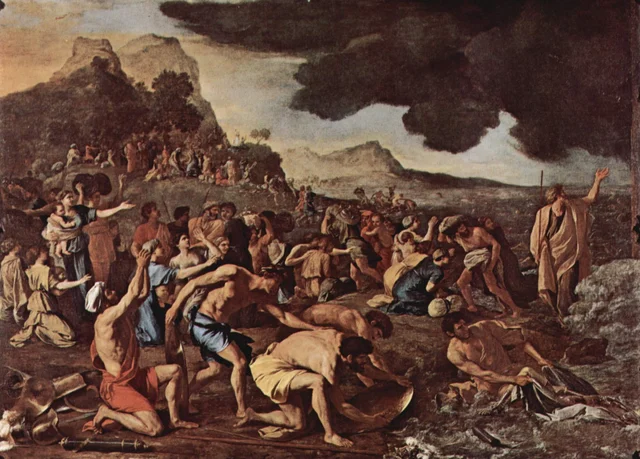 Der Zug durch das Rote MeerNicolas Poussin, 1632
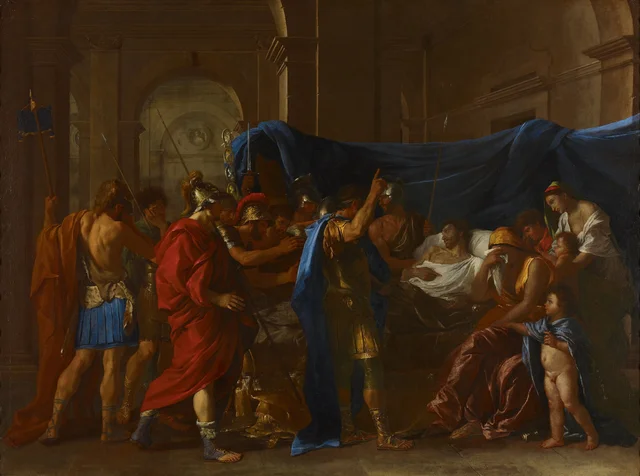 Der Tod des GermanicusNicolas Poussin, 1627
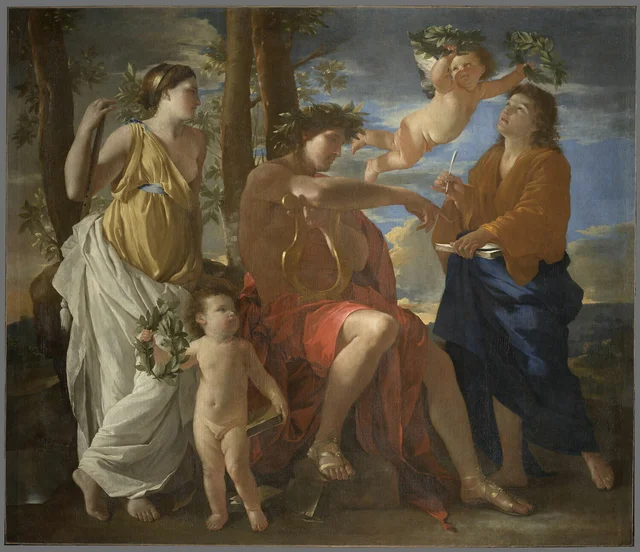 Die Inspiration des DichtersNicolas Poussin, 1629
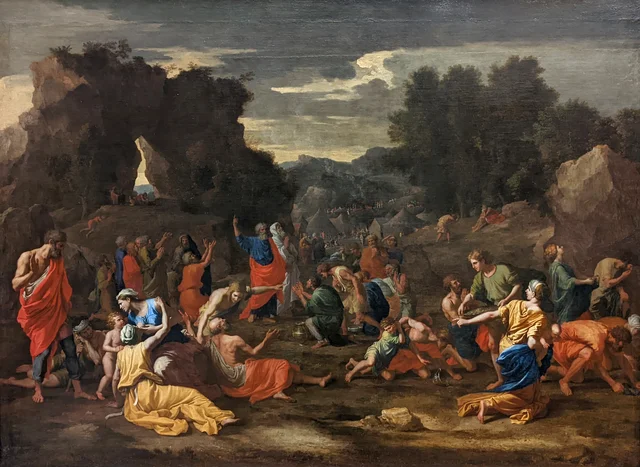 Das Sammeln des Manna in der WüsteNicolas Poussin, 1638
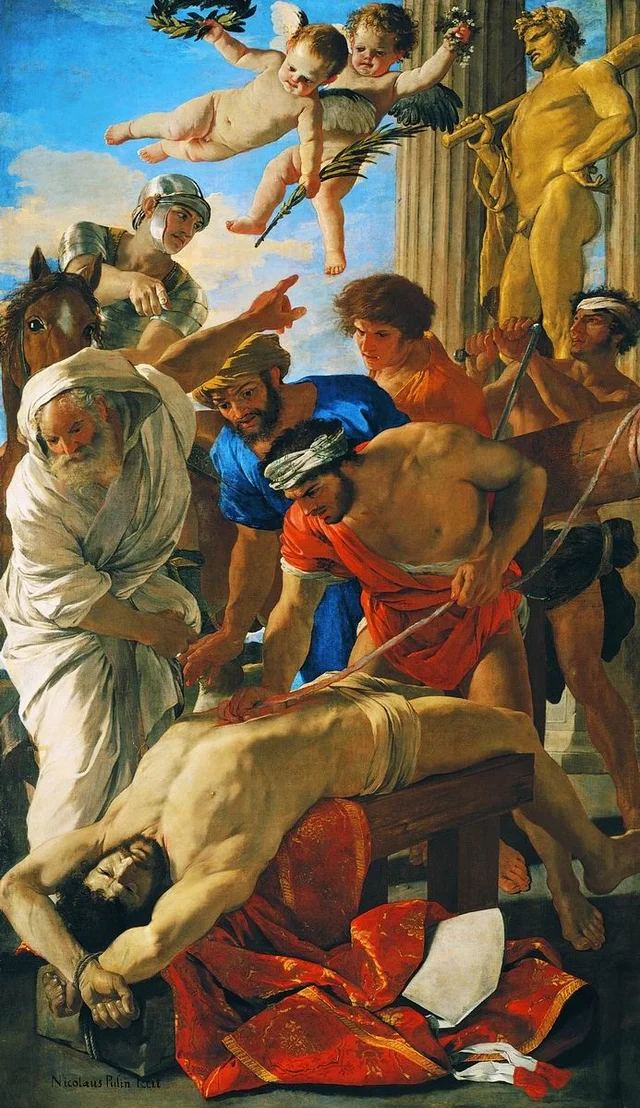 Das Martyrium des heiligen ErasmusNicolas Poussin, 1628
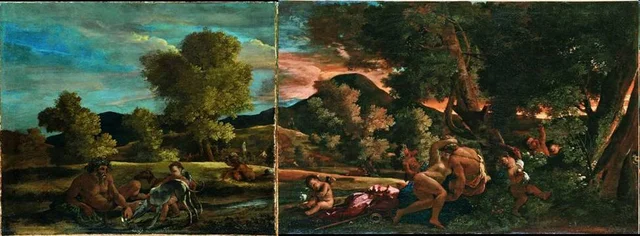 Venus und Adonis. Landschaft von Grottaferrata (rechte Hälfte von Venus und Adonis)Nicolas Poussin, 1625
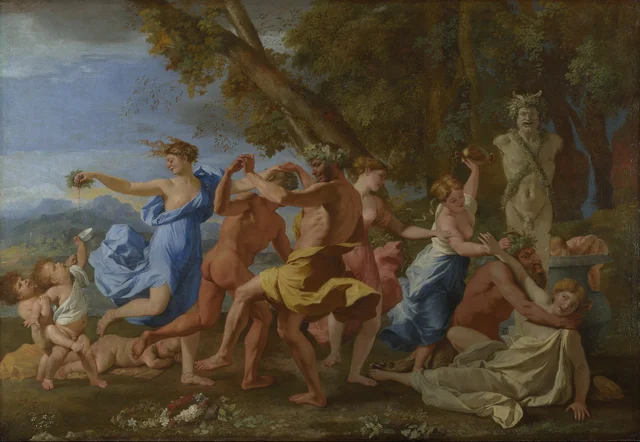 Bacchanal vor einer HermeNicolas Poussin, 1632
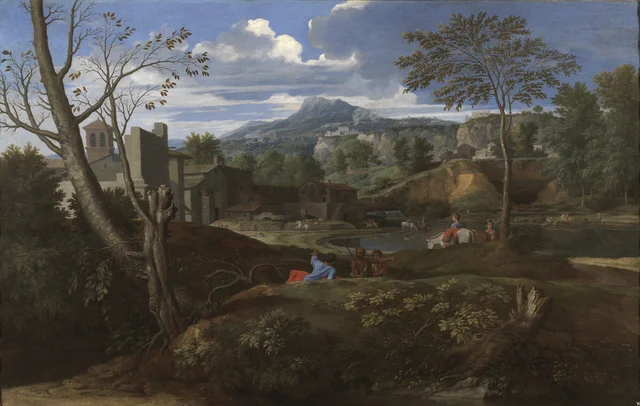 IdeallandschaftNicolas Poussin, 1648
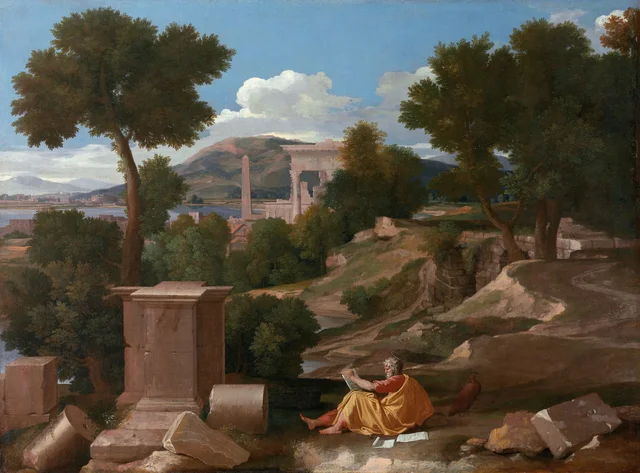 Landschaft mit dem heiligen Johannes auf PatmosNicolas Poussin, 1640