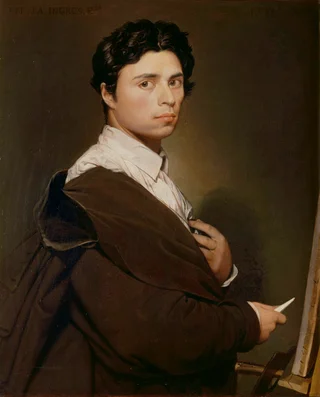
Jean-Auguste-Dominique Ingres
1780–1867 · Frankreich · Klassizismus
Die Geschichte
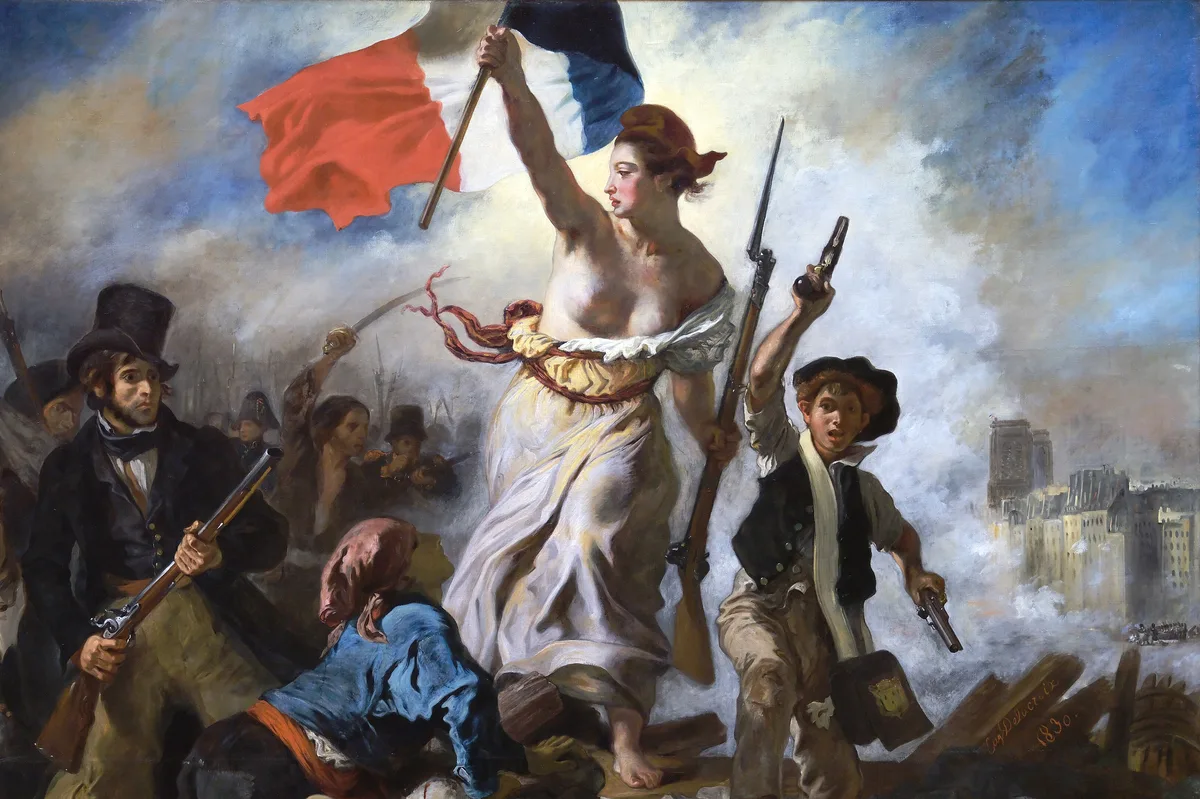
Ingres hielt sich für den letzten ehrlichen Mann der französischen Malerei, den Hüter der Zeichnung, der klaren Kontur und des Vorbilds Raffaels – gegen eine jüngere Generation, die in seinen Augen nur Farbe verschmierte und es Kunst nannte. Diese Generation hatte einen Anführer, Eugène Delacroix, und jahrzehntelang war die Pariser Kunstwelt gespalten: die Partei der Linie hinter Ingres, die Partei der Farbe hinter Delacroix. Ingres nannte seinen Rivalen den Apostel der Hässlichkeit, und auf der Weltausstellung 1855 in Paris sollen die Veranstalter die beiden Männer in getrennten Sälen gehängt haben.
Das Recht, dogmatisch zu sein, hatte er sich verdient. Ausgebildet im Atelier von Jacques-Louis David, dem großen Maler der Revolution und Napoleons, zeichnete Ingres mit einer Präzision, die kaum jemand erreichte. Und doch bricht sein berühmtestes Bild jede Regel, die er selbst predigte. Die Grande Odalisque von 1814, eine liegende Haremsdame, gemalt für Napoleons Schwester, hat einen Rücken mit zwei oder drei Wirbeln zu viel und ein Becken, das anatomisch gar nicht existieren könnte. Kritiker warfen ihm vor, die Anatomie vergessen zu haben; er hatte es absichtlich getan, den Körper gestreckt für die lange, kühle, ungebrochene Linie, die ihm mehr bedeutete als Korrektheit.
Ein kleineres Detail hat sich ebenfalls erhalten. Schon als Junge spielte Ingres Geige, als Jugendlicher gut genug, um im Orchester der Oper von Toulouse mitzuspielen, und sein ganzes Leben lang stand eine Geige neben seiner Staffelei. Aus dieser Gewohnheit entstand im Französischen die Redewendung un violon d'Ingres, für das ernsthafte Hobby, das jemand neben seiner eigentlichen Arbeit pflegt. 1924 griff der Fotograf Man Ray die Redewendung für ein eigenes Bild auf und malte die beiden geschwungenen Schalllöcher einer Geige auf den nackten Rücken eines Modells.
Weitere Artikel
Werke
120 Werke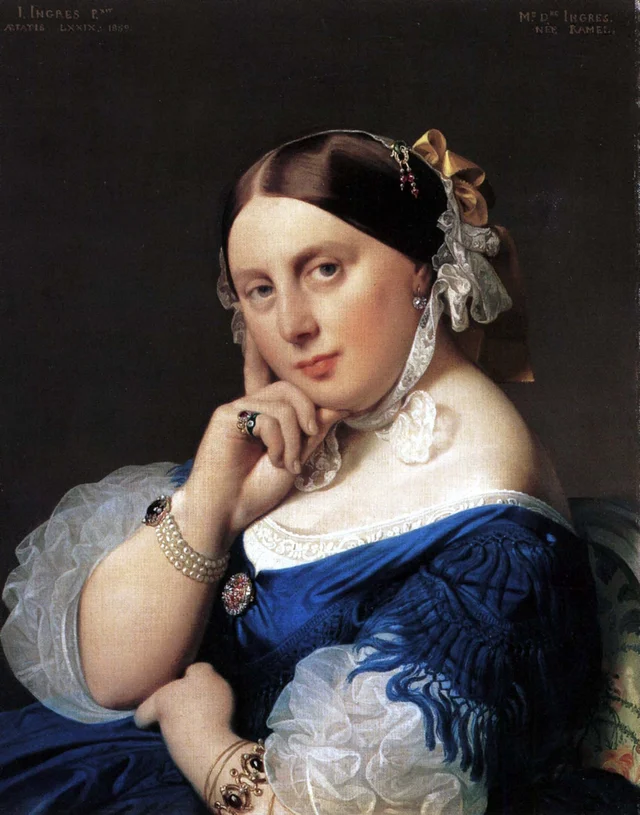 Bildnis der Delphine RamelJean-Auguste-Dominique Ingres, 1859
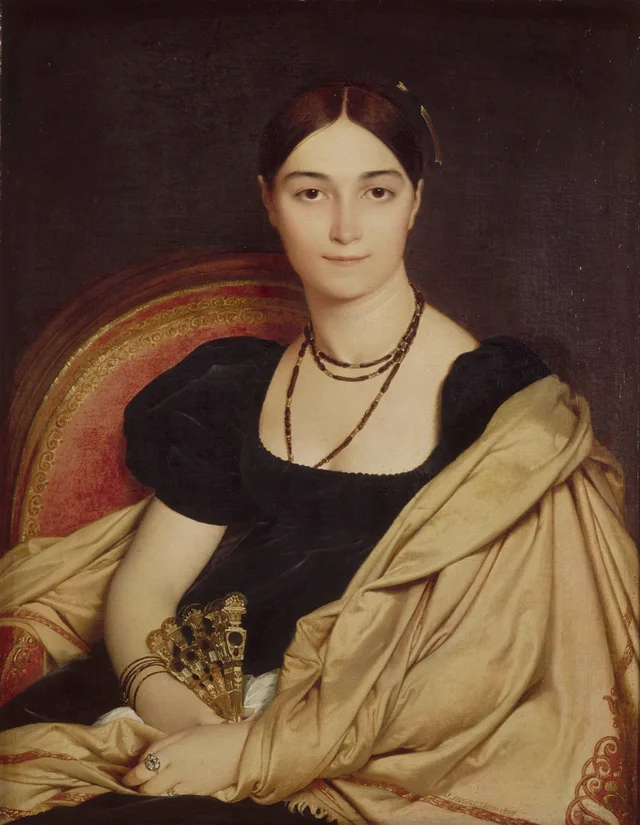 Bildnis der Madame DevauçayJean-Auguste-Dominique Ingres, 1807
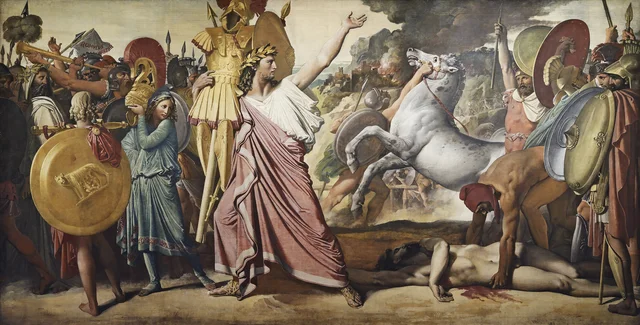 RomulusJean-Auguste-Dominique Ingres, 1812
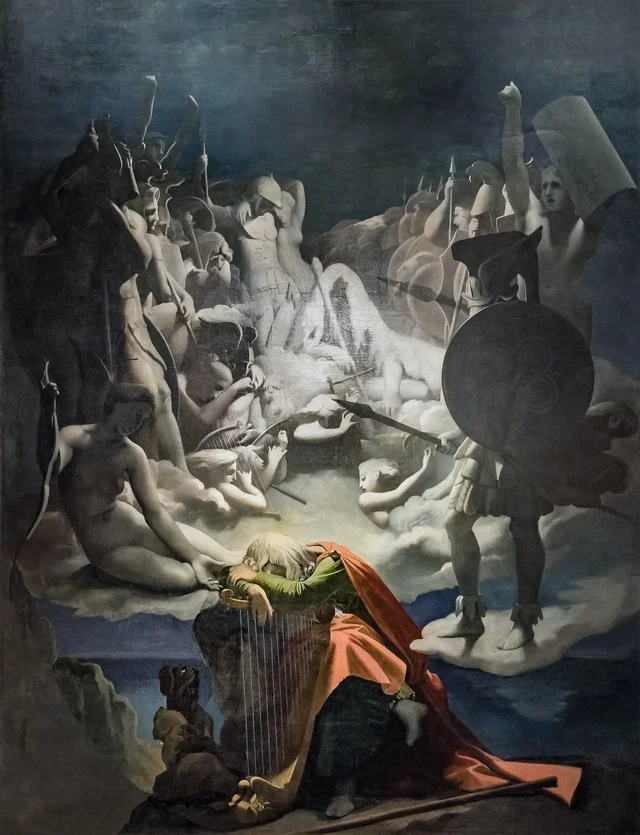 Der Traum OssiansJean-Auguste-Dominique Ingres, 1813
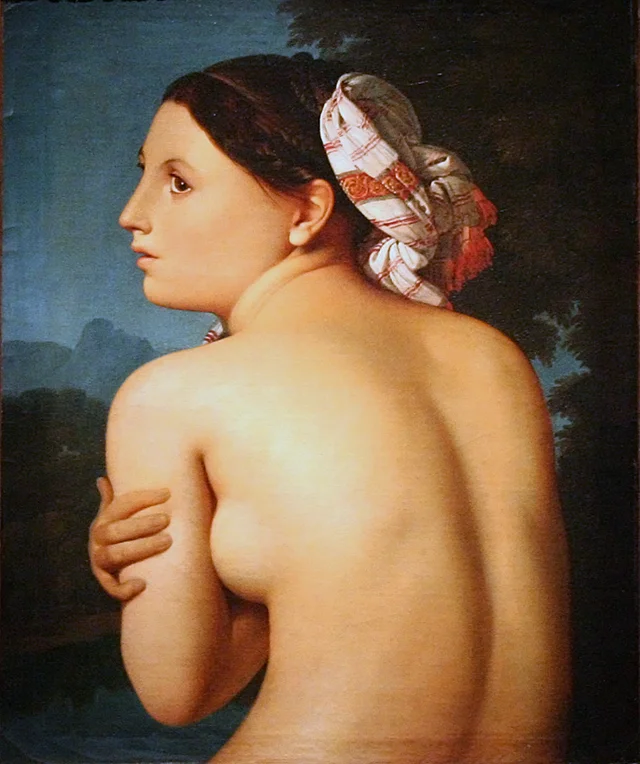 Die Badende (Halbfigur)Jean-Auguste-Dominique Ingres, 1807
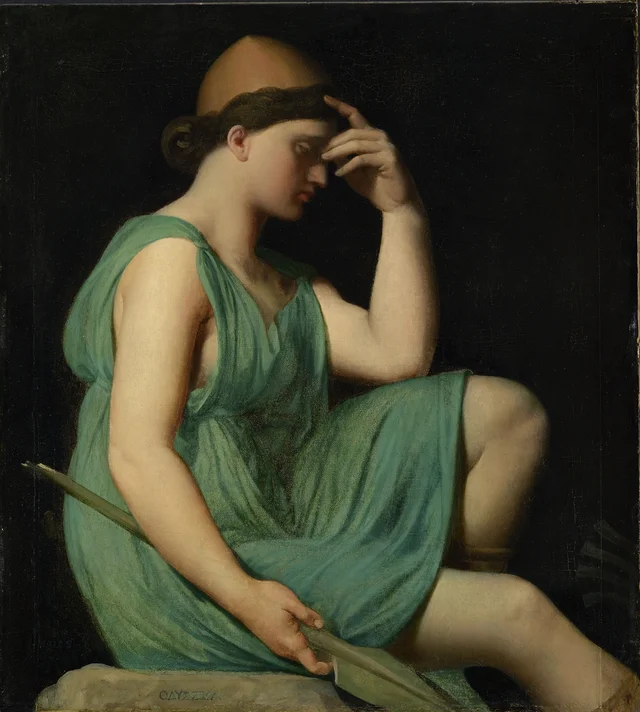 Die OdysseeJean-Auguste-Dominique Ingres, 1850
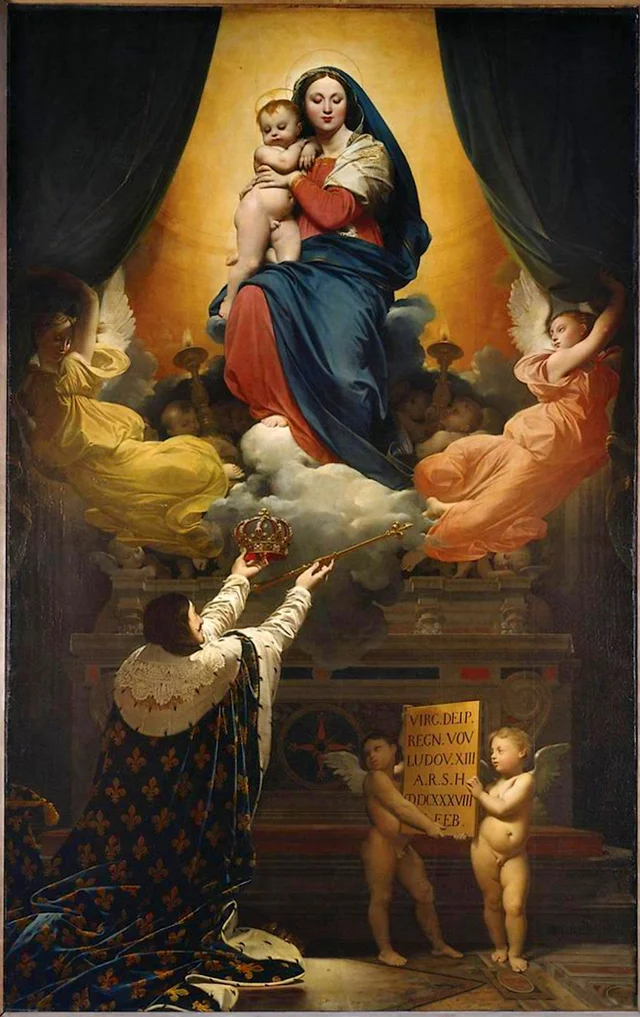 Das Gelübde Ludwigs XIII.Jean-Auguste-Dominique Ingres, 1824
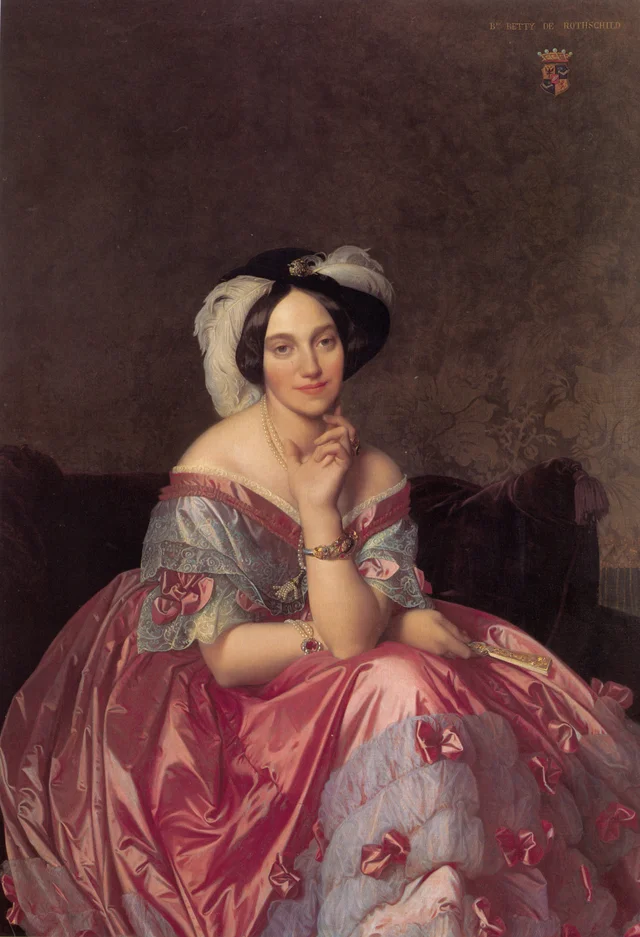 Die Baronin de RothschildJean-Auguste-Dominique Ingres, 1848
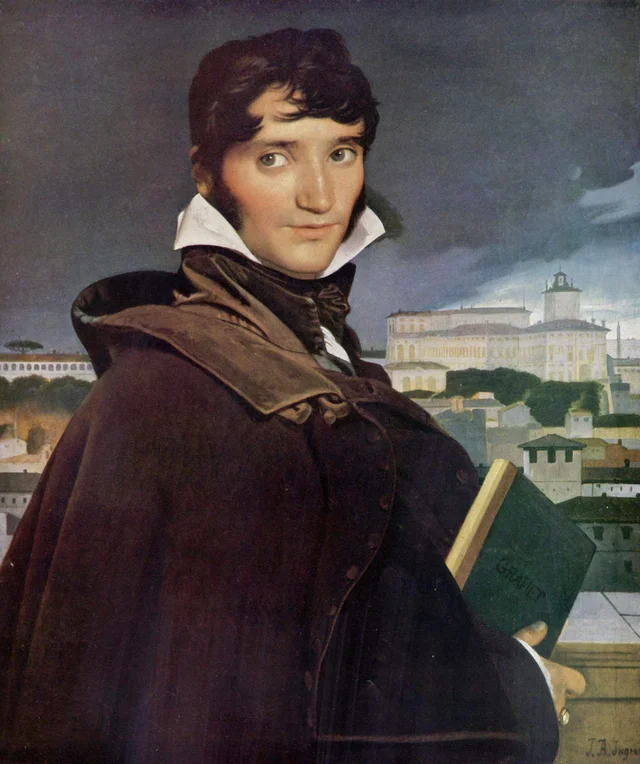 François Marius GranetJean-Auguste-Dominique Ingres, 1807
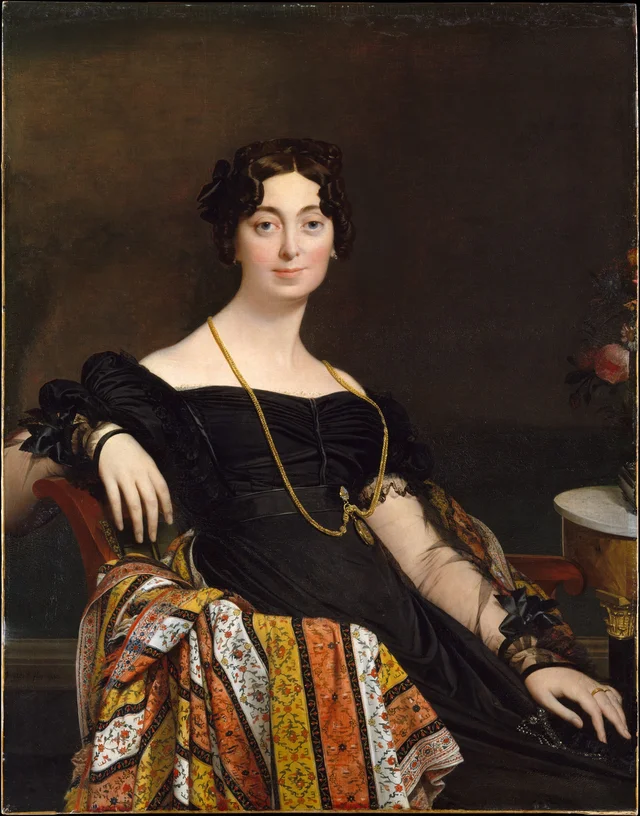 Madame Jacques-Louis Leblanc (Françoise Poncelle, 1788–1839)Jean-Auguste-Dominique Ingres, 1823
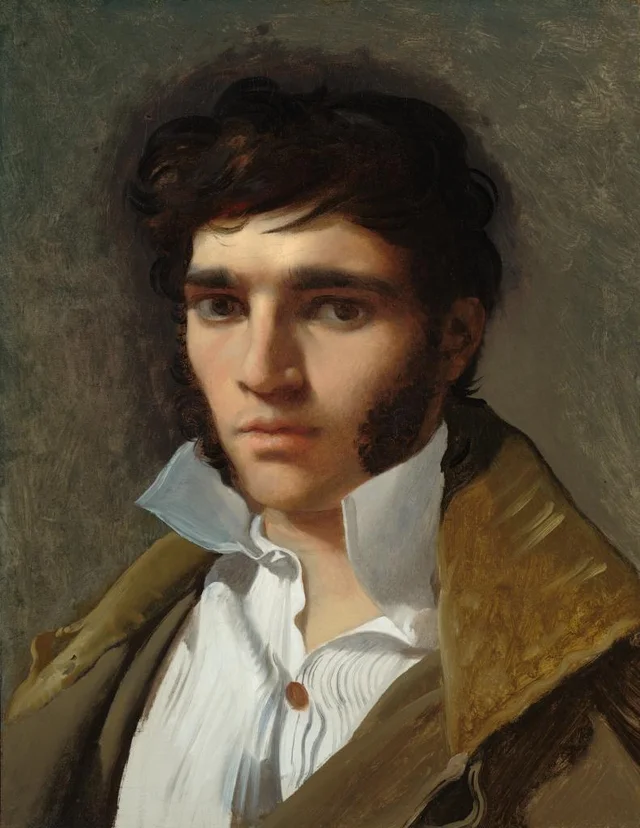 Bildnis des Paul LemoyneJean-Auguste-Dominique Ingres, 1810
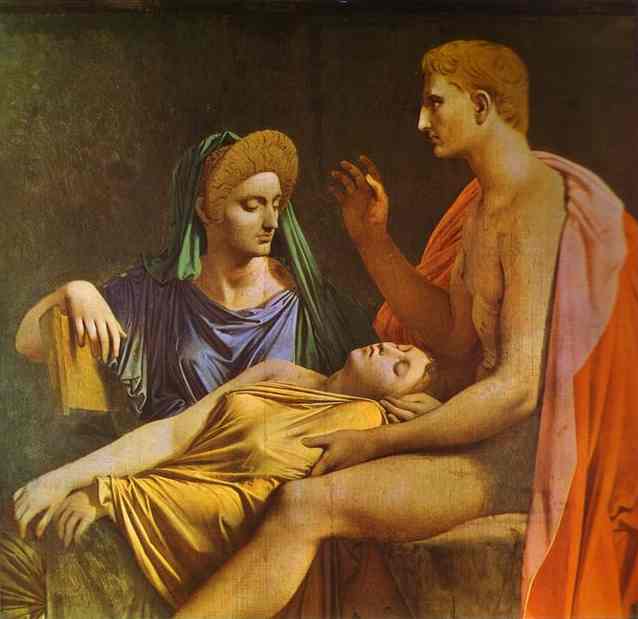 Augustus lauscht der Lesung der AeneisJean-Auguste-Dominique Ingres, 1812
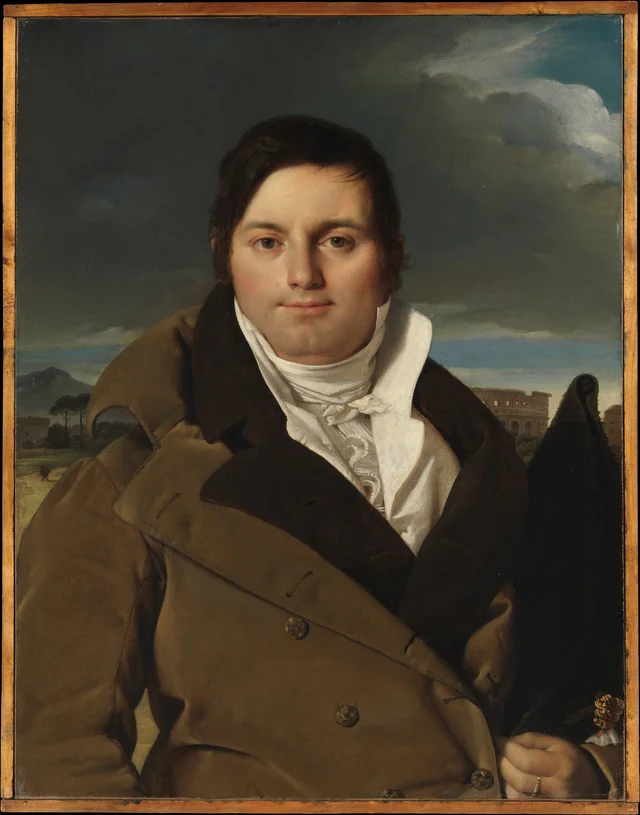 Joseph-Antoine MoltedoJean-Auguste-Dominique Ingres, 1810
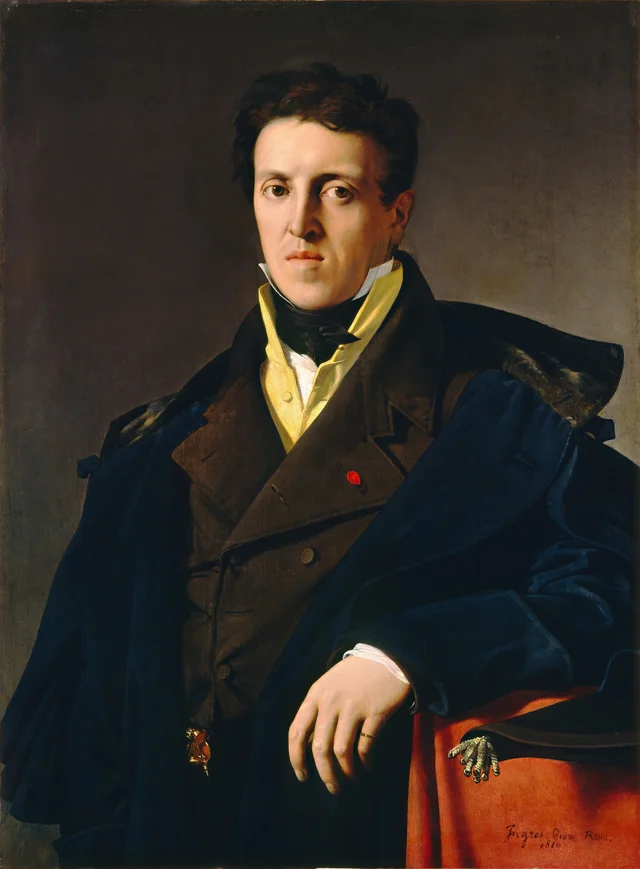 Marcotte d’ArgenteuilJean-Auguste-Dominique Ingres, 1810
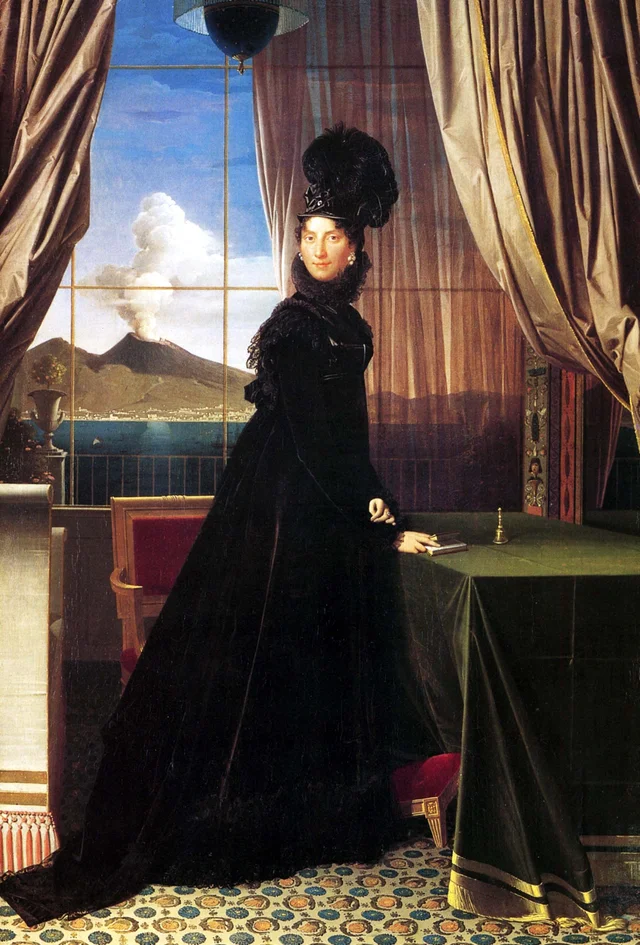 Bildnis der Caroline Murat, Königin von NeapelJean-Auguste-Dominique Ingres, 1814
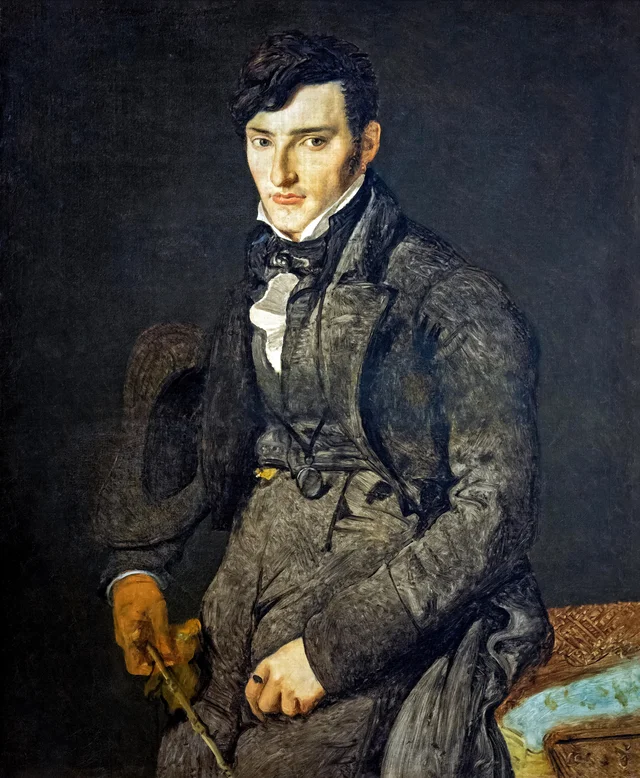 Bildnis des Jean-Pierre-François GilibertJean-Auguste-Dominique Ingres, 1805
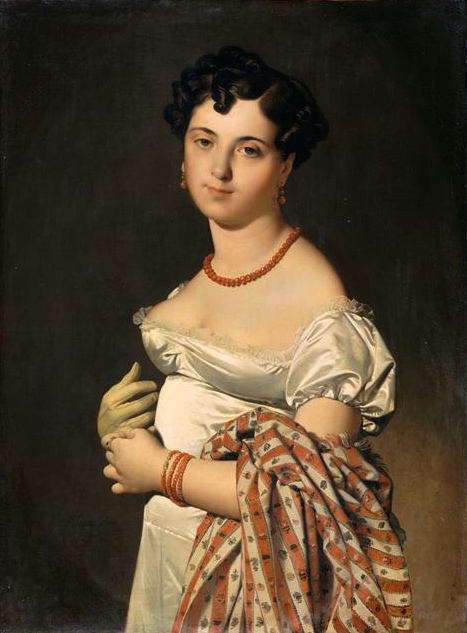 Bildnis der Madame PanckouckeJean-Auguste-Dominique Ingres, 1811
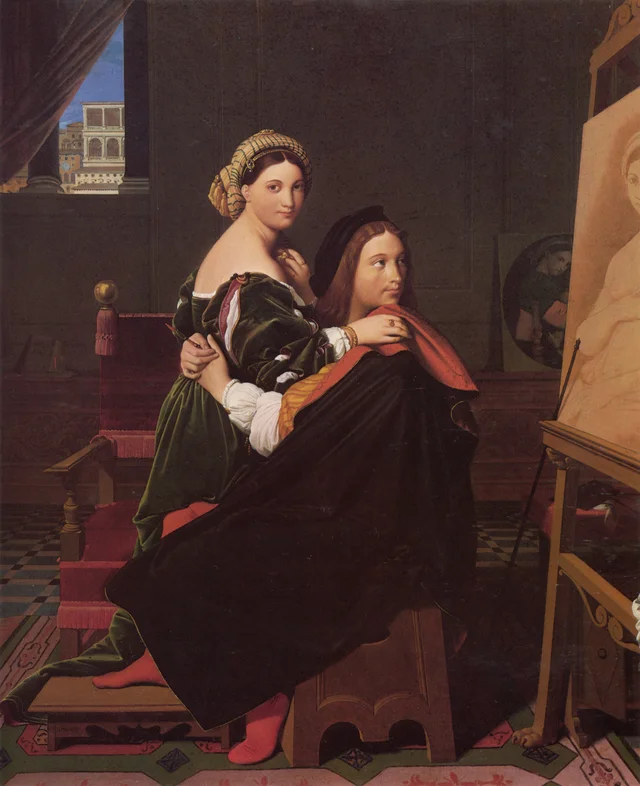 Raffael und die FornarinaJean-Auguste-Dominique Ingres, 1814
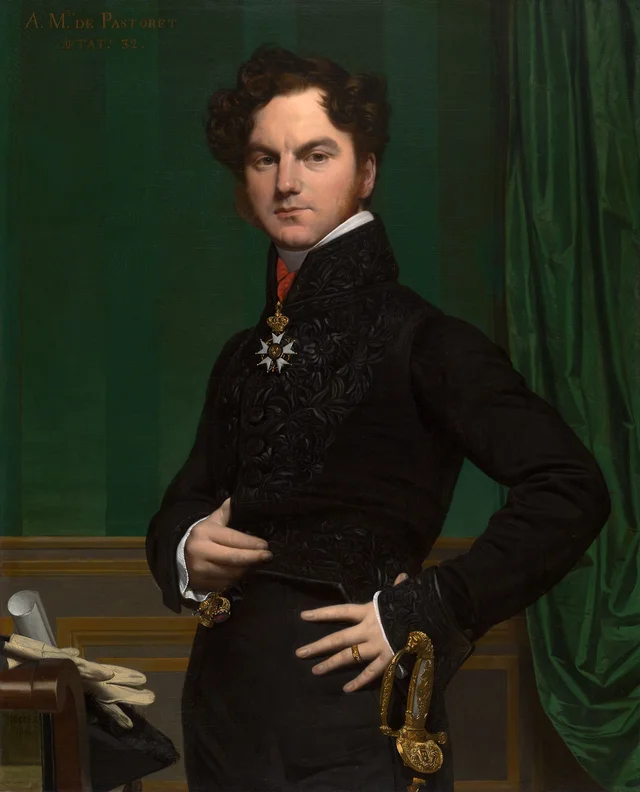 Amédée-David, Graf von PastoretJean-Auguste-Dominique Ingres, 1823
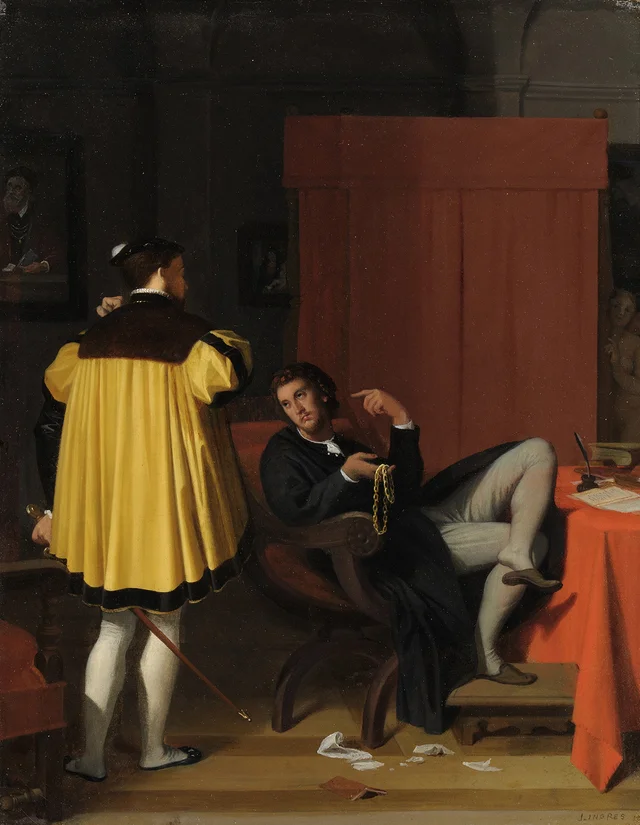 Aretino und der Gesandte Karls V.Jean-Auguste-Dominique Ingres, 1848
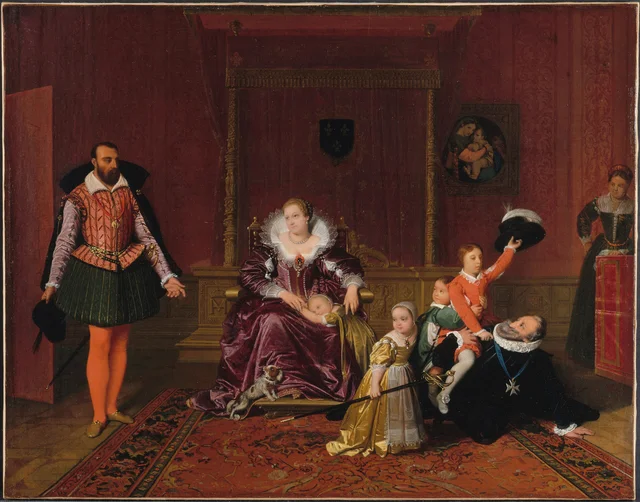 Heinrich IV. empfängt den spanischen GesandtenJean-Auguste-Dominique Ingres, 1817
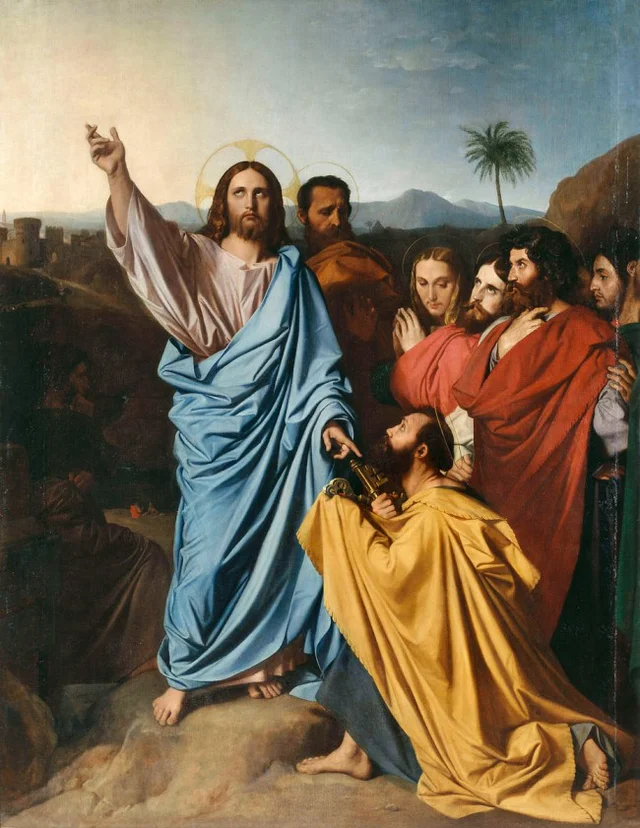 Jesus übergibt Petrus die SchlüsselJean-Auguste-Dominique Ingres, 1820
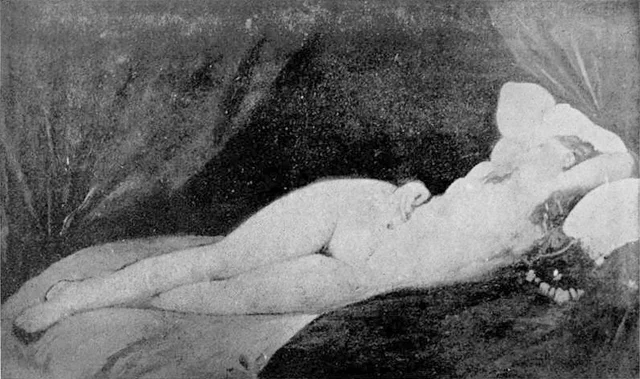 Die Schläferin von NeapelJean-Auguste-Dominique Ingres, 1809
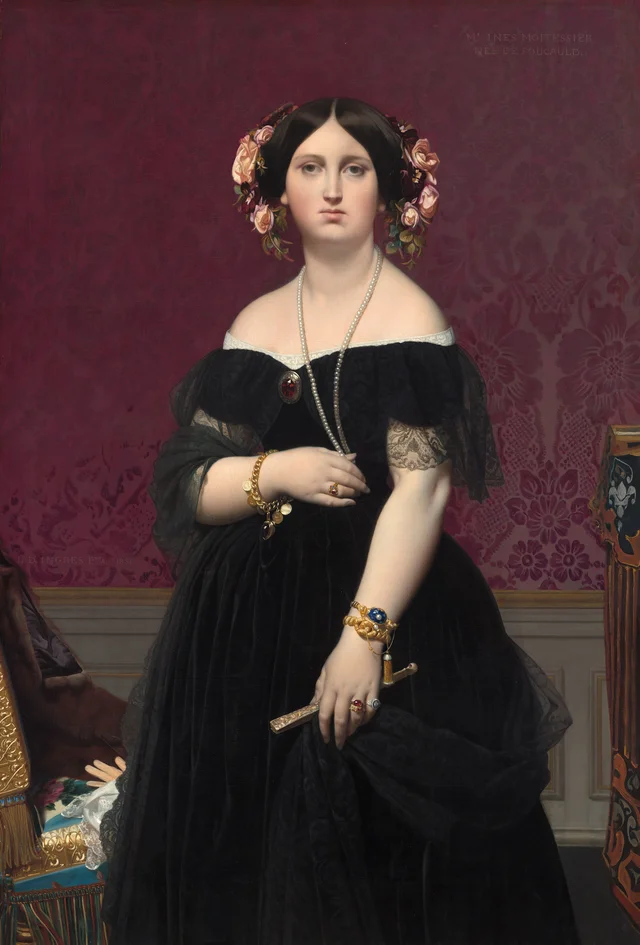 Madame MoitessierJean-Auguste-Dominique Ingres, 1851
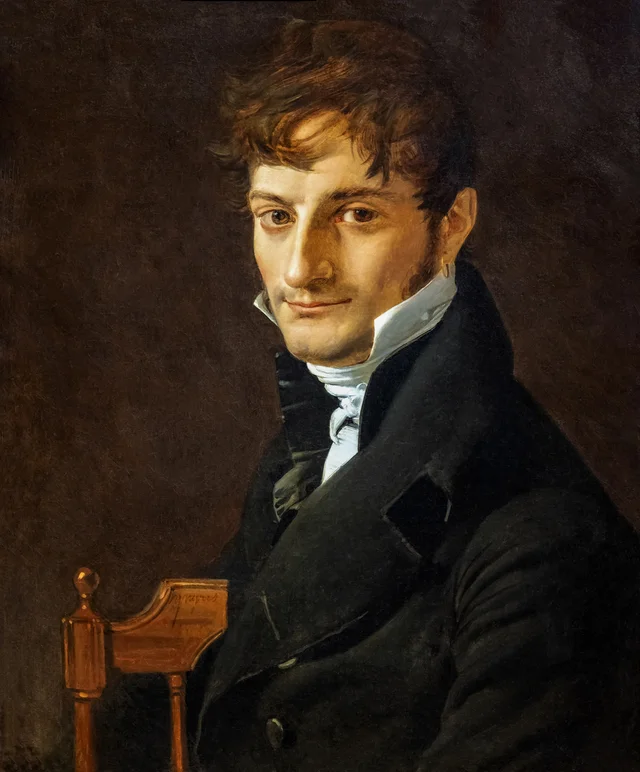 Bildnis von Belvèze-FoulonJean-Auguste-Dominique Ingres, 1805