
The story
The Louvre began as a fortress. Philip II raised it on the right bank of the Seine around 1190 to guard medieval Paris, and over the following centuries French kings rebuilt it into a royal palace, until Louis XIV moved his court to Versailles in 1682 and left the half-finished halls to the royal collection and the artists lodged inside.
The Revolution turned it into a public museum. On 10 August 1793 the Muséum central des arts opened its doors, showing the confiscated art of the crown and the church to any citizen who wished to walk in. Napoleon filled it with the spoils of his campaigns and briefly renamed it after himself. Much was returned after Waterloo, but the idea held, a national collection arranged for study and free to the public.
Today the Louvre holds more than 35,000 works, from the Venus de Milo to Géricault's Raft of the Medusa. The crowds, though, press toward one small portrait. In August 1911 it vanished: Vincenzo Peruggia, an Italian handyman who had worked in the museum, lifted Leonardo's Mona Lisa off the wall and carried it out under his coat. For two years the frame hung empty while visitors came to stare at the gap, and the painting returned only in 1913, after Peruggia tried to sell it to a dealer in Florence. I. M. Pei's glass pyramid, set in the courtyard in 1989, now marks the entrance.
More articles

Collection
1,174 works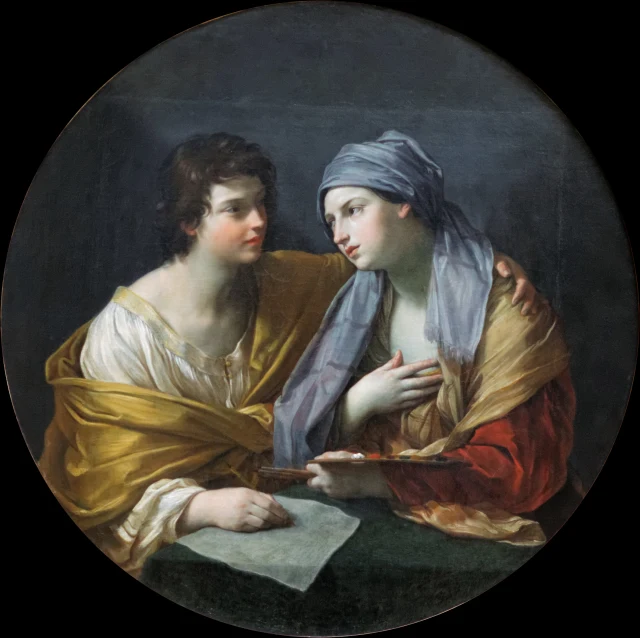 The Union of Drawing and ColorGuido Reni, 1623
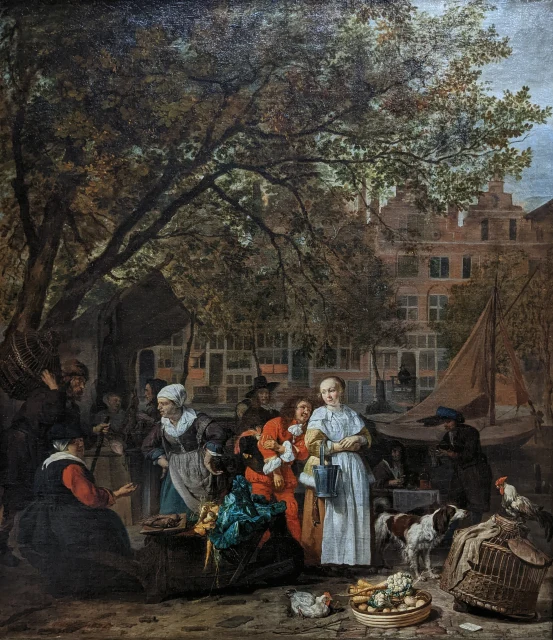 The Vegetable Market in AmsterdamGabriel Metsu, 1660
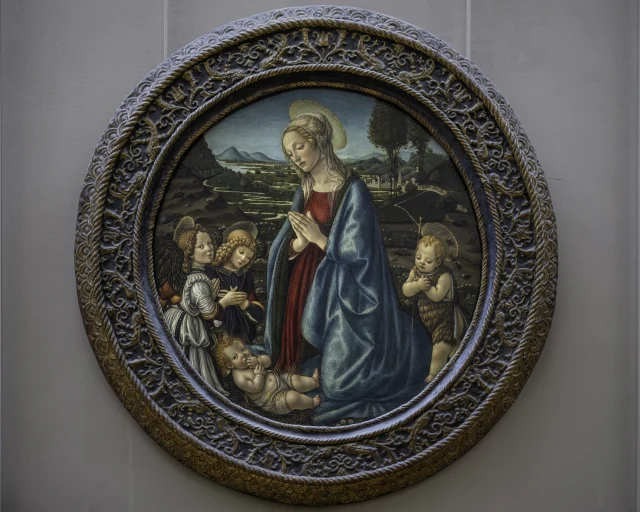 The Virgin Adoring the Child with the Infant Saint John the Baptist and Two AngelsFrancesco Botticini, 1487
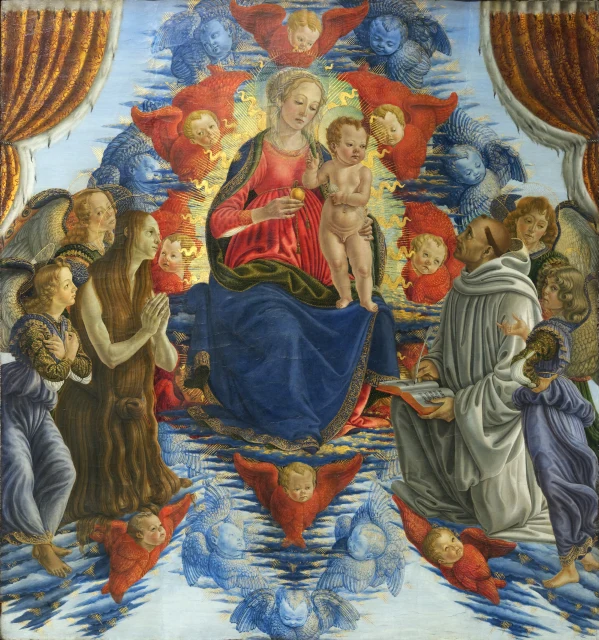 The Virgin and Child in Glory with Cherubim, Seraphim, Four Angels, Saint Mary Magdalene and Saint Bernard of ClairvauxFrancesco Botticini, 1487
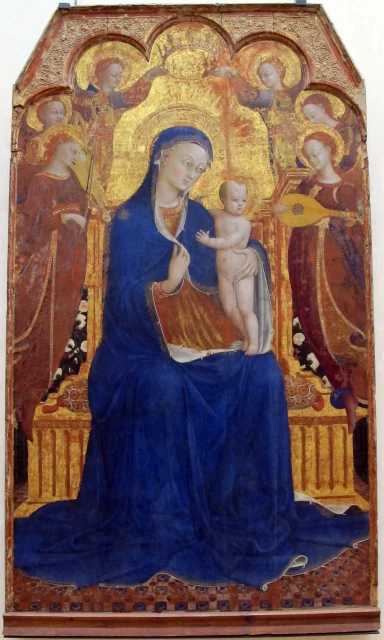 The Virgin and Child Surrounded by Six AngelsSassetta, 1440
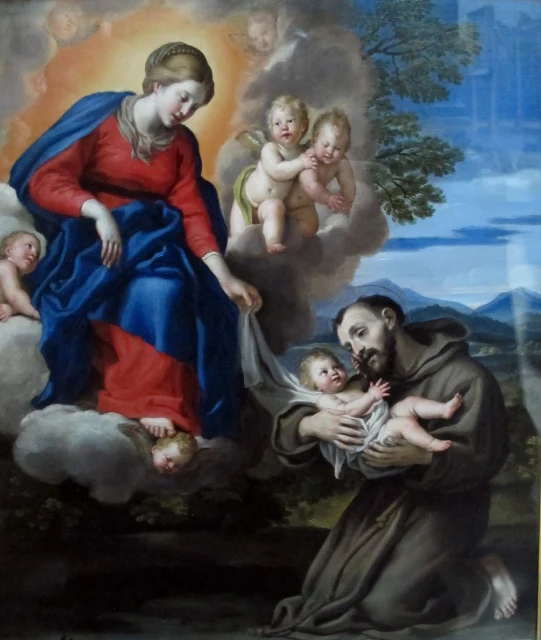 The Virgin and Child with Saint FrancisDomenichino, 1623
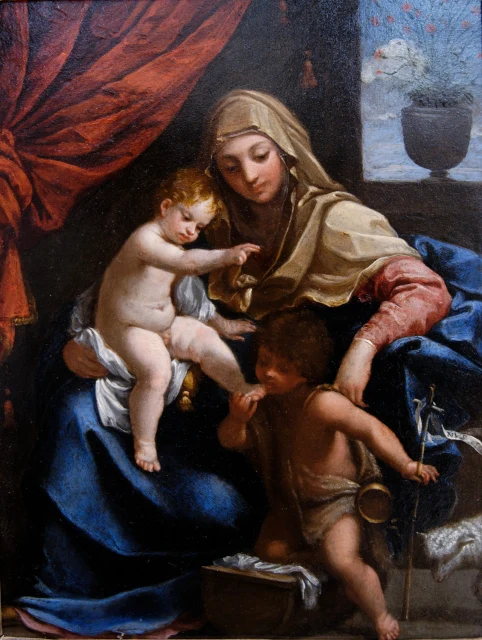 The Virgin and Child with the Infant Saint John the BaptistGuido Reni, 1607
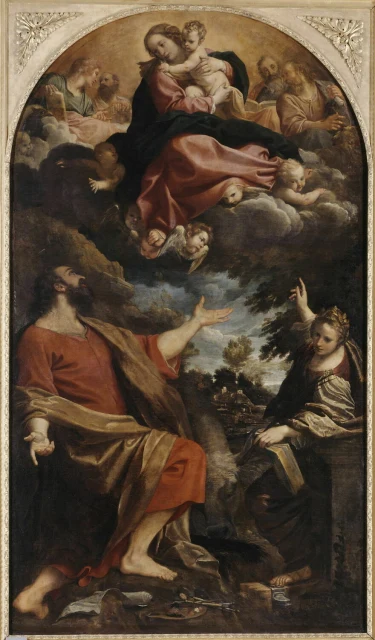 The Virgin Appearing to Saint Luke and Saint CatherineAnnibale Carracci, 1592
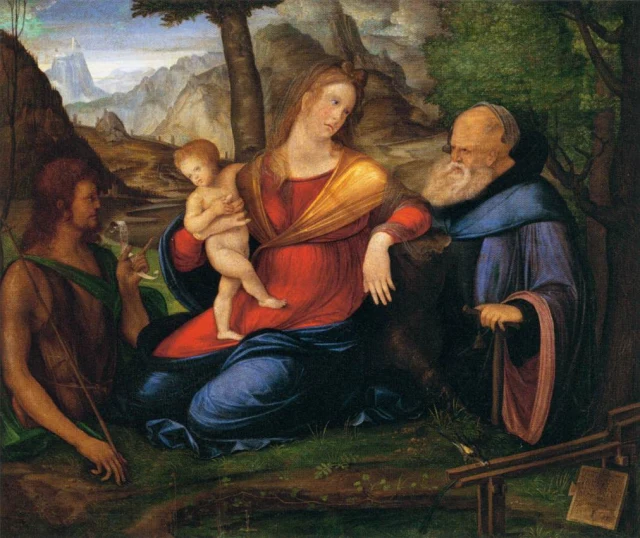 The Virgin at the FountainJacopo de' Barbari, 1500
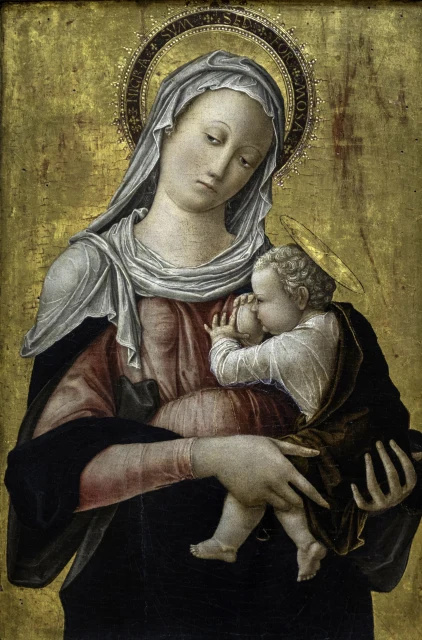 The Virgin Nursing the ChildBartolomeo Vivarini, 1450
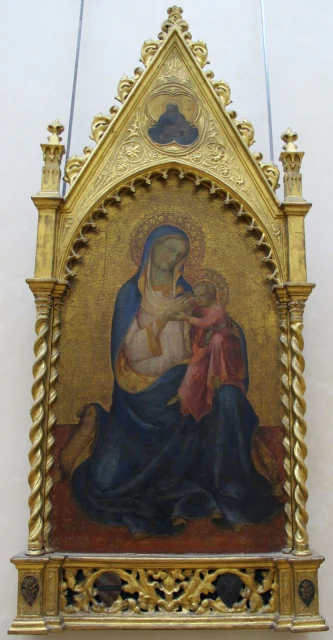 The Virgin of Humility Nursing the ChildWorkshop of Lorenzo Monaco, 1400
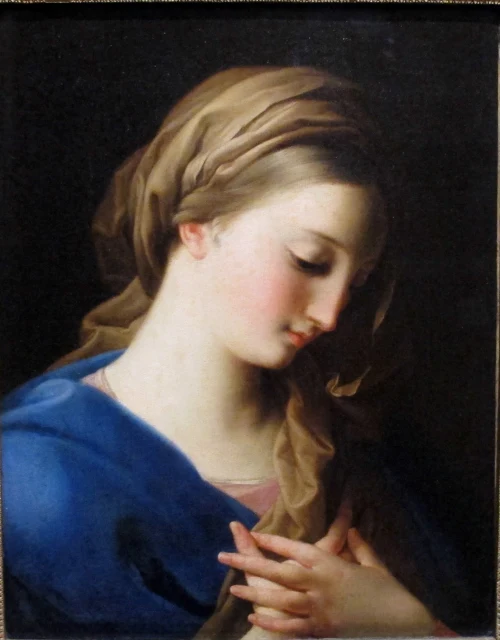 The Virgin of the AnnunciationPompeo Batoni, 1737
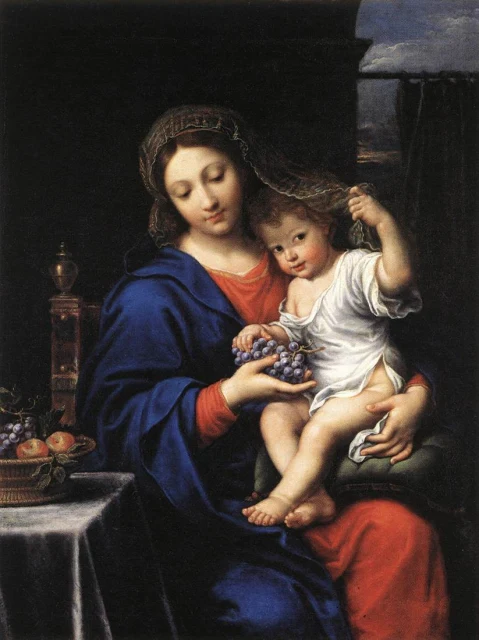 The Virgin of the GrapesPierre Mignard I, 1656
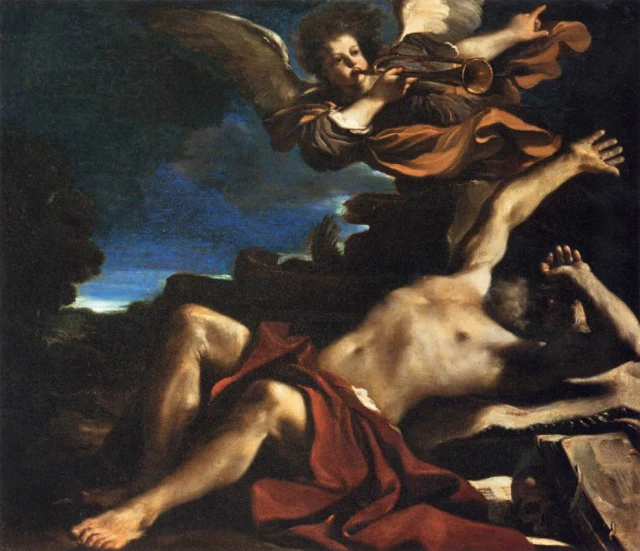 The Vision of Saint JeromeGuercino, 1619
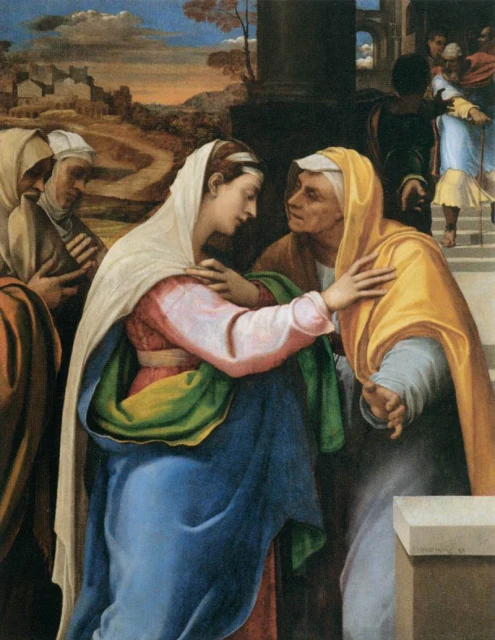 The VisitationSebastiano del Piombo, 1519
 The Vow to LoveJean-Honoré Fragonard, 1780
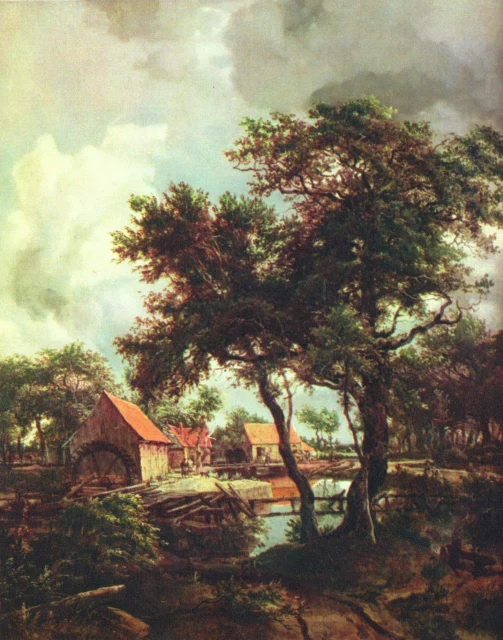 The WatermillMeindert Hobbema, 1665
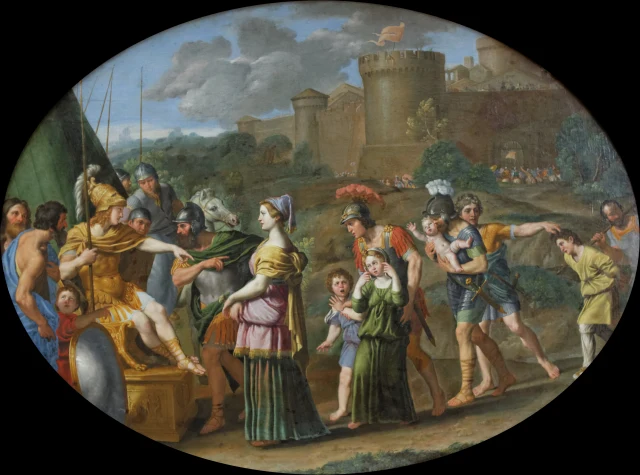 Timoclea Brought Captive before AlexanderDomenichino, 1615
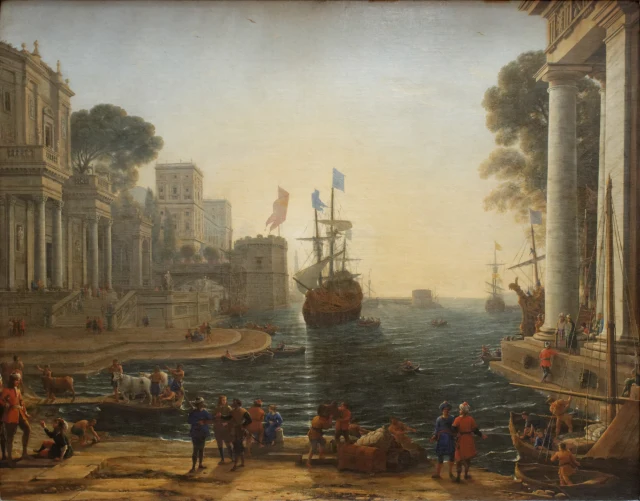 Ulysses Returns Chryseis to Her FatherClaude Lorrain, 1644
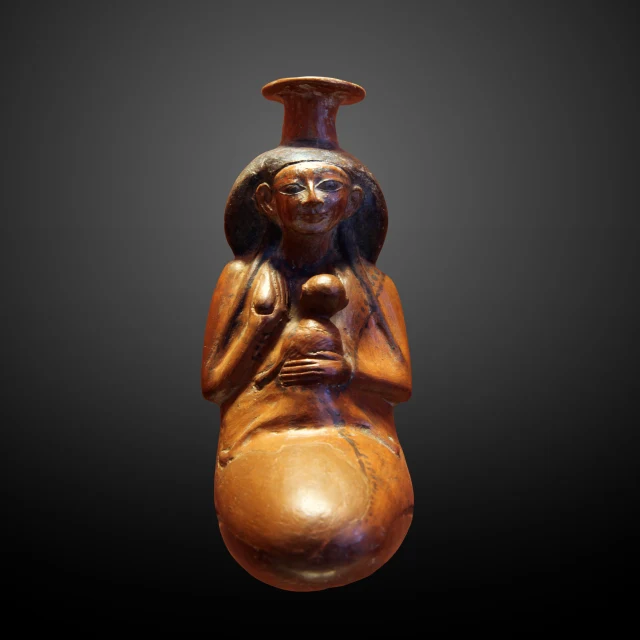 Vase in the Form of a Woman Nursing a ChildUnknown Egyptian artist (18th Dynasty), -1482
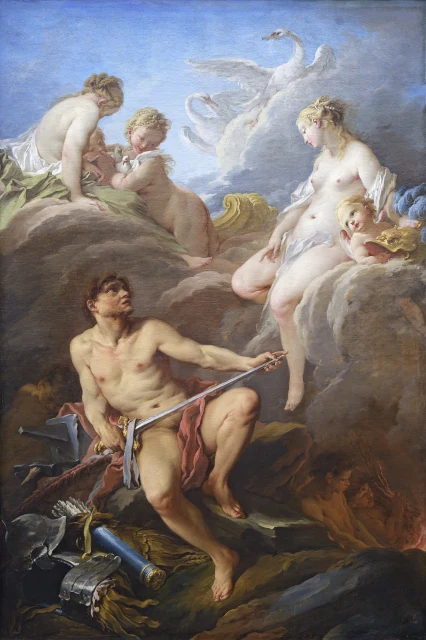 Venus Asking Vulcan for Arms for AeneasFrançois Boucher, 1732
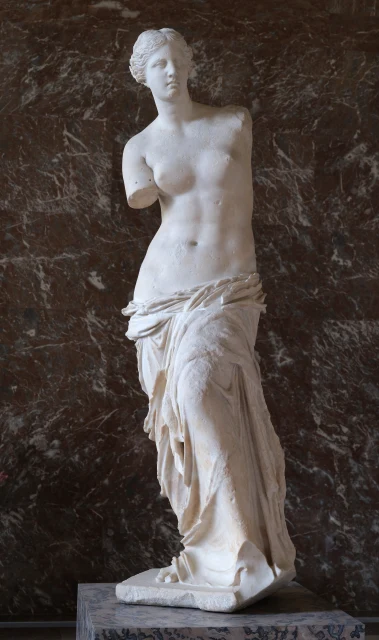 Venus de MiloAttributed to Alexandros of Antioch, -137
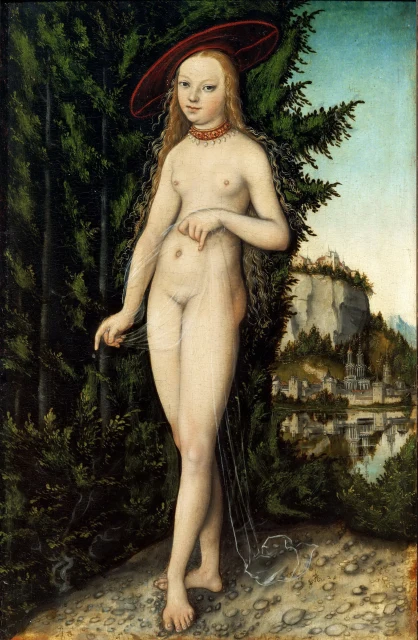 Venus in a LandscapeLucas Cranach the Elder, 1529
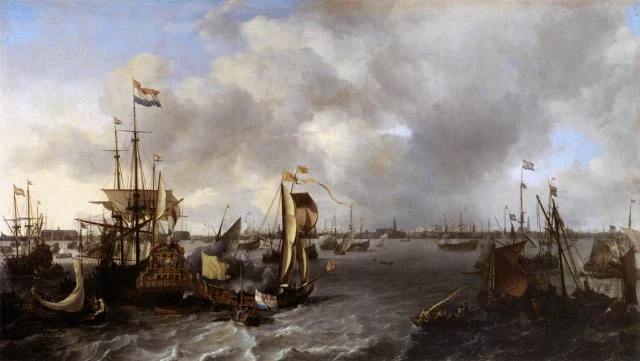 View of Amsterdam with Ships on the IJLudolf Bakhuizen, 1666
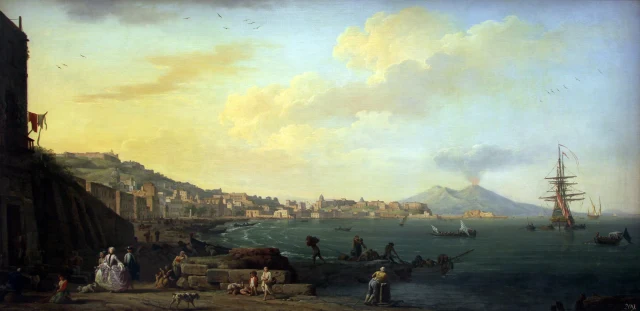 View of Naples with Mount VesuviusJoseph Vernet, 1748