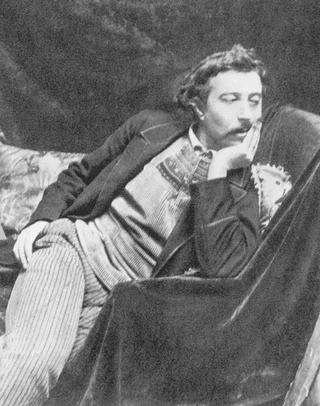
ポール・ゴーギャン
1848–1903 · フランス · ポスト印象派
ストーリー
30代半ばになるまで、ポール・ゴーギャンはパリの株式仲買人で、良い給料と、デンマーク人の妻、そして5人の子どもを持つ身だった。裕福な男の趣味として印象派の絵画を蒐集し、自らも絵筆をとって遊び程度に描いていた。ところが1882年、パリ株式市場が暴落し、勤め先の会社は崩壊、快適な生活もろとも消え去った。ゴーギャンはこの災難を、絵に専念してよいという許しだと受け止めた。彼はフルタイムで絵を描くことを決意し、愕然とした家族はやがて彼のもとを去っていった。
彼はブルターニュの安価な芸術家村ポン=タヴァンへ流れ着き、そこで自らを形づくる様式を作り上げた。1888年、彼は白い頭巾をかぶったブルターニュの女性たちが教会のあとに幻視を見る場面を描いた。純粋な赤一色の平面の上で、ヤコブが天使と格闘している場面である。実際の空間や自然な色彩への配慮はなく、絵は大胆な輪郭線と平坦な色の塊から築かれていた――場面というより観念だった。彼が「サンテティスム(総合主義)」と呼んだこの、想像と象徴から描くやり方は、そのまま近代美術へと流れ込んでいく。
その秋、フィンセント・ファン・ゴッホがゴーギャンを南仏アルルへ誘い、家を共にして芸術家村を始めようとした。それは9週間しか続かなかった。二人は猛烈な勢いで絵を描き、それ以上に激しく言い争い、1888年のクリスマス直前、ファン・ゴッホが自らの耳の一部を切り落とし、ゴーギャンがパリへ逃げ帰るという形で決裂を迎えた。ゴーギャンはヨーロッパからもっと遠く離れた場所を求め、1891年、太平洋のフランス植民地タヒチへ船出した。彼が半ば自分の頭の中で作り上げた楽園を探し求めてのことだった。そこで彼が見出したのは、すでに植民地化されカトリック化されたパペーテだったが、それでもそこで彼は生涯でもっとも有名な作品のいくつかを描き、1903年、さらに辺境のマルキーズ諸島で貧しいまま世を去った。
他の記事
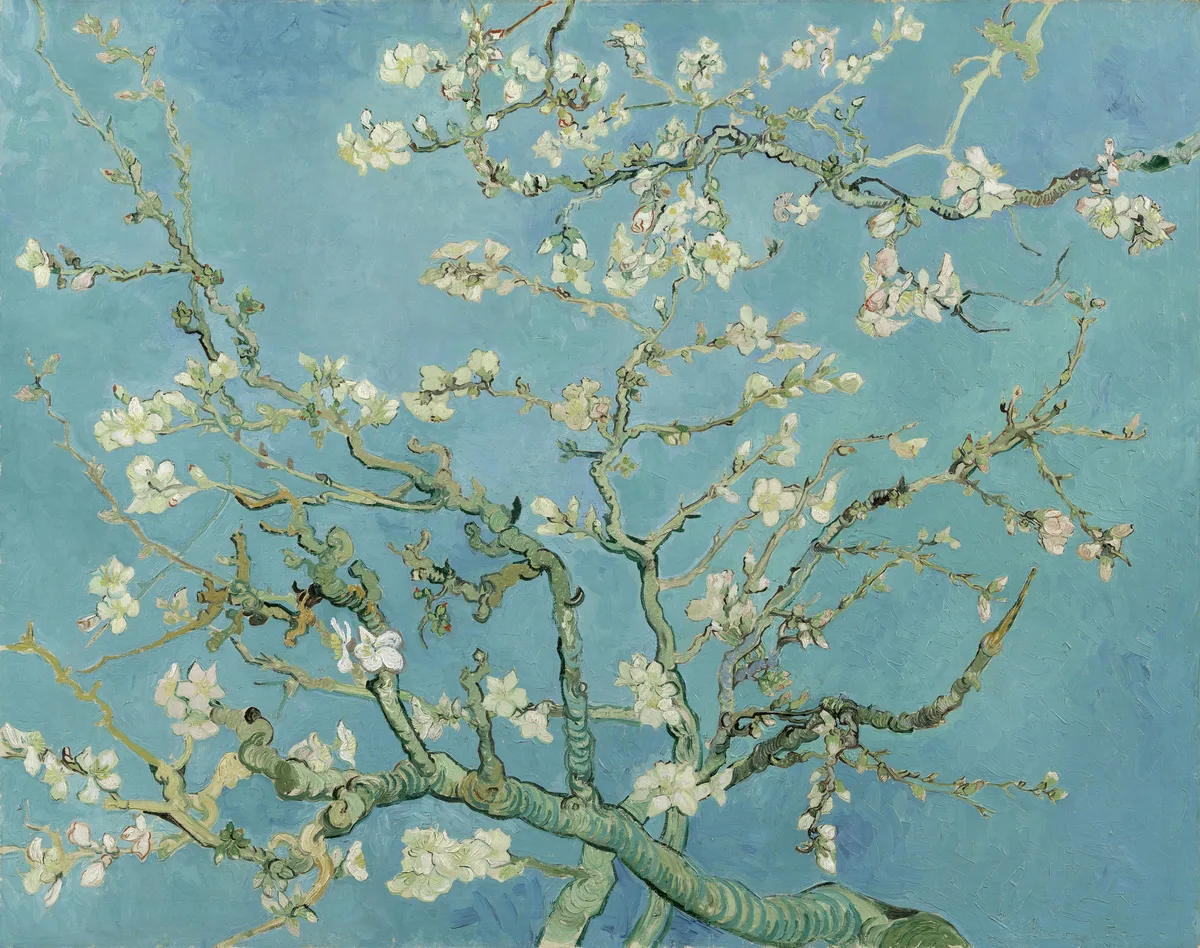
作品
158点の作品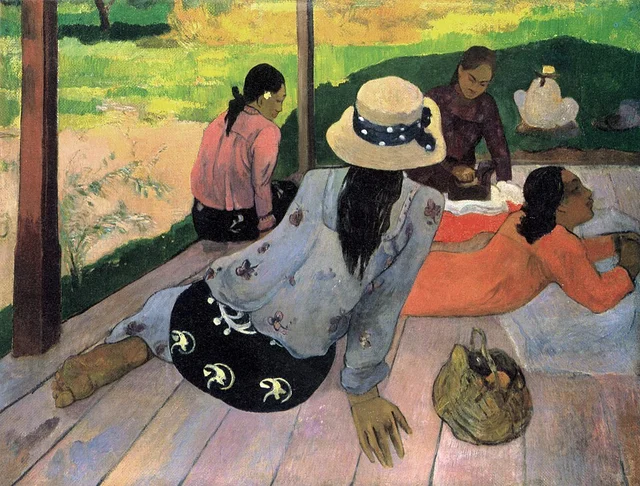 昼寝ポール・ゴーギャン, 1892
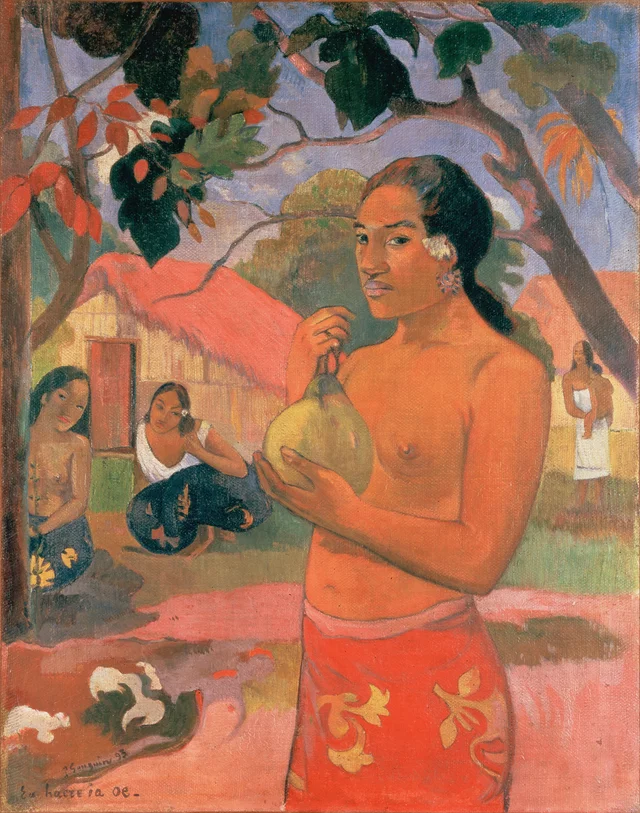 ウ・ハエレ・イア・オエポール・ゴーギャン, 1893
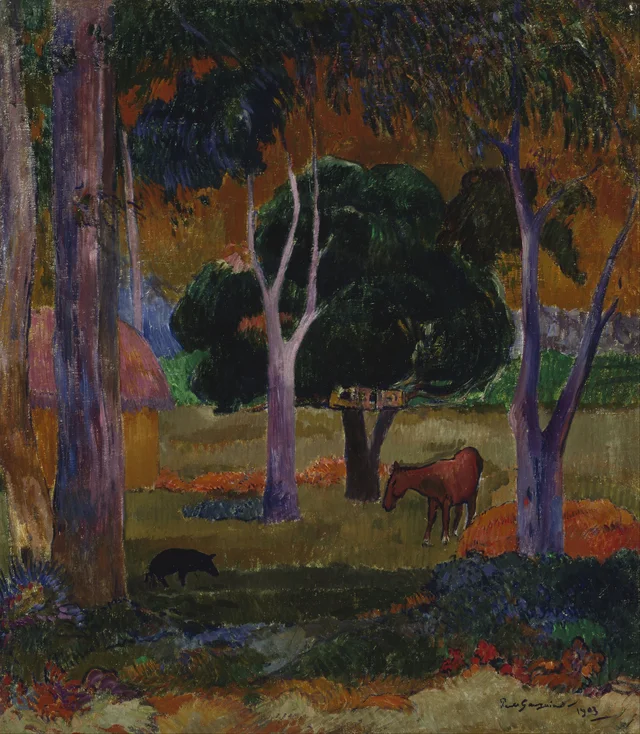 ヒバオア島ポール・ゴーギャン, 1903
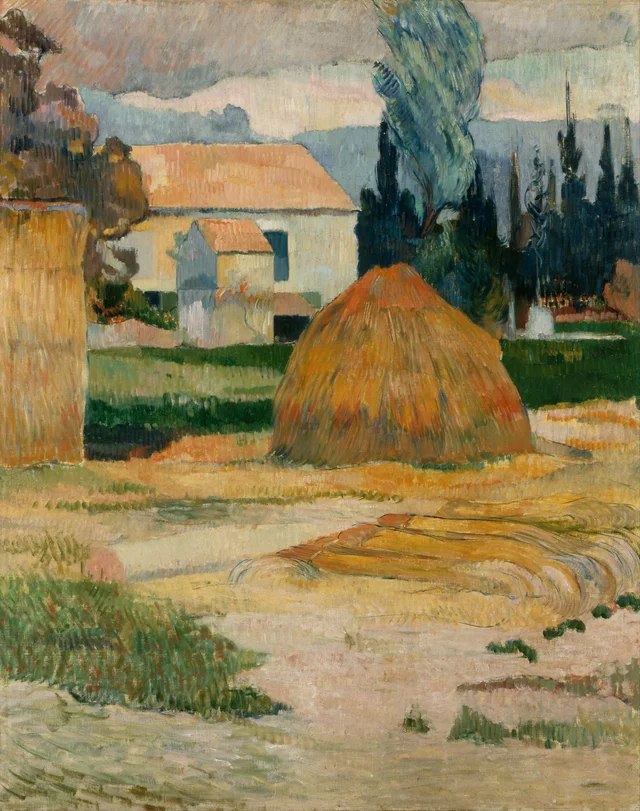 アルル近郊の風景ポール・ゴーギャン, 1888
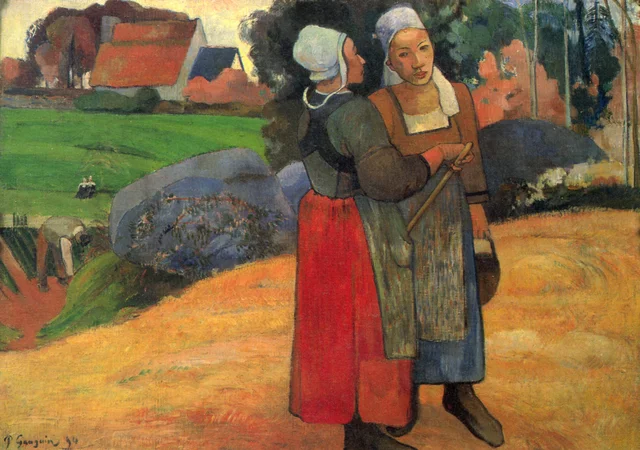 ブルターニュの農婦たちポール・ゴーギャン, 1894
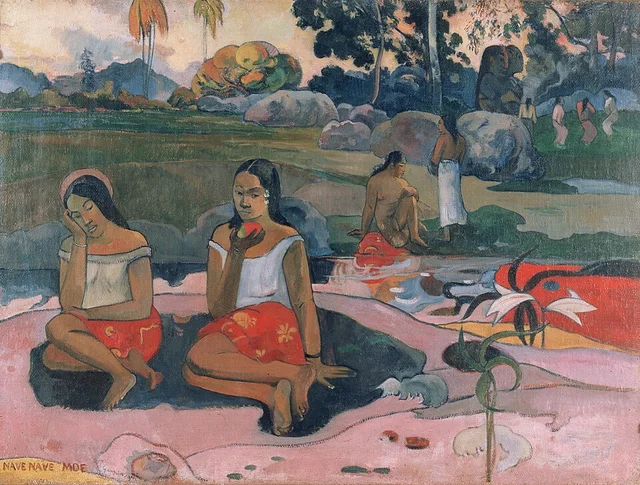 聖なる泉、甘美な夢(ナヴェ・ナヴェ・モエ)ポール・ゴーギャン, 1894
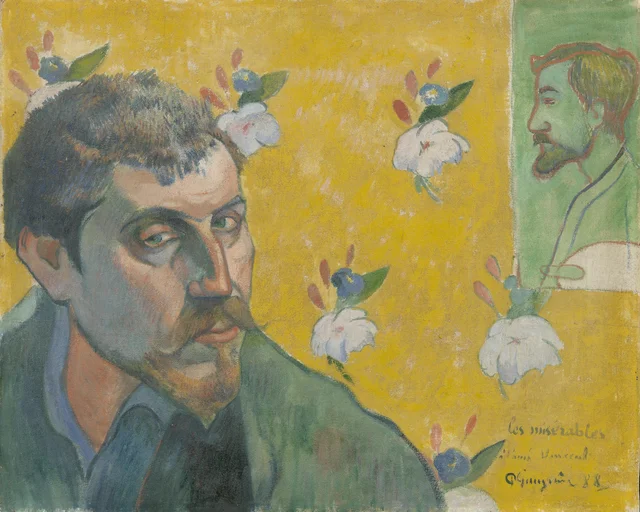 ベルナールの肖像を伴う自画像ポール・ゴーギャン, 1888
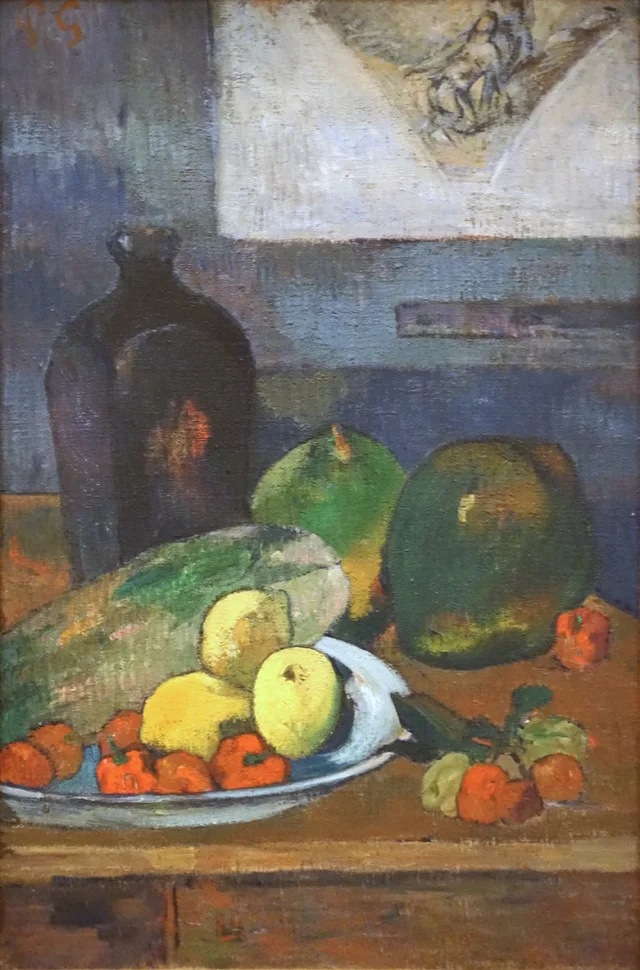 ドラクロワに倣った習作のある静物ポール・ゴーギャン, 1887
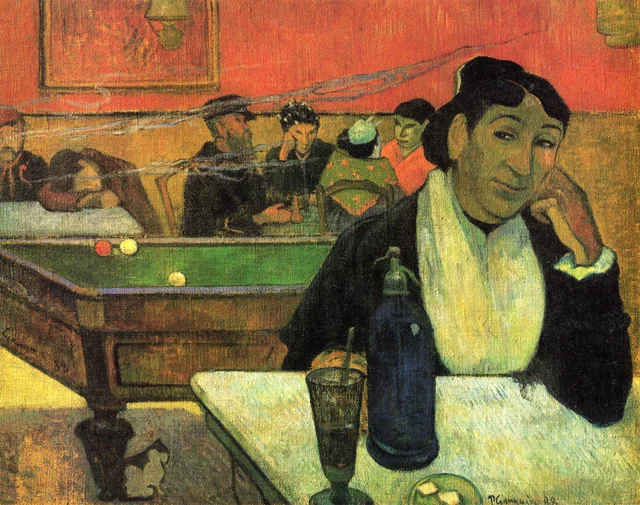 アルルの夜のカフェポール・ゴーギャン, 1888
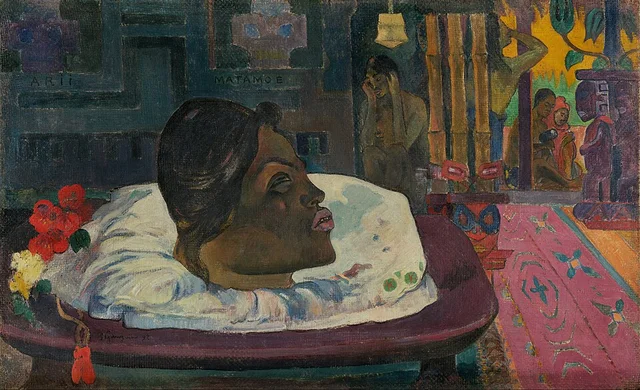 王の終焉ポール・ゴーギャン, 1892
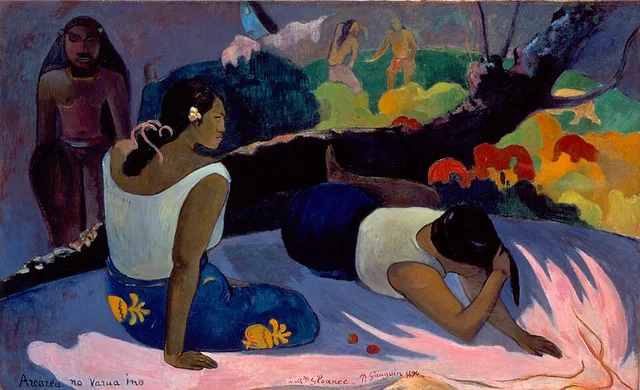 Arearea no varua inoポール・ゴーギャン, 1894
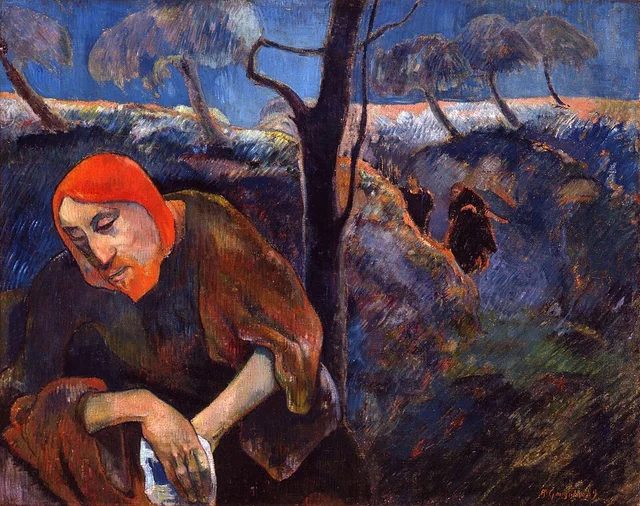 オリーブ園のキリストポール・ゴーギャン, 1889
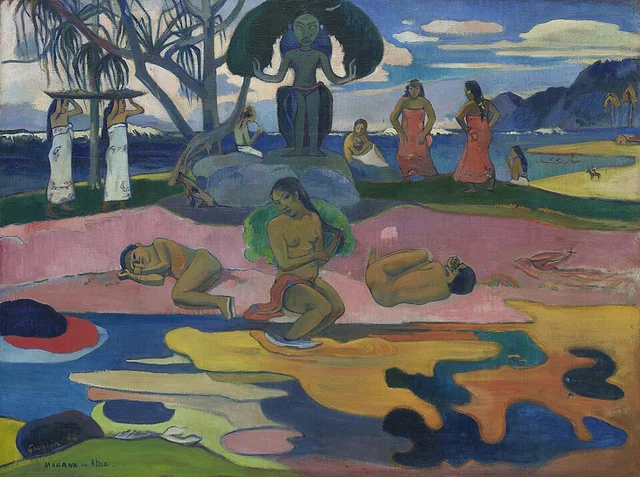 神の日(マハナ・ノ・アトゥア)ポール・ゴーギャン, 1894
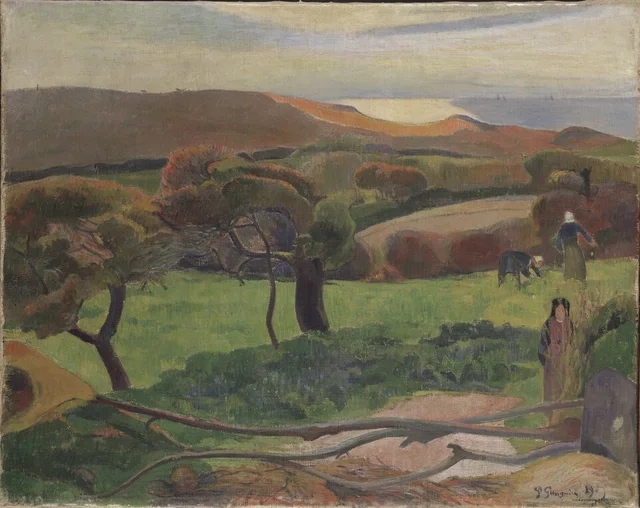 ブルターニュの風景ポール・ゴーギャン, 1889
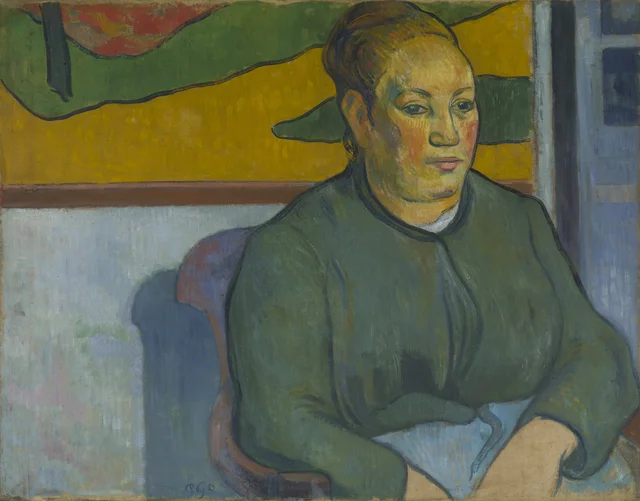 ルーラン夫人ポール・ゴーギャン, 1888
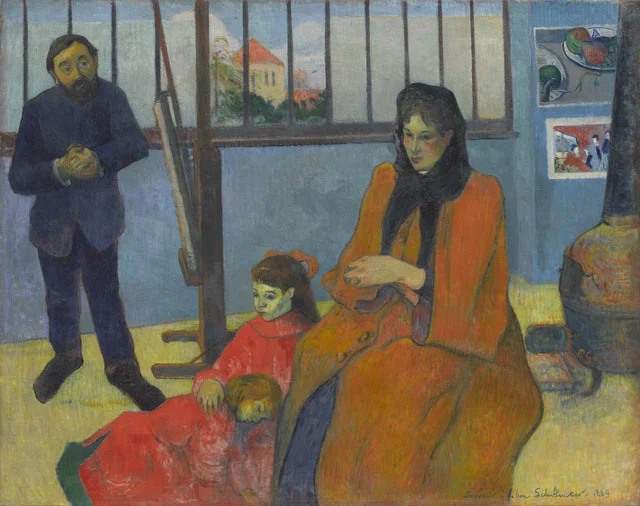 シュフネッケルのアトリエポール・ゴーギャン, 1889
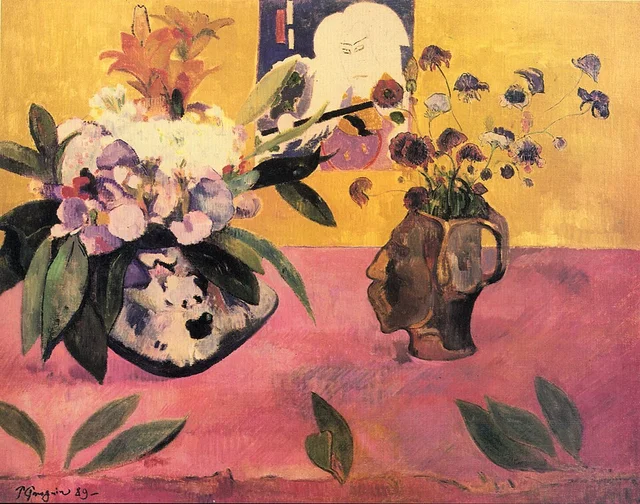 頭部形の花瓶と日本の浮世絵のある静物ポール・ゴーギャン, 1889
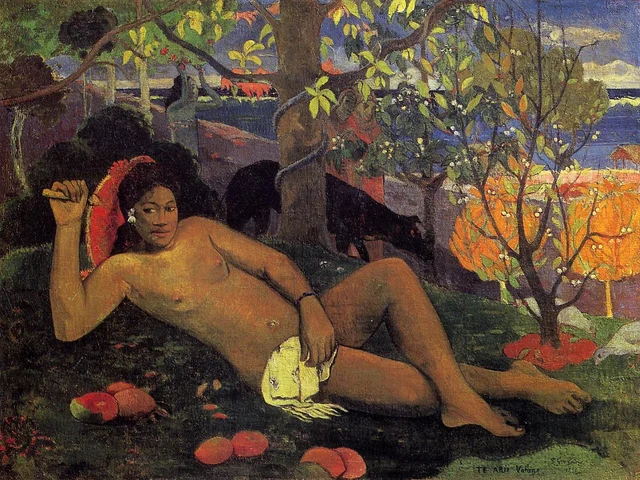 王の妻ポール・ゴーギャン, 1896
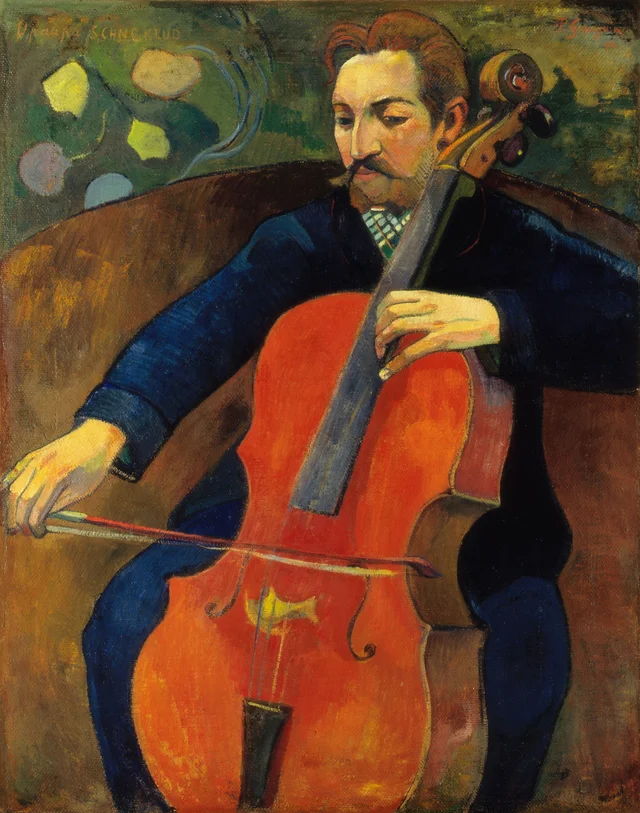 演奏者シュネクリュードポール・ゴーギャン, 1894
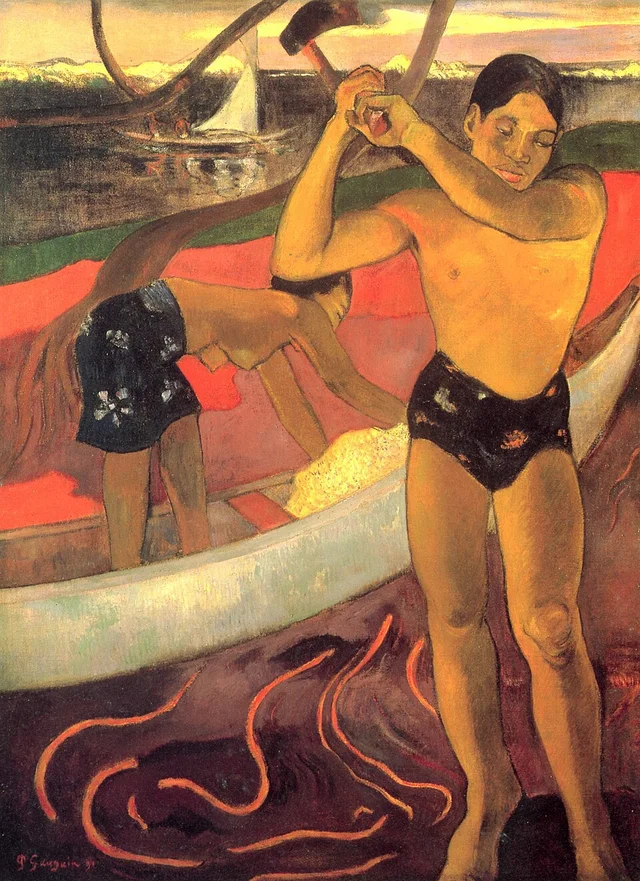 きこりポール・ゴーギャン, 1891
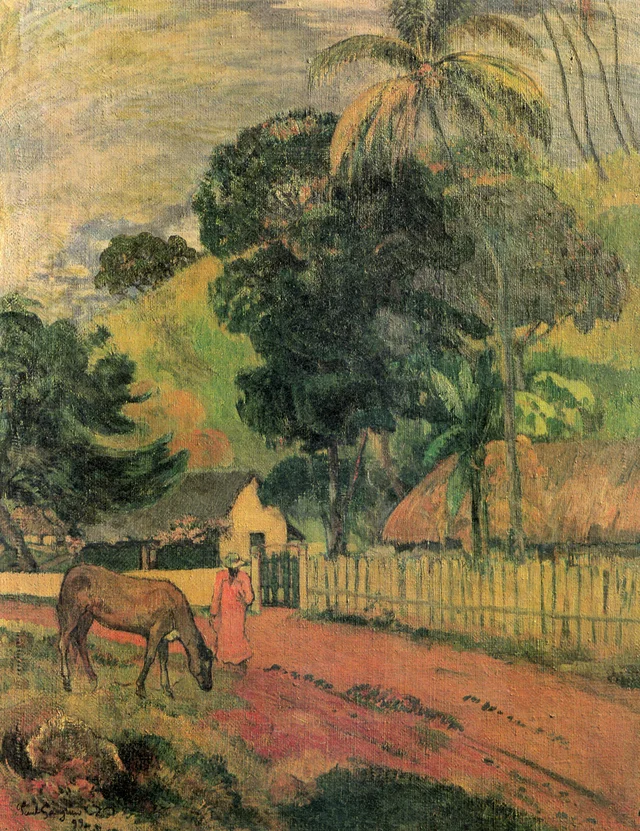 風景、道の上の馬ポール・ゴーギャン, 1899
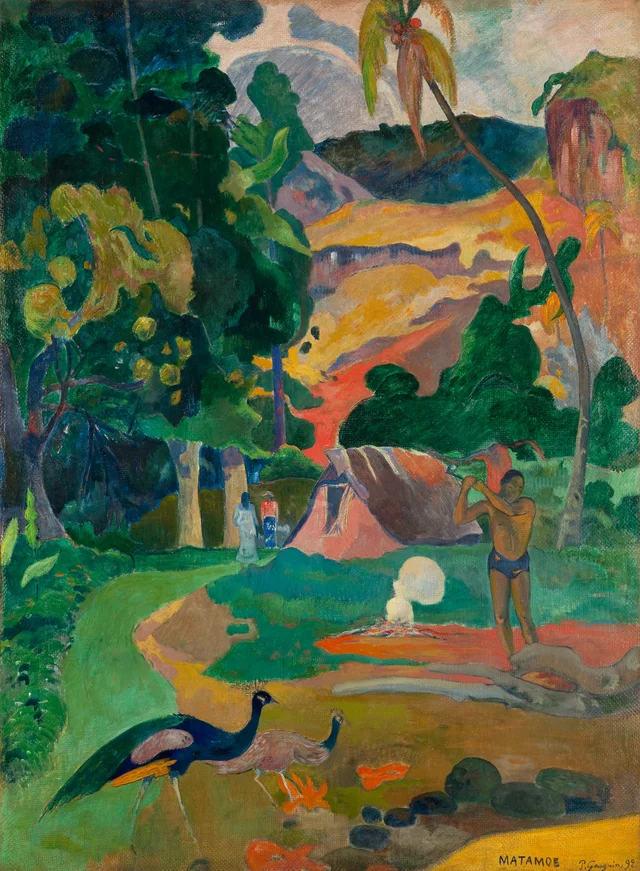 マタモエ(死)、孔雀のいる風景ポール・ゴーギャン, 1892
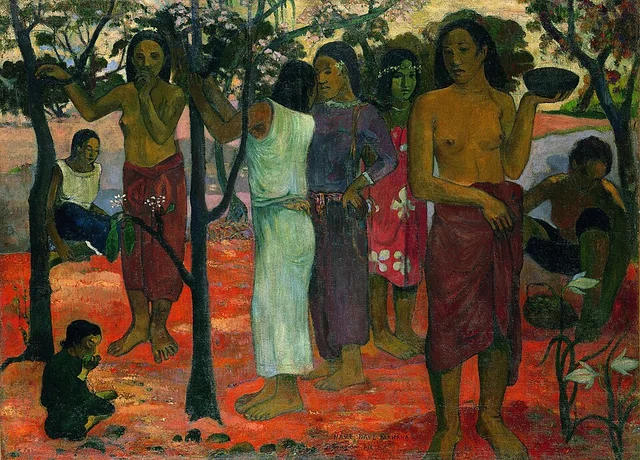 Nave Nave Mahanaポール・ゴーギャン, 1896
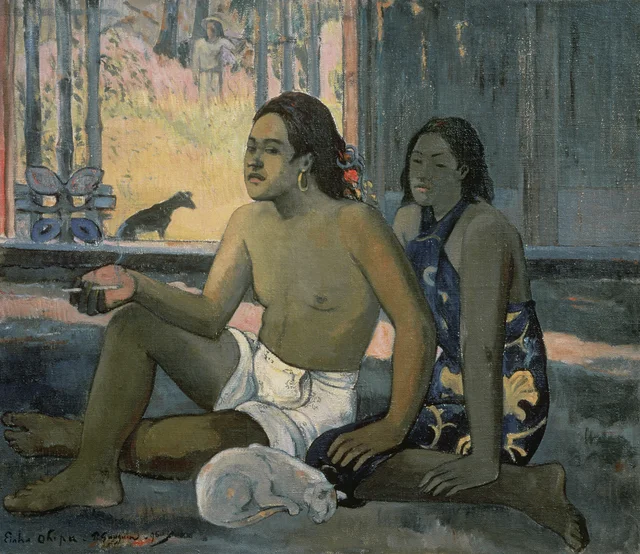 働くな(エイアハ・オヒパ)ポール・ゴーギャン, 1896
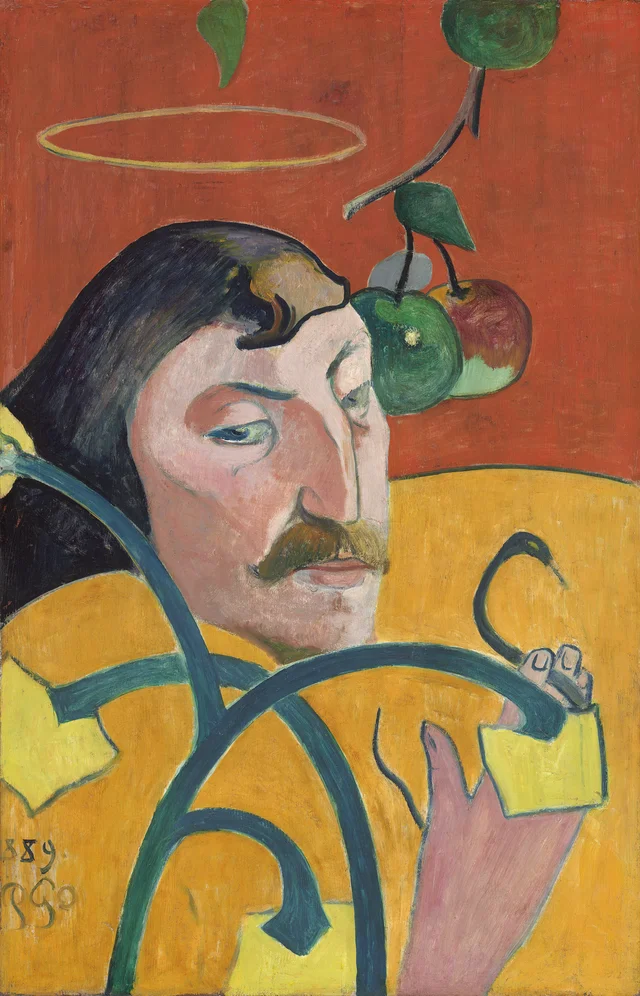 自画像ポール・ゴーギャン, 1889