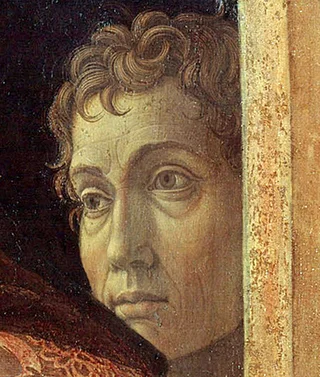
Andrea Mantegna
1431–1506 · République de Venise · Renaissance italienne
L'histoire
En 1460, Andrea Mantegna devint peintre de cour de la famille Gonzaga, seigneurs de Mantoue, une charge qu'il occupa jusqu'à la fin de sa vie, arrangement inhabituel à une époque où la plupart des peintres italiens passaient de commande en commande et de ville en ville. Entre 1465 et 1474, il décora une seule pièce du palais ducal, la Camera degli Sposi, de fresques représentant les Gonzaga, leurs courtisans, leurs chevaux et leurs chiens, enveloppés dans une architecture peinte qui semble ouvrir les murs sur de vraies loggias et sur le ciel.
Le plafond en fut la partie la plus audacieuse, une ouverture ovale peinte à l'aplomb du spectateur et cernée de personnages et de putti penchés par-dessus une balustrade peinte, comme s'ils regardaient les occupants réels de la pièce, l'une des premières fois qu'un peintre tentait un raccourci aussi abrupt à pareille échelle.
Il poussa le même procédé plus loin des décennies après, dans la Lamentation sur le Christ mort, un petit panneau montrant le corps du Christ vu des pieds vers la tête, en raccourci si prononcé que le torse et la tête se réduisent au loin tandis que les pieds blessés emplissent le premier plan. Mantegna était entré par mariage, en 1453, dans la grande famille de peintres vénitiens en épousant Nicolosia Bellini, sœur du peintre Giovanni Bellini, liant ainsi le peintre de cour de Mantoue à l'atelier qui façonnait la génération suivante de l'art vénitien.
Autres articles
 Article · 40 min de lectureLes Gallerie dell'Accademia de Venise : vingt œuvres et le chemin qui a conduit chacune jusqu'ici
 Article · 40 min de lectureLa Pinacothèque de Brera : des saisies napoléoniennes à la Grande Brera
 Article · 47 min de lectureLa Gemäldegalerie de Berlin : 20 tableaux que Berlin a achetés, perdus et divisés
 Article · 49 min de lectureCapodimonte : comment vingt œuvres sont montées sur la colline de Naples
Œuvres
76 œuvres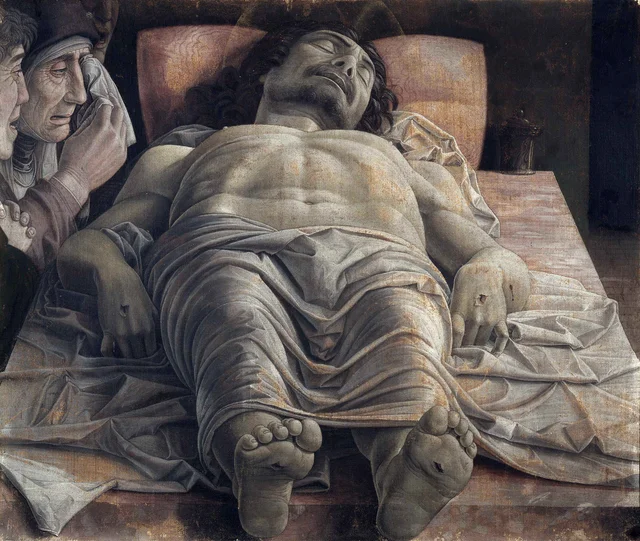 La Lamentation sur le Christ mortAndrea Mantegna, 1483
 La Mort de la ViergeAndrea Mantegna, 1462
 La Madone de la VictoireAndrea Mantegna, 1495
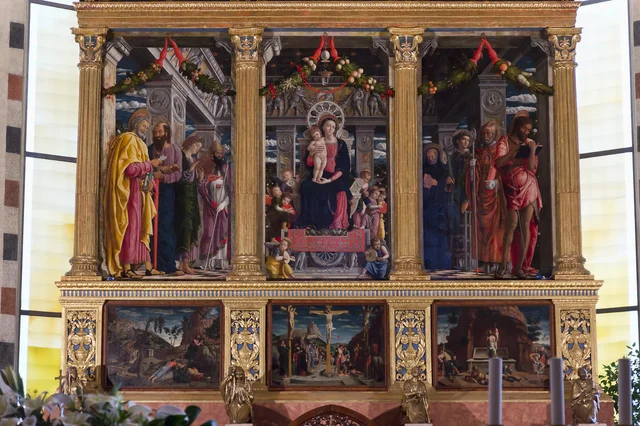 Retable de San ZenoAndrea Mantegna, 1457
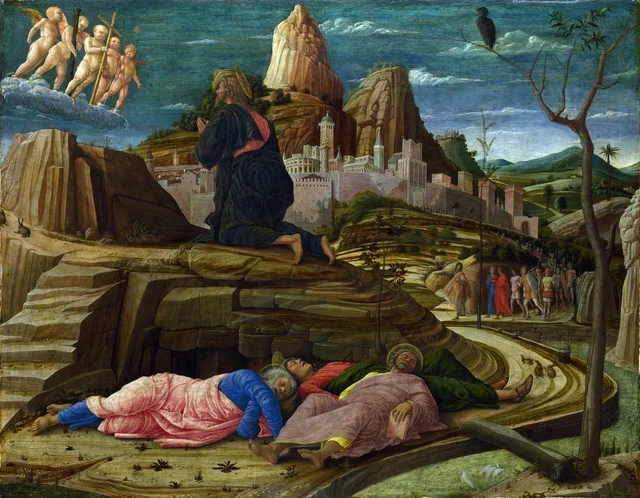 L'Agonie dans le jardinAndrea Mantegna, 1450
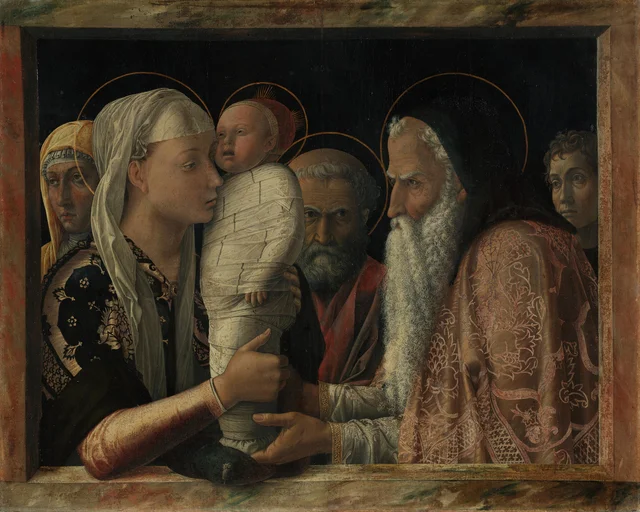 La Présentation au TempleAndrea Mantegna, 1450
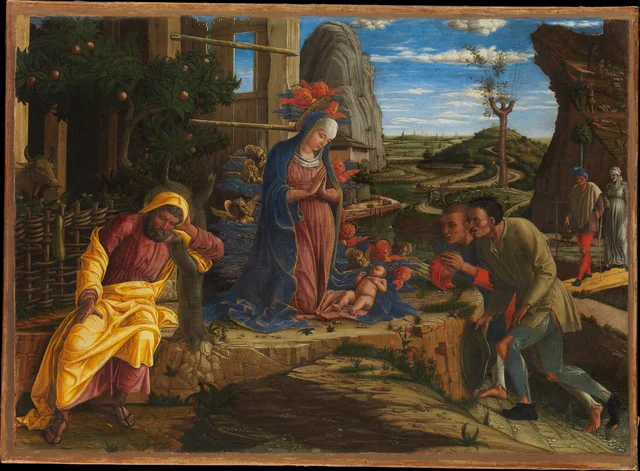 L'Adoration des bergersAndrea Mantegna, 1450
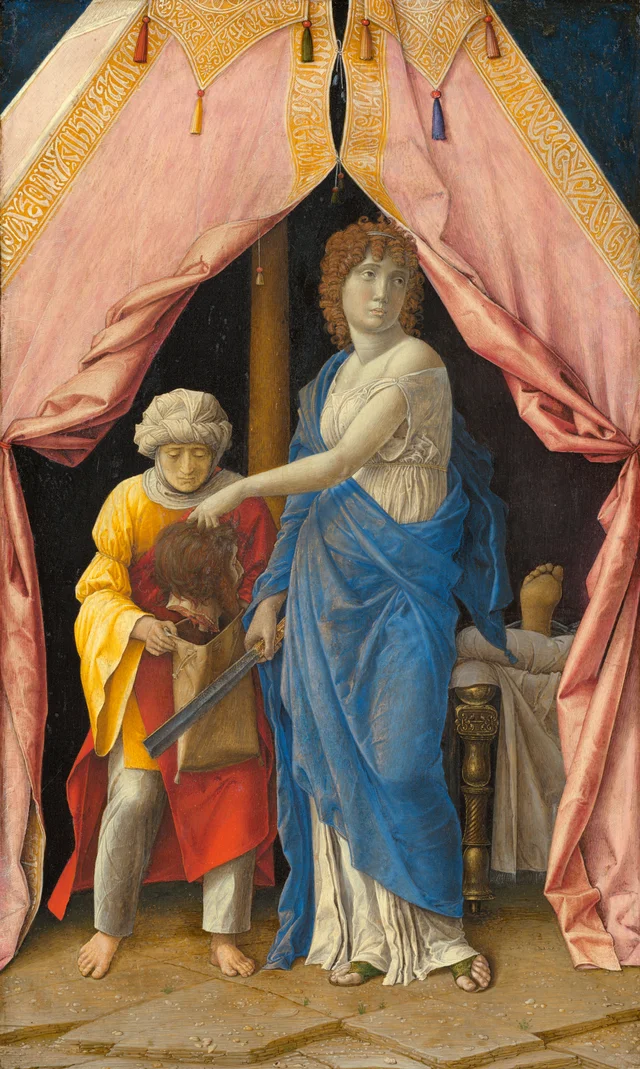 Judith et HolopherneAndrea Mantegna, 1495
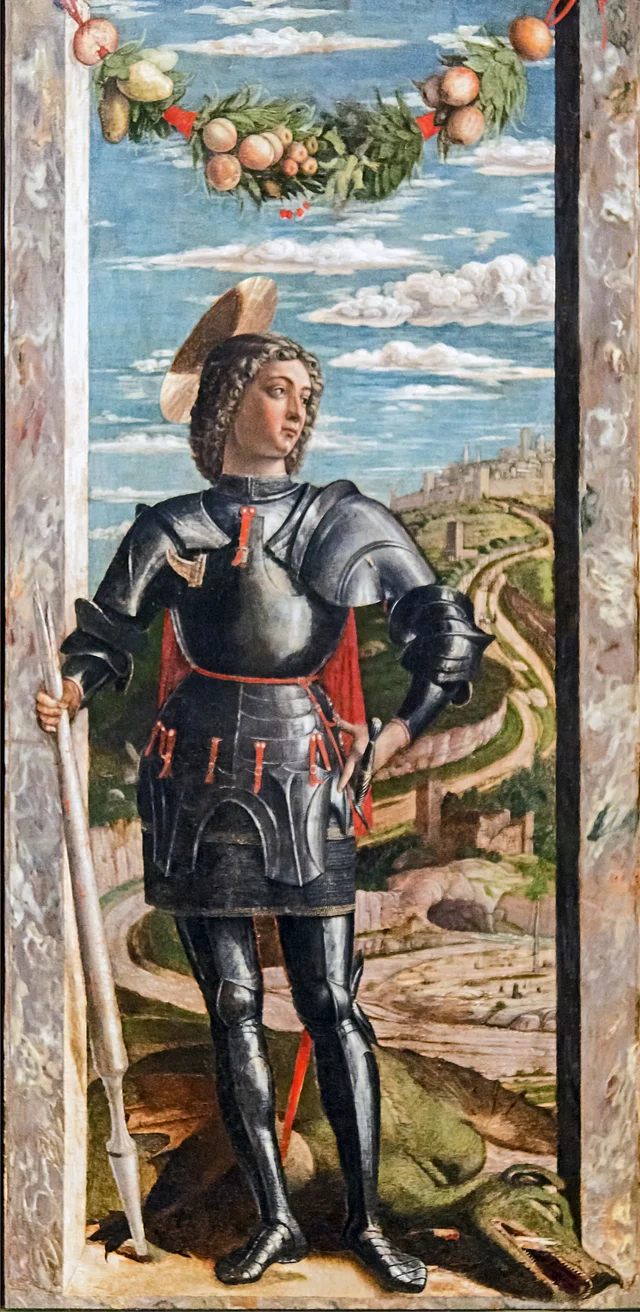 Saint GeorgesAndrea Mantegna, 1460
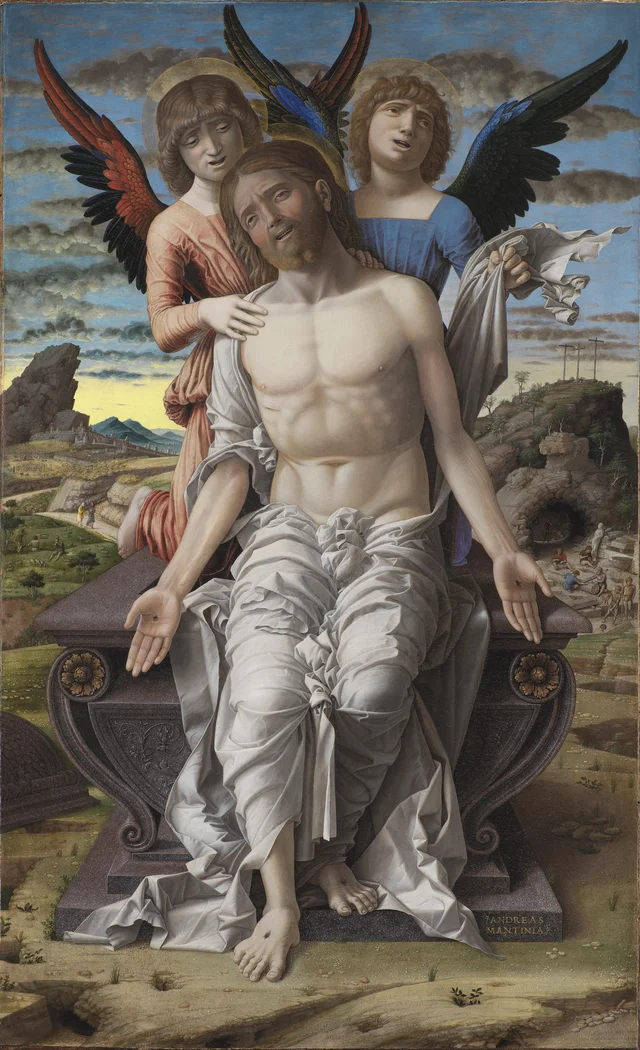 Le Christ Rédempteur souffrantAndrea Mantegna, 1488
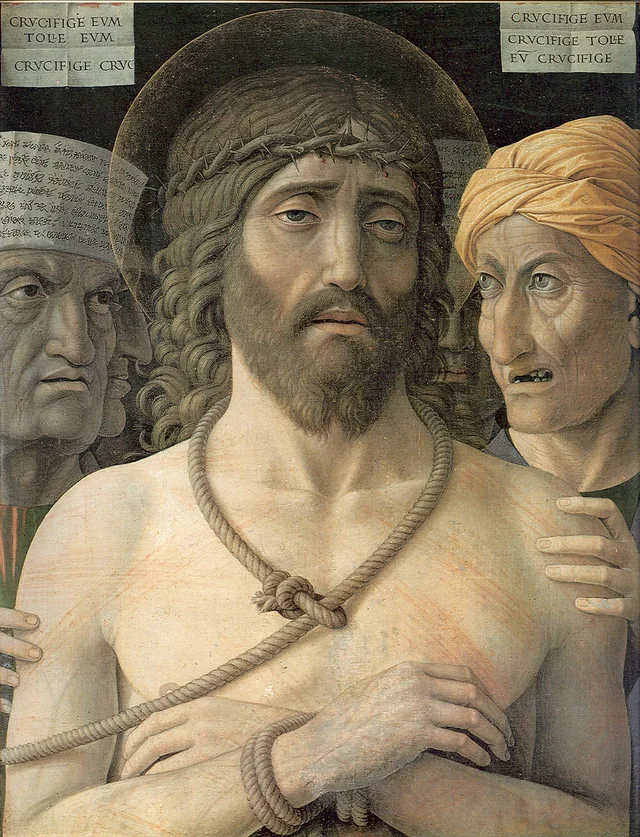 Ecce HomoAndrea Mantegna, 1500
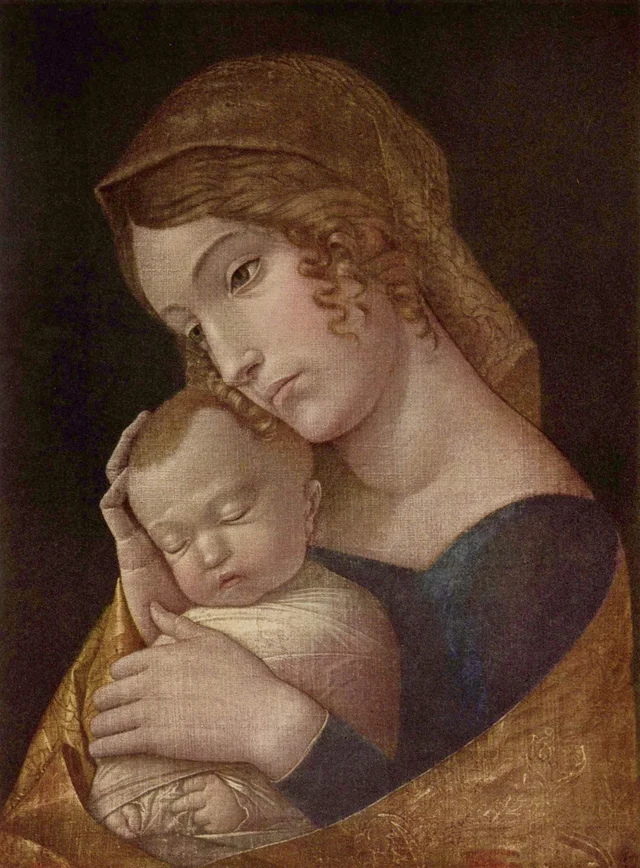 La Vierge à l'Enfant endormiAndrea Mantegna, 1457
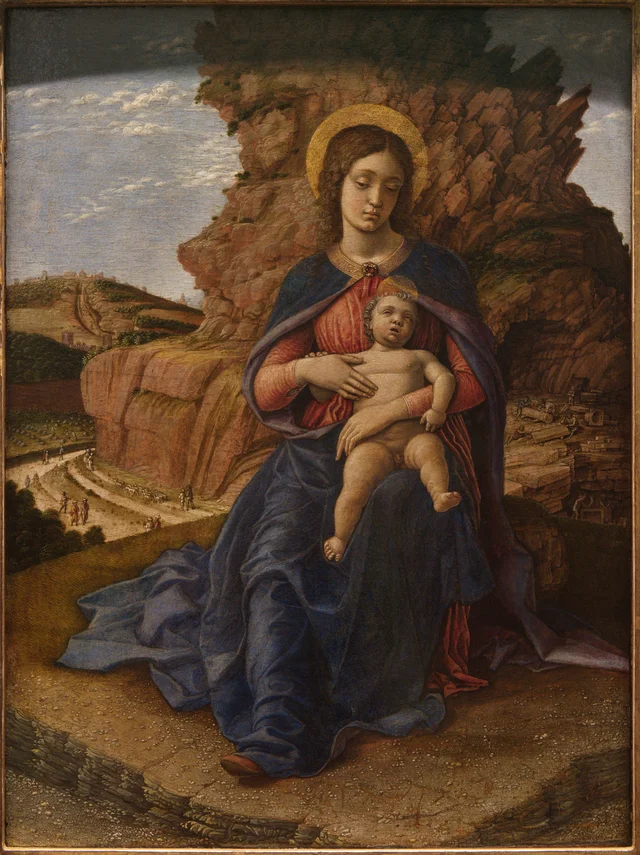 La Vierge des carrièresAndrea Mantegna, 1489
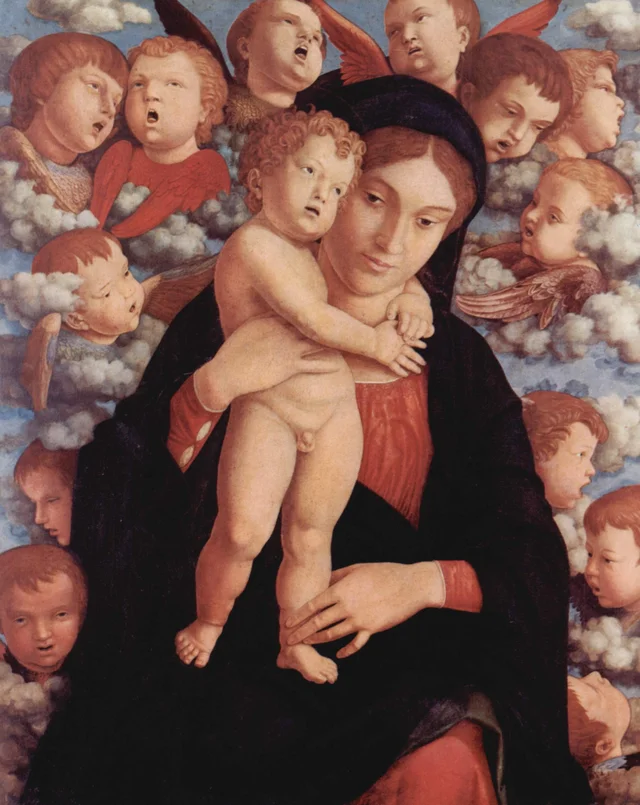 La Vierge aux chérubinsAndrea Mantegna, 1485
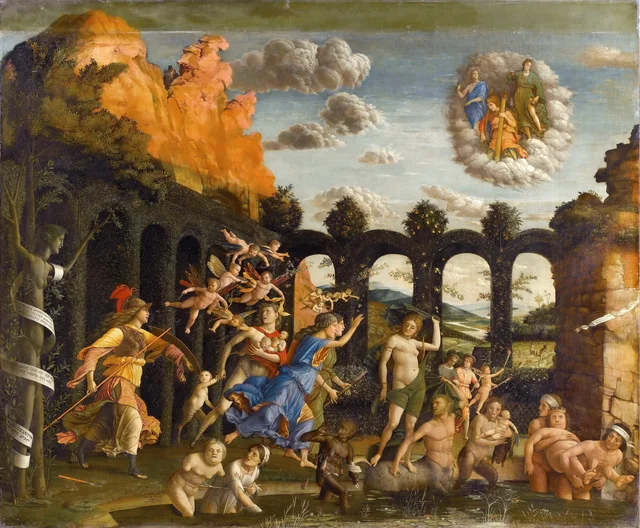 Le Triomphe des VertusAndrea Mantegna, 1502
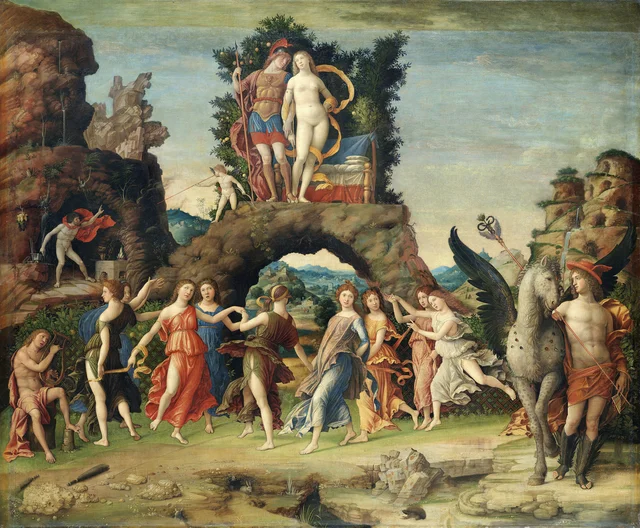 Le ParnasseAndrea Mantegna, 1500
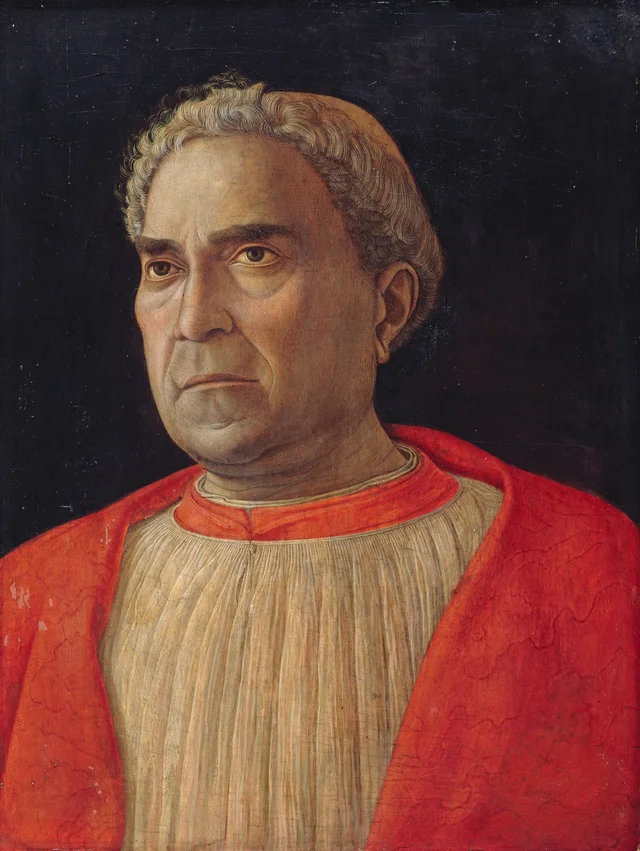 Portrait du cardinal Ludovico TrevisanAndrea Mantegna, 1457
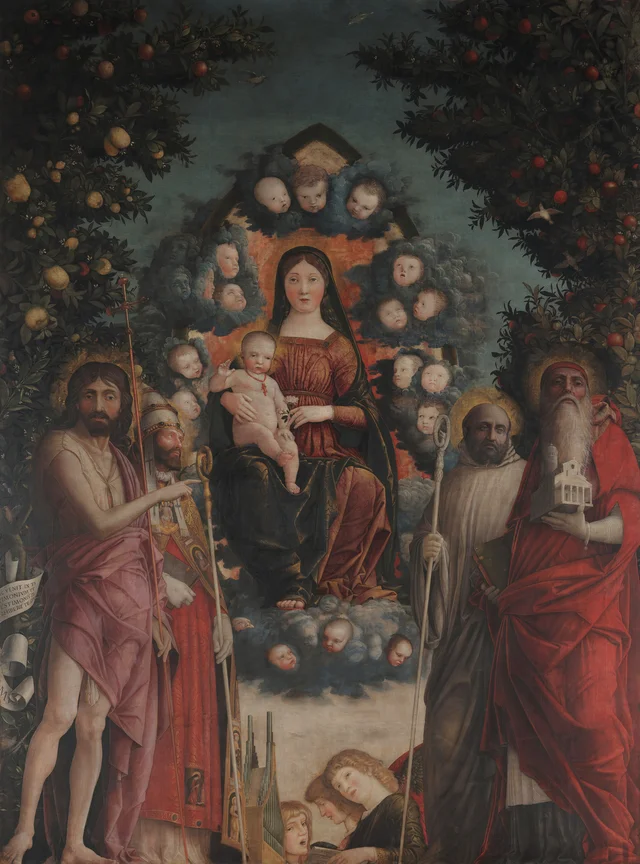 La Madone TrivulzioAndrea Mantegna, 1497
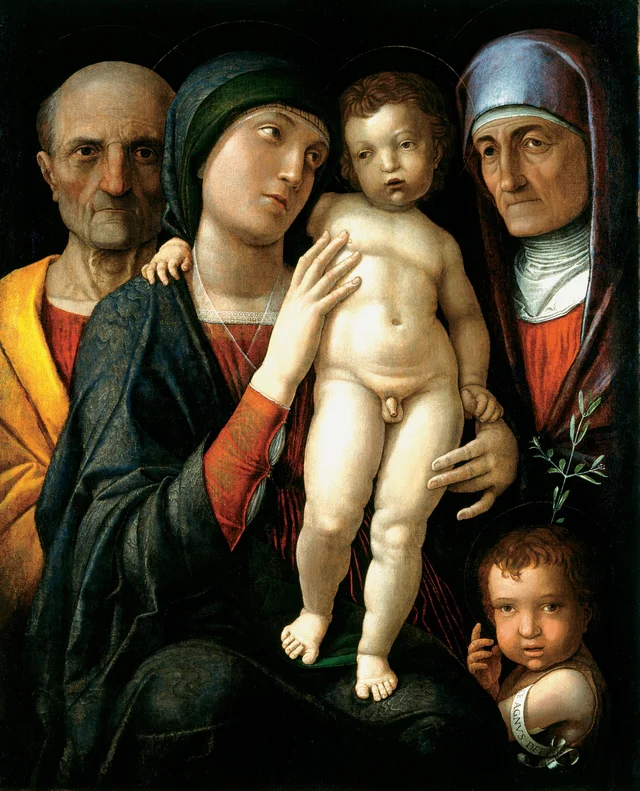 Sainte Famille avec sainte Élisabeth et saint Jean-Baptiste enfantAndrea Mantegna, 1495
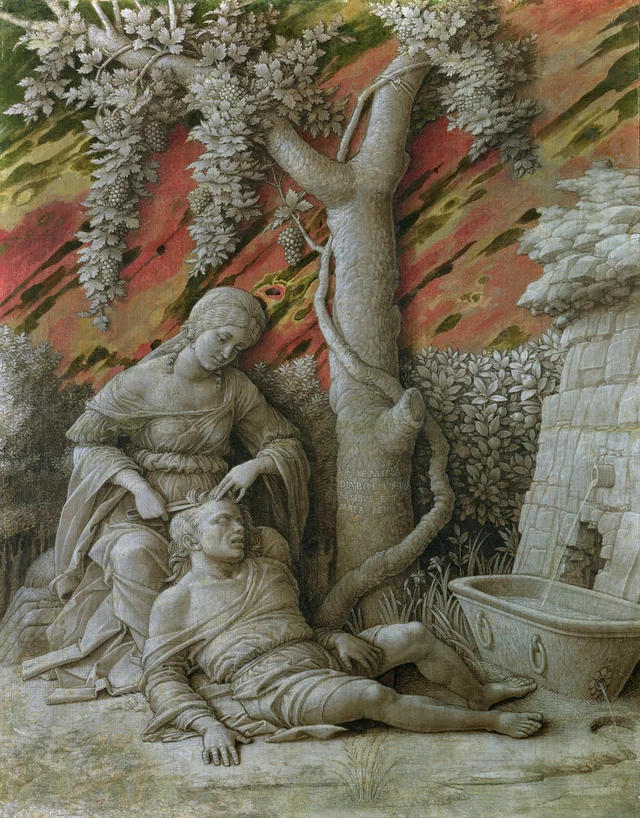 Samson et DalilaAndrea Mantegna, 1495
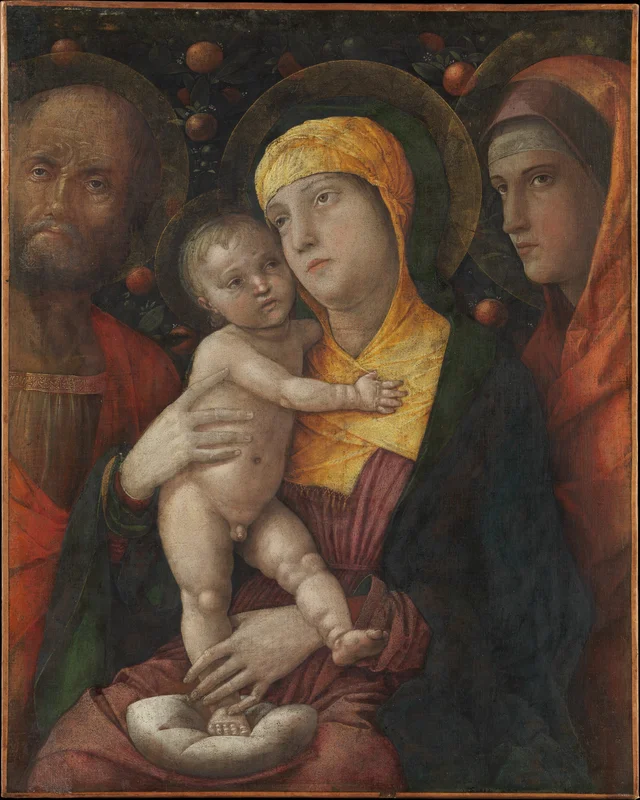 La Sainte Famille avec sainte Marie MadeleineAndrea Mantegna, 1495
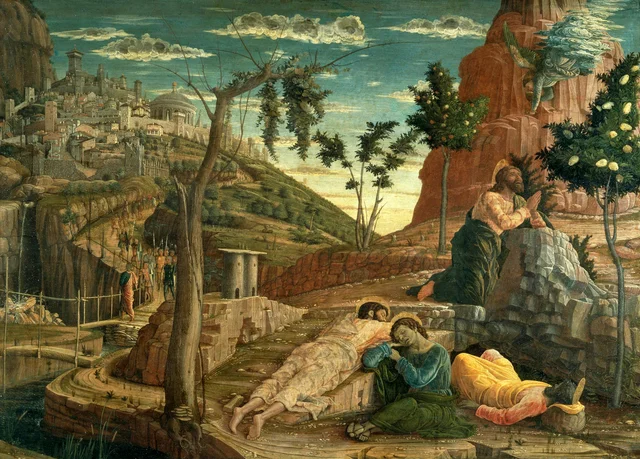 L'Agonie au jardin des OliviersAndrea Mantegna, 1459
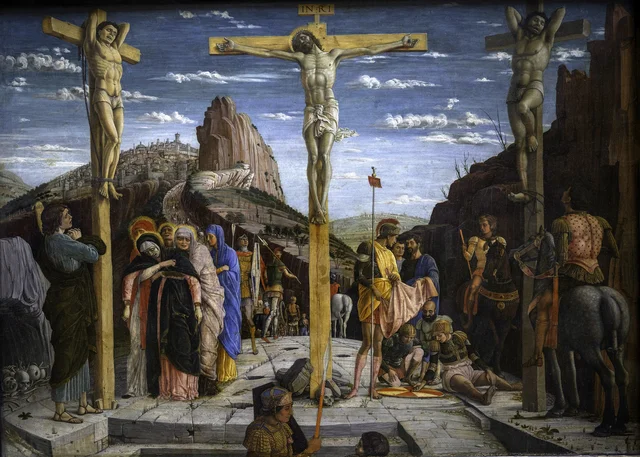 La CrucifixionAndrea Mantegna, 1457
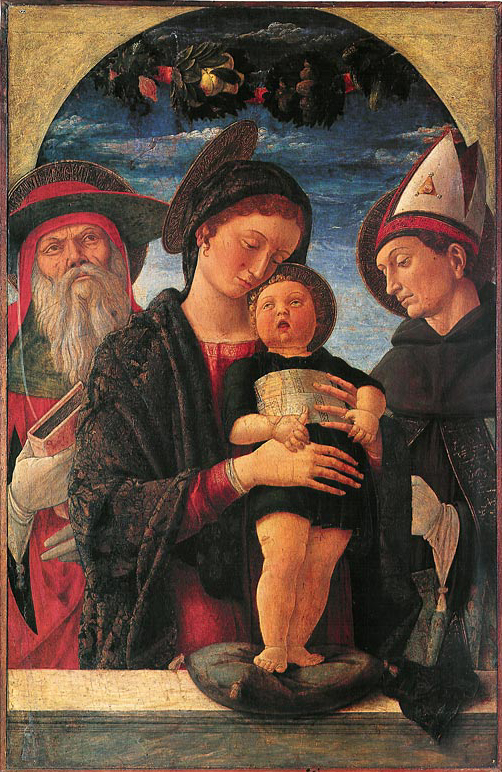 Vierge à l'Enfant avec les saints Jérôme et LouisAndrea Mantegna, 1455
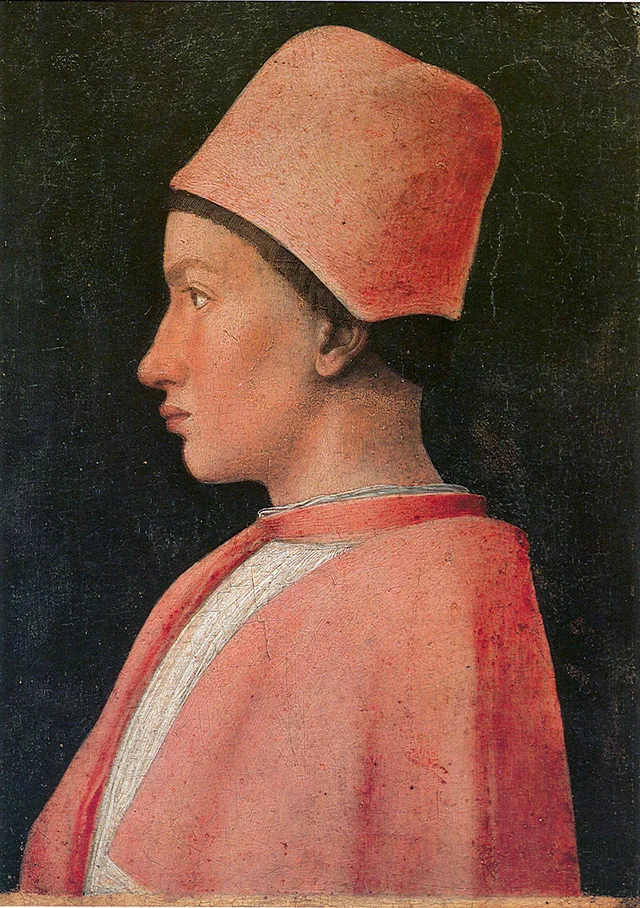 Portrait de Francesco GonzagaAndrea Mantegna, 1461