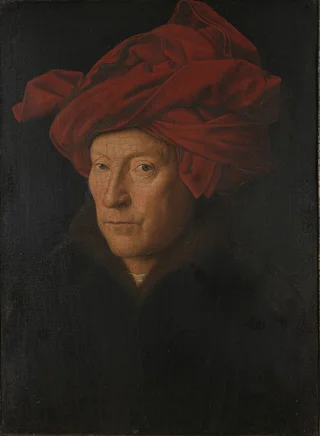
Jan van Eyck
1390–1441 · Pays-Bas méridionaux · Primitifs flamands
L'histoire
Jan van Eyck travailla pour l'un des hommes les plus riches de l'Europe du XVe siècle, Philippe le Bon, duc de Bourgogne, dont les terres s'étendaient sur ce qui est aujourd'hui la Belgique, la Hollande et l'est de la France. Van Eyck était son peintre de cour et son valet de chambre, recevait un salaire généreux et bénéficiait d'une confiance qui dépassait largement l'atelier. En 1428, le duc l'envoya au Portugal dans le cadre d'une ambassade de mariage, et sa mission consistait notamment à peindre la promise, Isabelle, afin que Philippe puisse voir le visage de celle qu'il projetait d'épouser.
De retour à Bruges, il perfectionnait un procédé qui donnait à ses tableaux l'apparence d'être éclairés de l'intérieur. Il n'inventa pas la peinture à l'huile, mais apprit à construire une image à partir de nombreux glacis fins et transparents, superposés couche après couche, de sorte que la lumière semblait s'enfoncer dans la couleur puis en ressortir. Cela lui permit de rendre un lustre de laiton, un miroir convexe et l'épaisse fourrure d'un col avec une précision qu'aucun peintre n'avait atteinte auparavant, le plus fameusement dans le double portrait Arnolfini de 1434.
Sa plus grande œuvre conservée est le Retable de Gand, achevé en 1432, un vaste ensemble de panneaux à volets commencé par son frère Hubert. Le cadre porte une inscription désignant Jan comme celui qui l'acheva, et sur le portrait Arnolfini, il signa le mur lui-même en une écriture latine cursive, indiquant que Jan van Eyck fut ici, au-dessus de la date de réalisation.
Autres articles
 Article · 42 min de lectureLa National Gallery of Art de Washington : vingt tableaux venus de mains privées
 Article · 46 min de lectureQue voir au Louvre : 25 œuvres majeures
 Article · 45 min de lectureLe musée Thyssen-Bornemisza : vingt tableaux achetés par un père et son fils
 Article · 47 min de lectureLa Gemäldegalerie de Berlin : 20 tableaux que Berlin a achetés, perdus et divisés
 Article · 40 min de lectureLa galerie des Maîtres anciens de Dresde : 15 tableaux achetés, rebaptisés et rendus
 Article · 51 min de lectureLe Kunsthistorisches Museum de Vienne : 25 œuvres et comment elles sont arrivées chez les Habsbourg
Œuvres
37 œuvres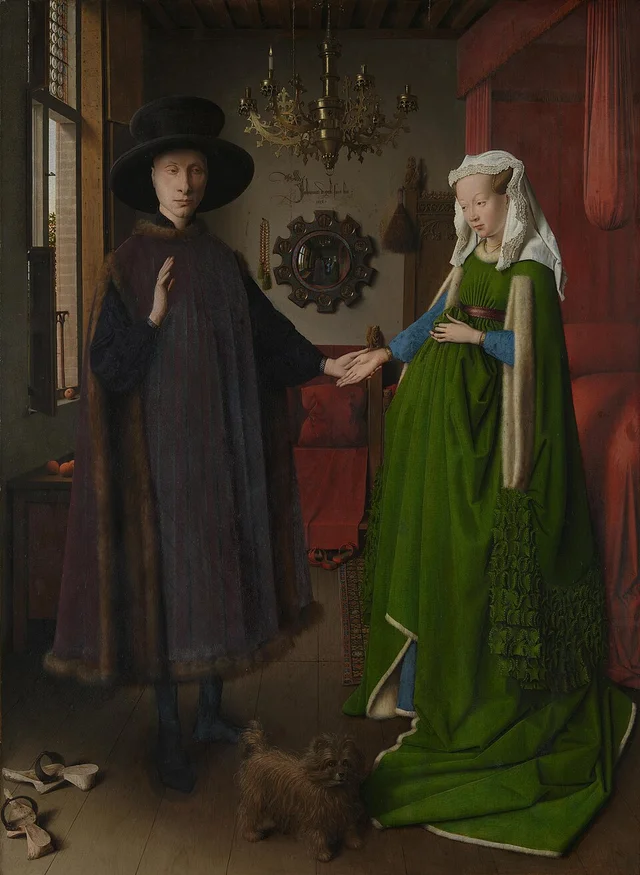 Les Époux ArnolfiniJan van Eyck, 1434
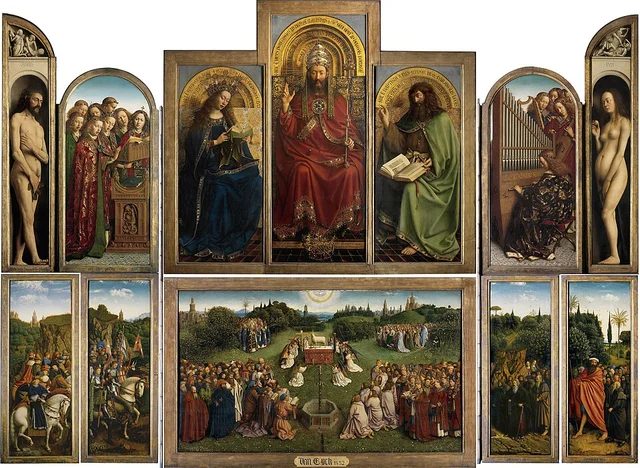 Le Retable de GandJan van Eyck, 1432
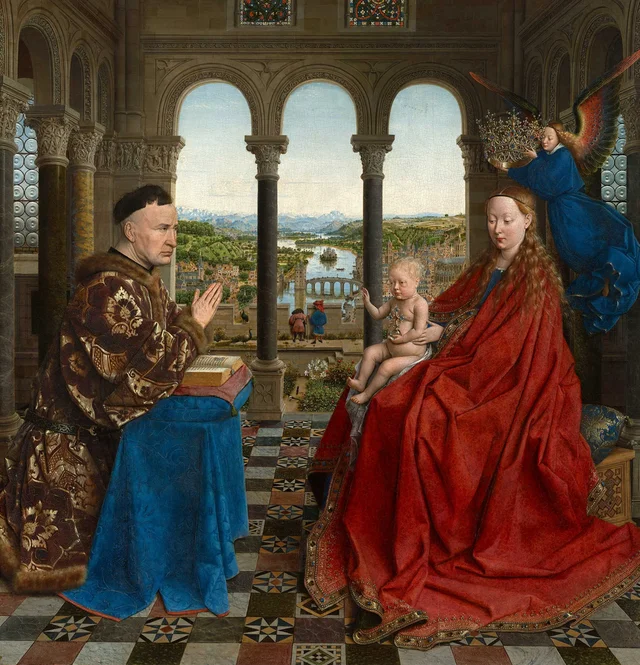 La Vierge du chancelier RolinJan van Eyck, 1435
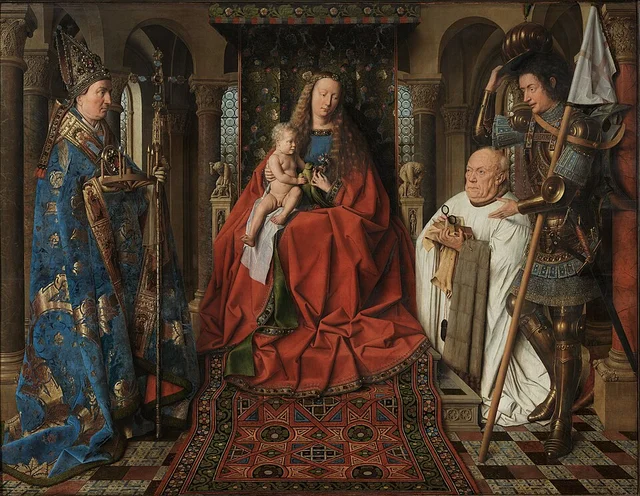 La Vierge au chanoine van der PaeleJan van Eyck, 1436
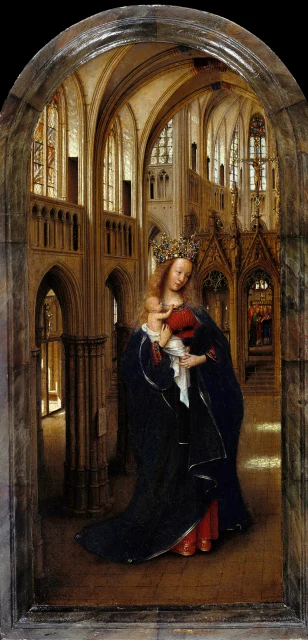 La Vierge dans l'égliseJan van Eyck, 1440
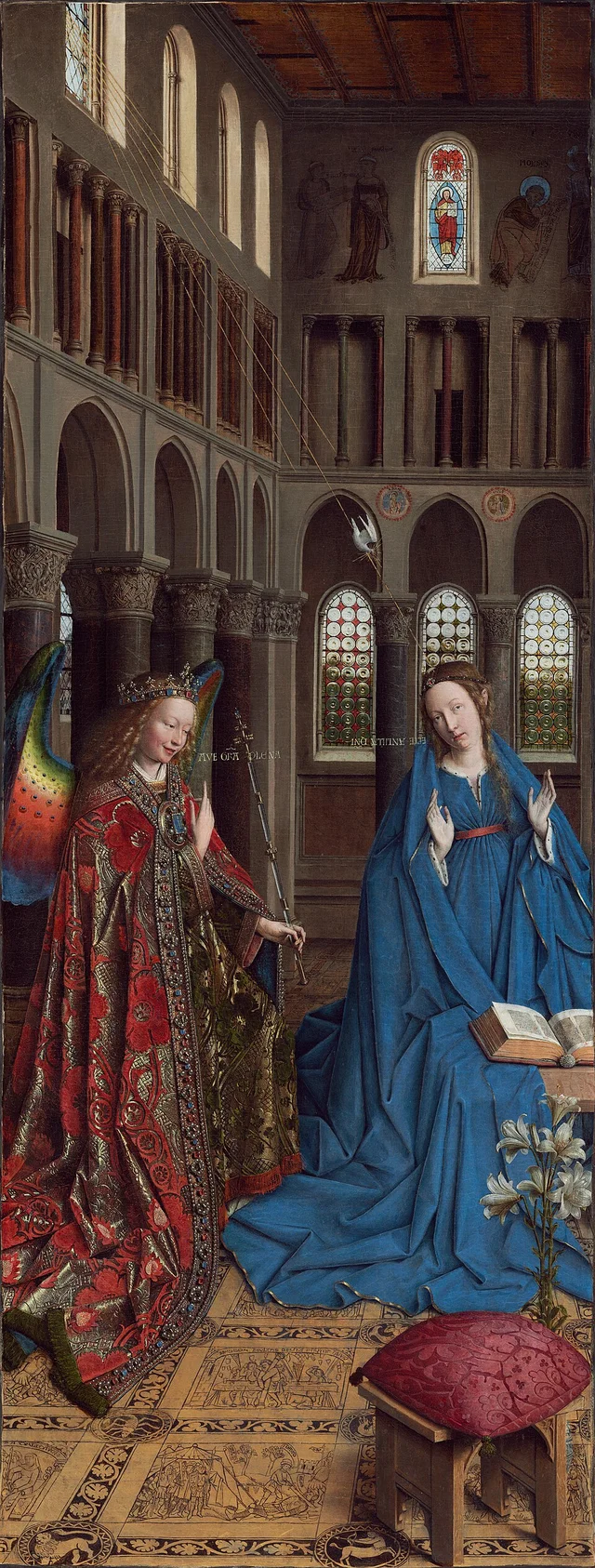 L'AnnonciationJan van Eyck, 1435
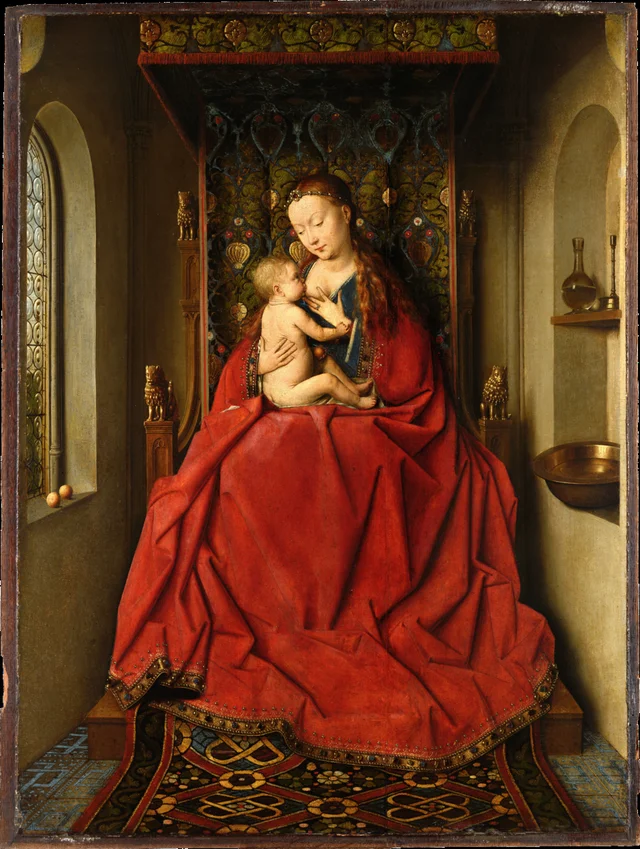 La Vierge de LucquesJan van Eyck, 1437
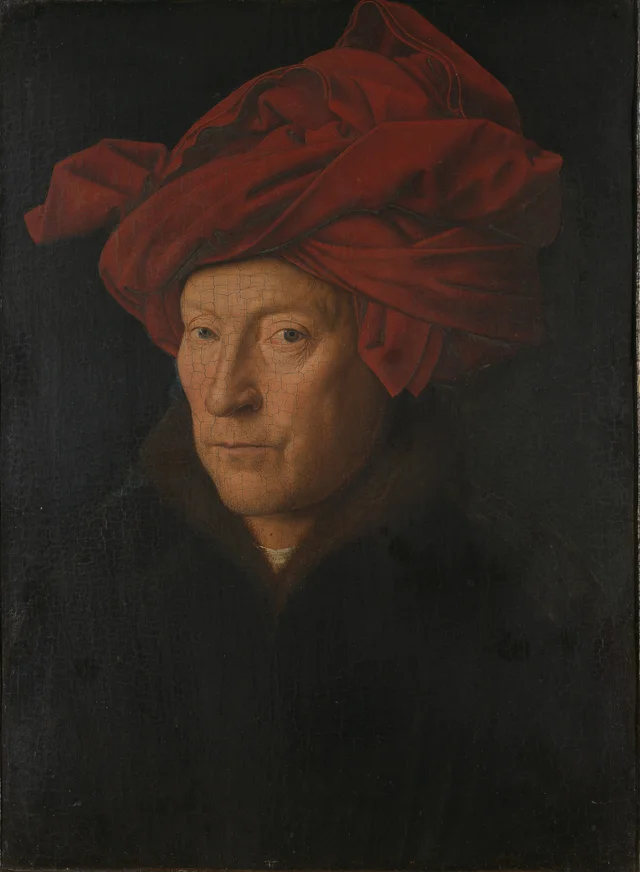 Portrait d'homme (Autoportrait ?)Jan van Eyck, 1433
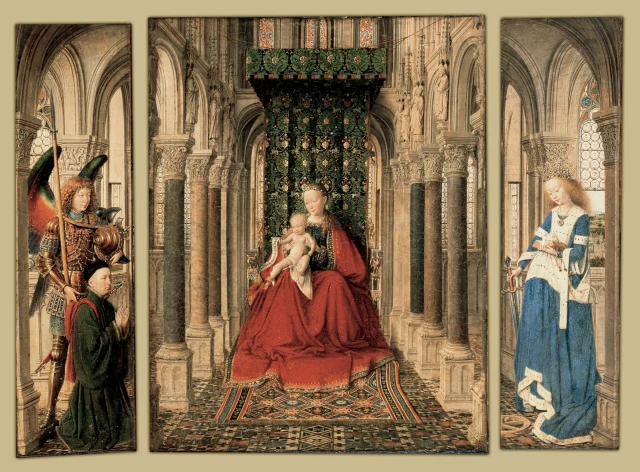 Triptyque de DresdeJan van Eyck, 1437
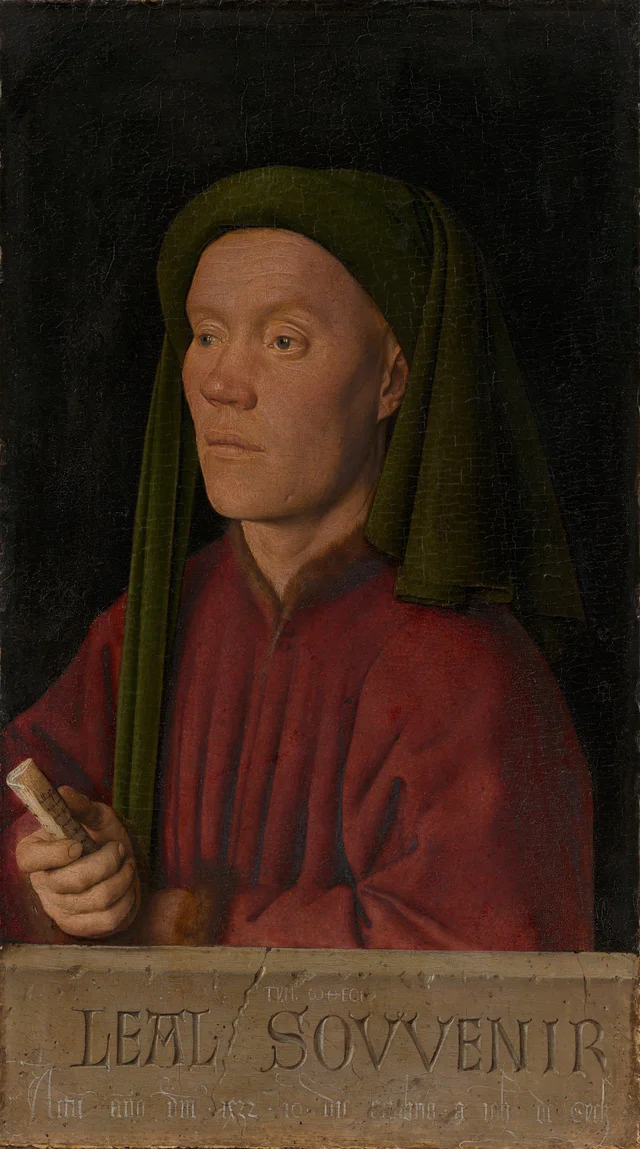 Léal SouvenirJan van Eyck, 1432
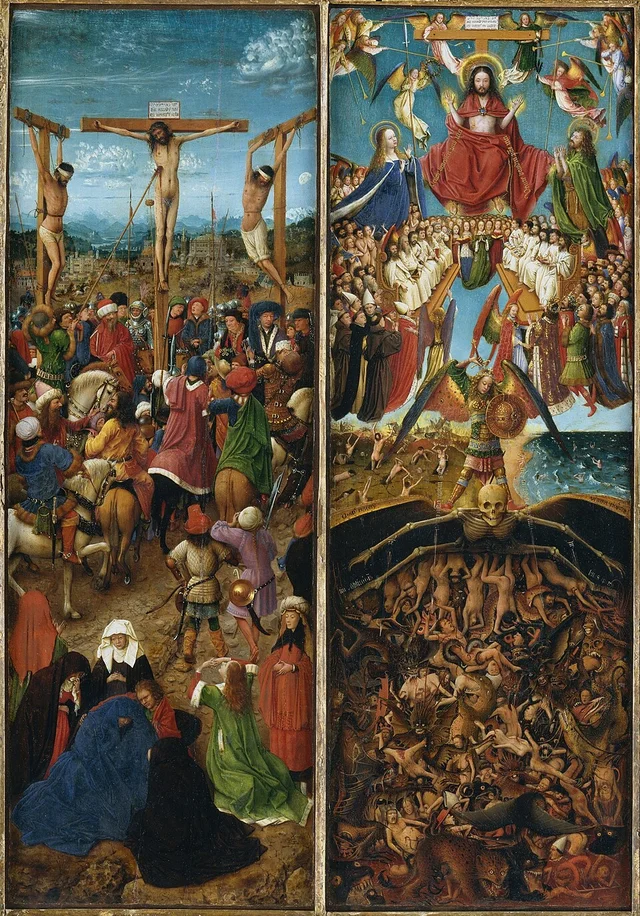 Diptyque de la Crucifixion et du Jugement dernierJan van Eyck, 1440
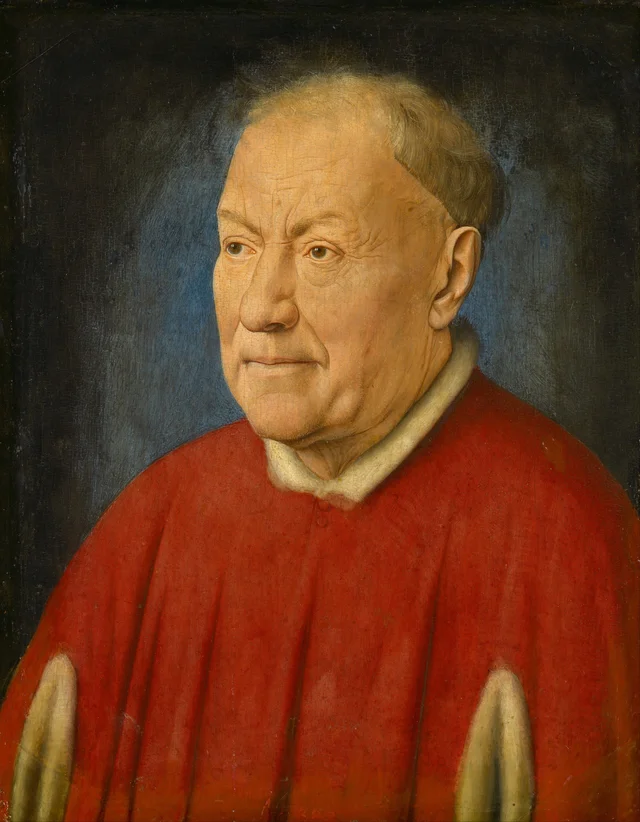 Portrait d'homme (le cardinal Niccolò Albergati ?)Jan van Eyck, 1431
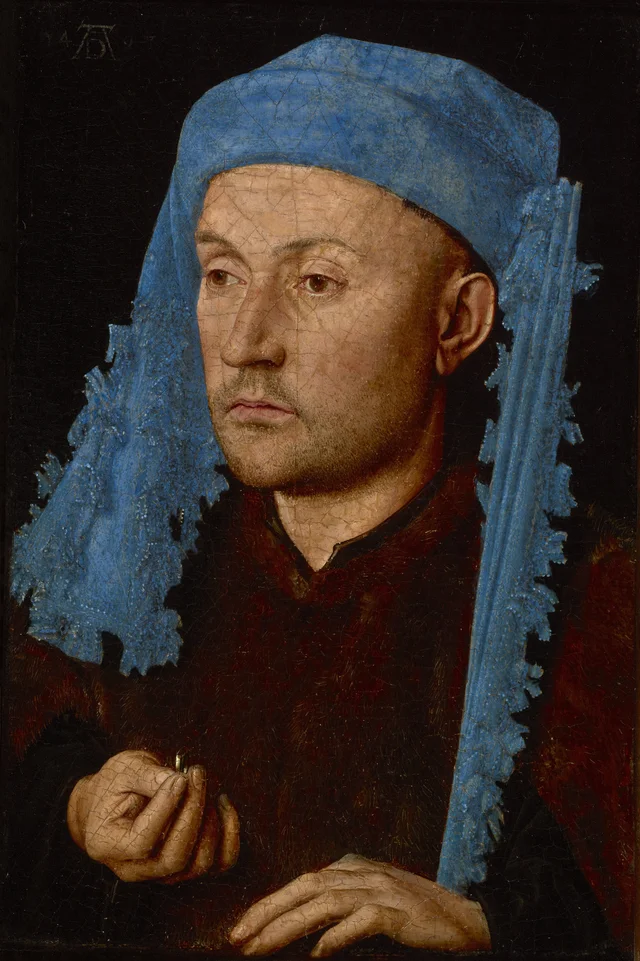 Portrait d'homme au chaperon bleuJan van Eyck, 1435
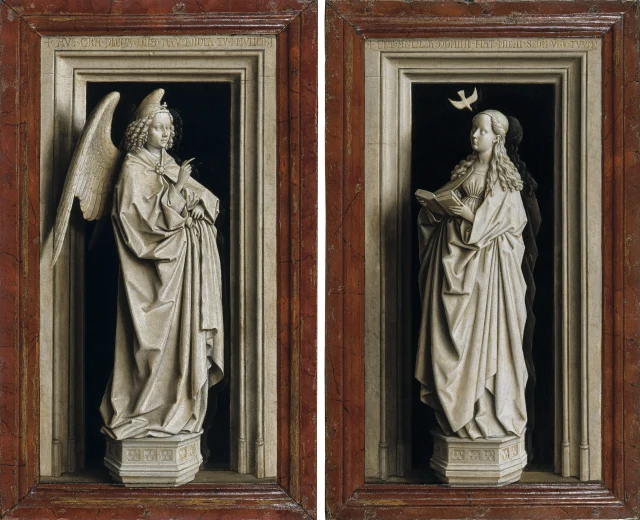 L'AnnonciationJan van Eyck, 1440
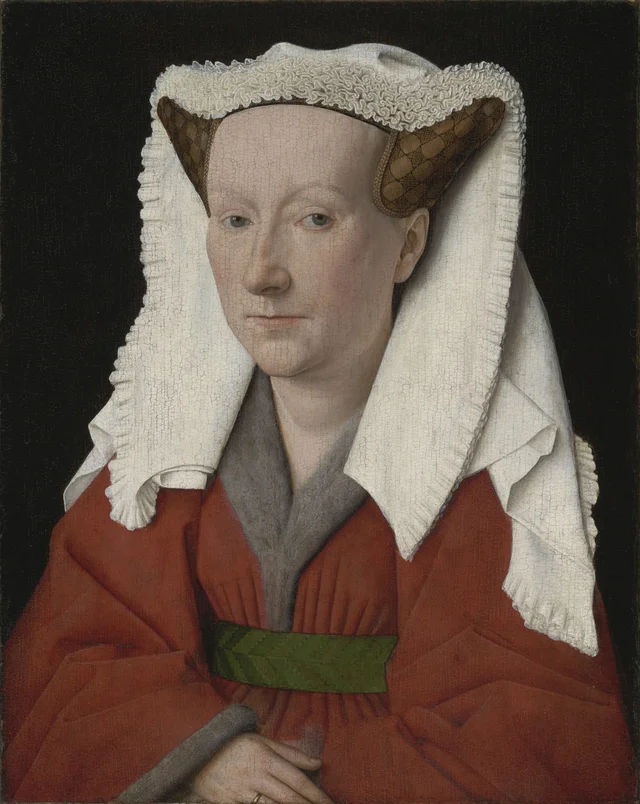 Portrait de Margareta van EyckJan van Eyck, 1439
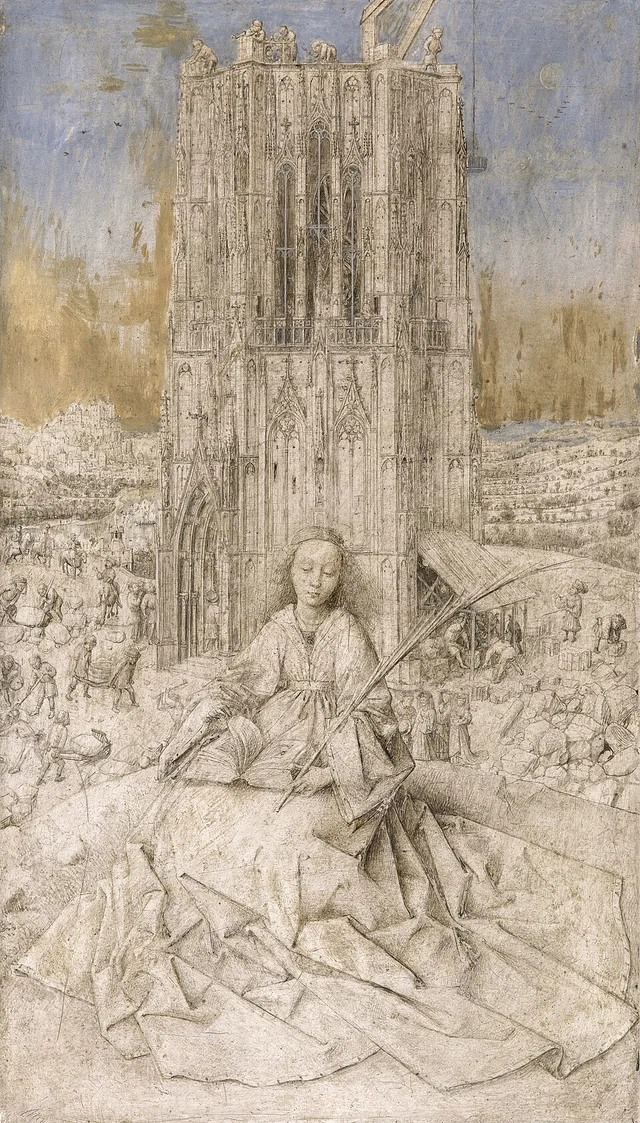 Sainte BarbeJan van Eyck, 1437
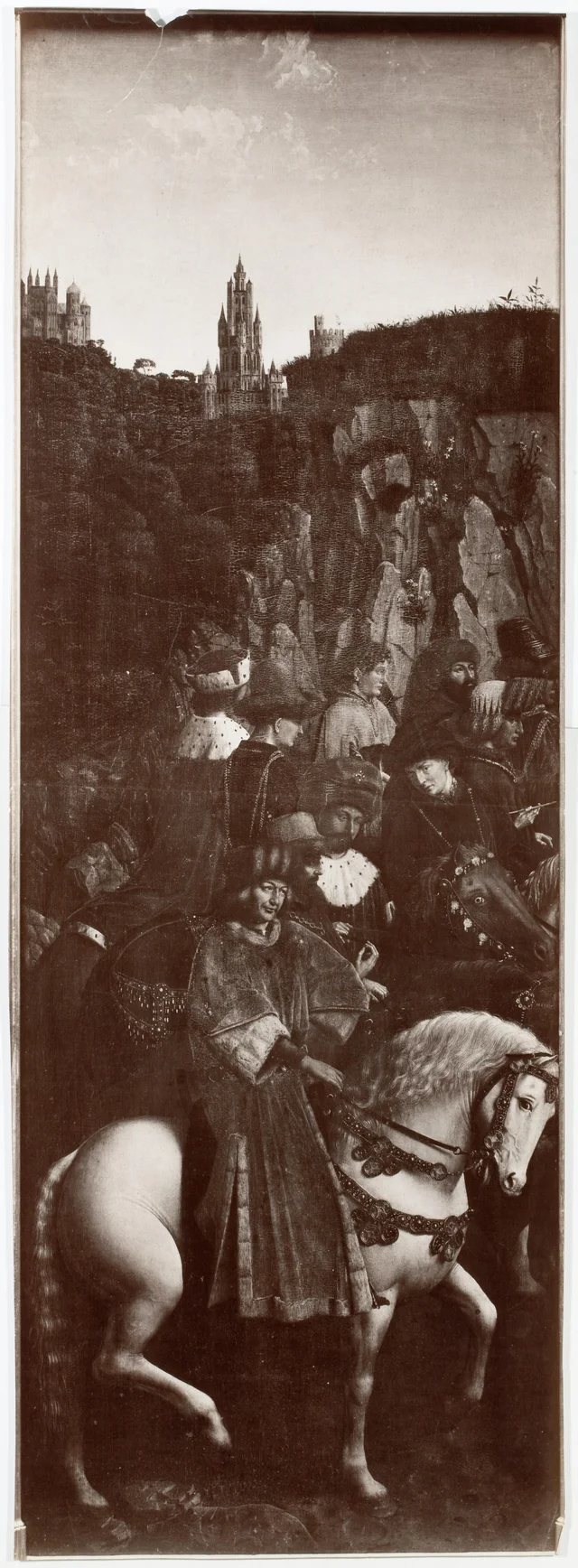 Les Juges intègresJan van Eyck, 1432
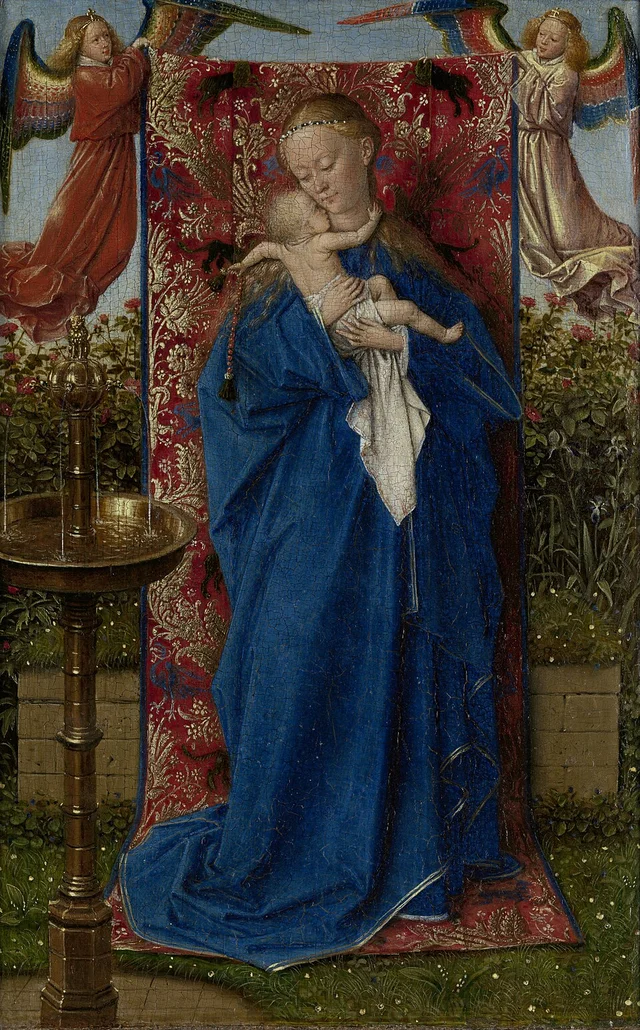 La Vierge à la fontaineJan van Eyck, 1439
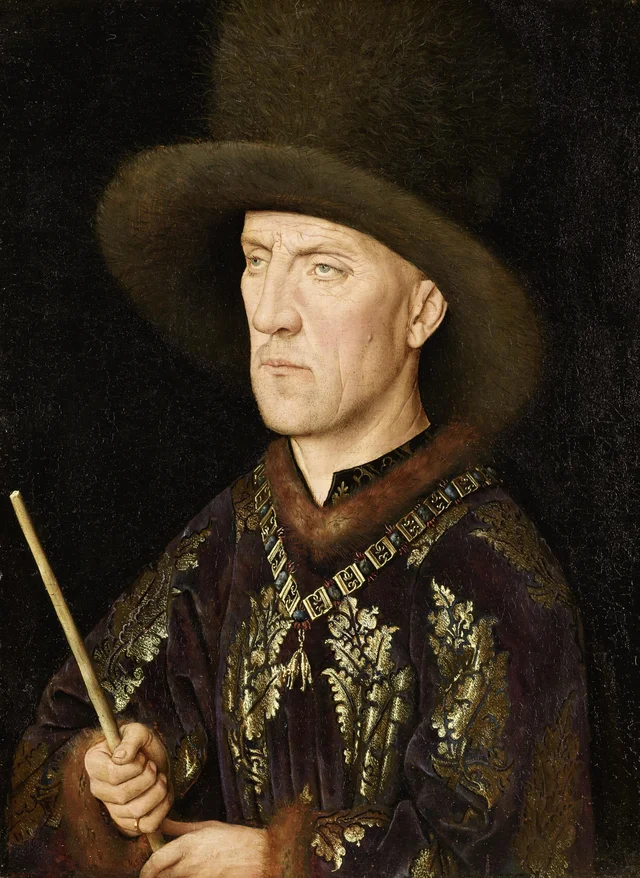 Portrait de Baudouin de LannoyJan van Eyck, 1435
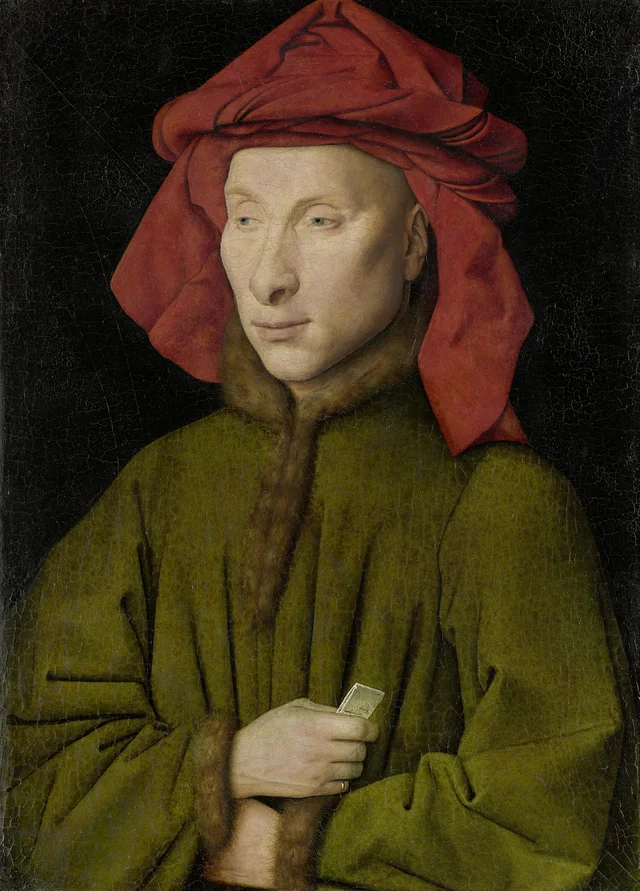 Portrait de Giovanni di Nicolao ArnolfiniJan van Eyck, 1440
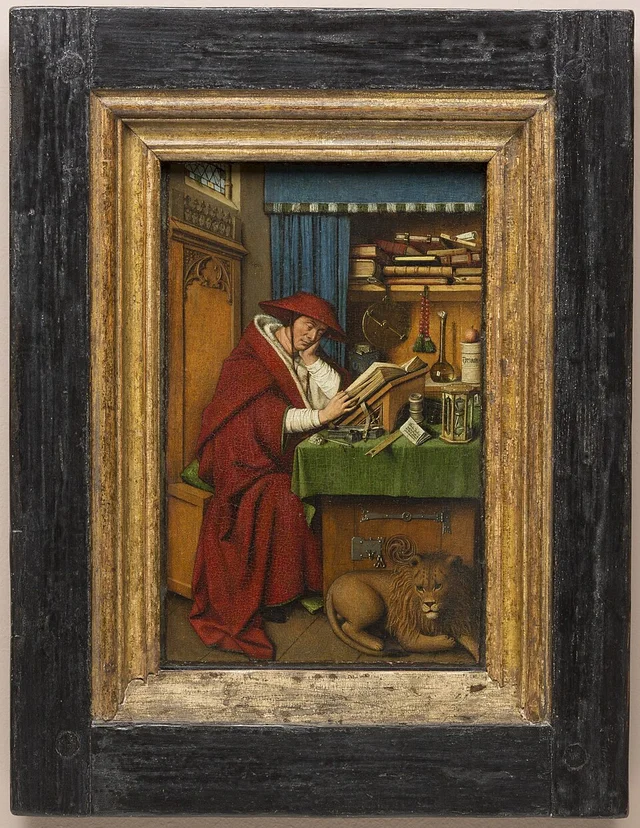 Saint Jérôme dans son cabinet de travailJan van Eyck, 1435
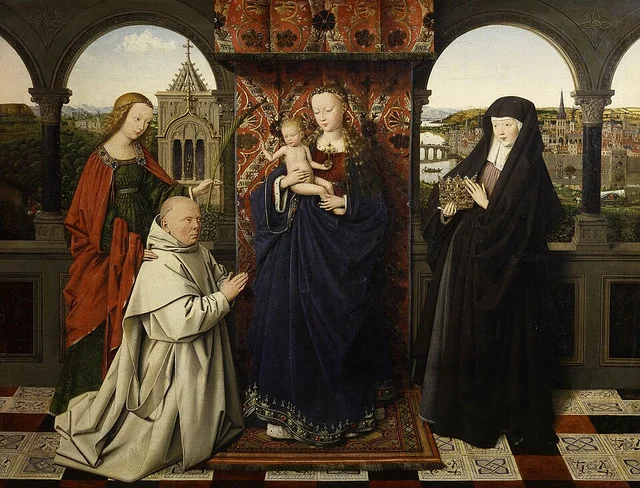 La Vierge à l'Enfant avec des saints et un donateurJan van Eyck, 1441
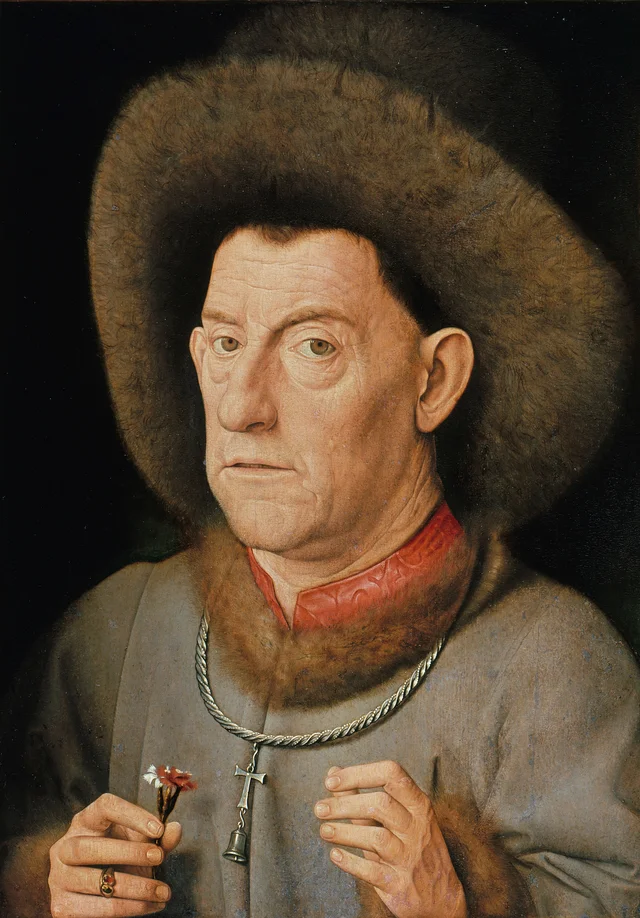 Portrait d'un homme à l'œilletJan van Eyck, 1435
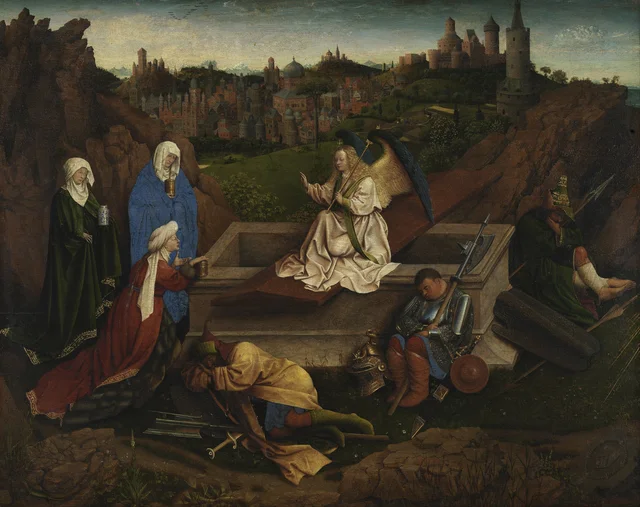 Les Trois Maries au tombeauJan van Eyck, 1430
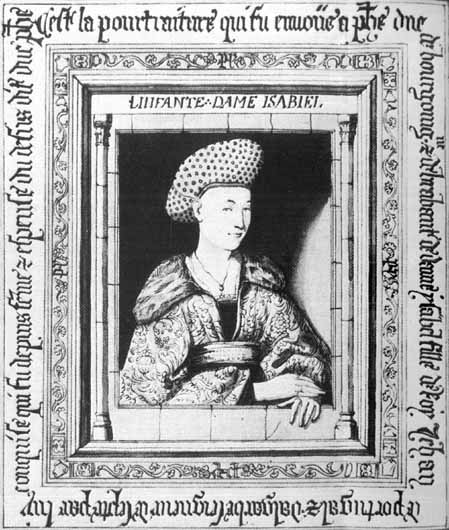 Portrait d'Isabelle de PortugalJan van Eyck, 1428